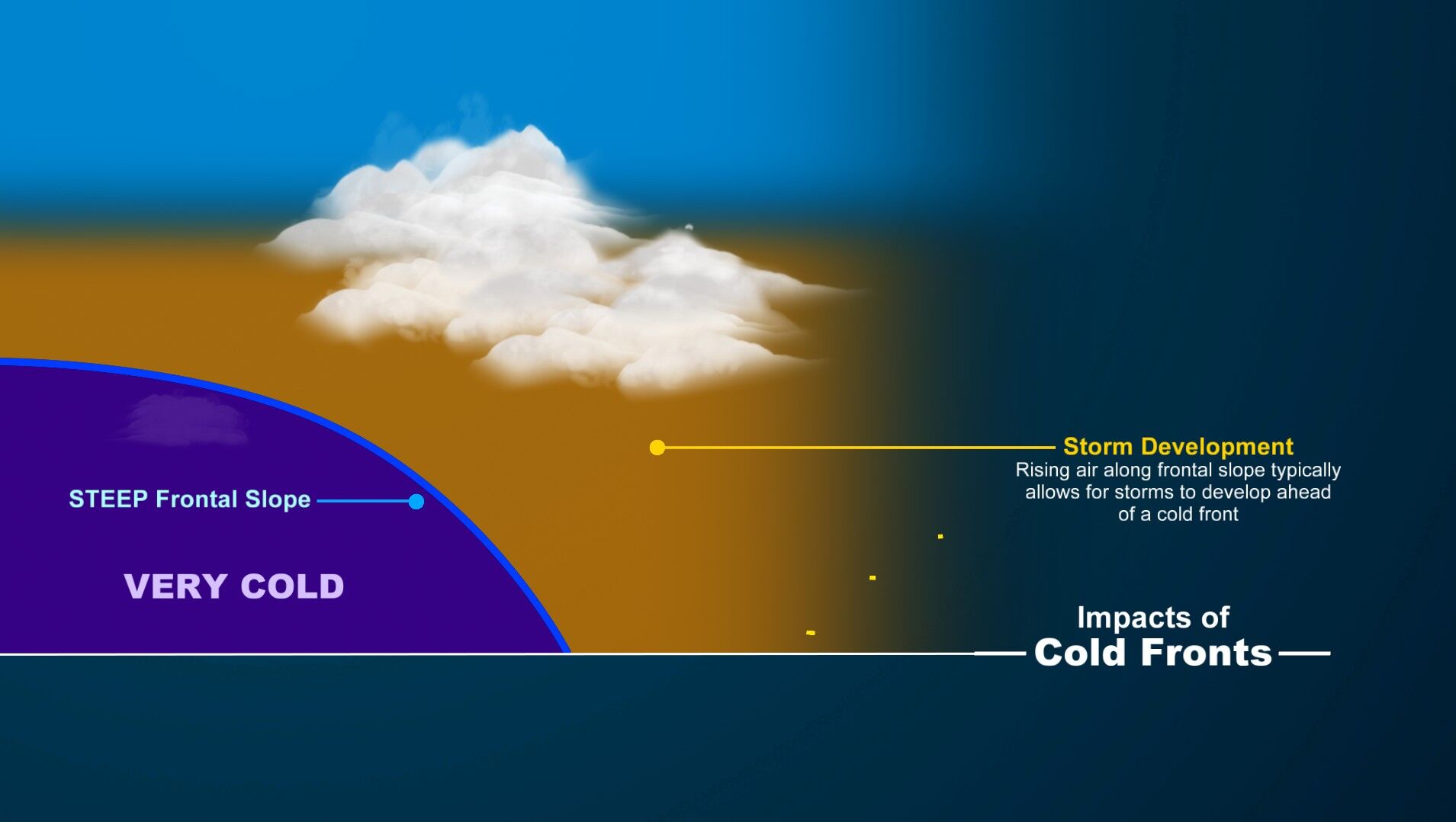
Cold fronts are oftentimes the trigger needed for storms to develop. A cold front can be thought of as the leading edge of colder air moving in. Some fronts are weak with small temperature changes, while others are strong with thirty degree drops in temperatures. Cold fronts can enhance wind speeds, because wind is related to changes in pressure, and temperature is related to pressure. Highs this weekend will go from the 70's on Friday to the 60's on Saturday. Last weekend we went from the upper 80's during the week to the 50's behind the front a few days later.
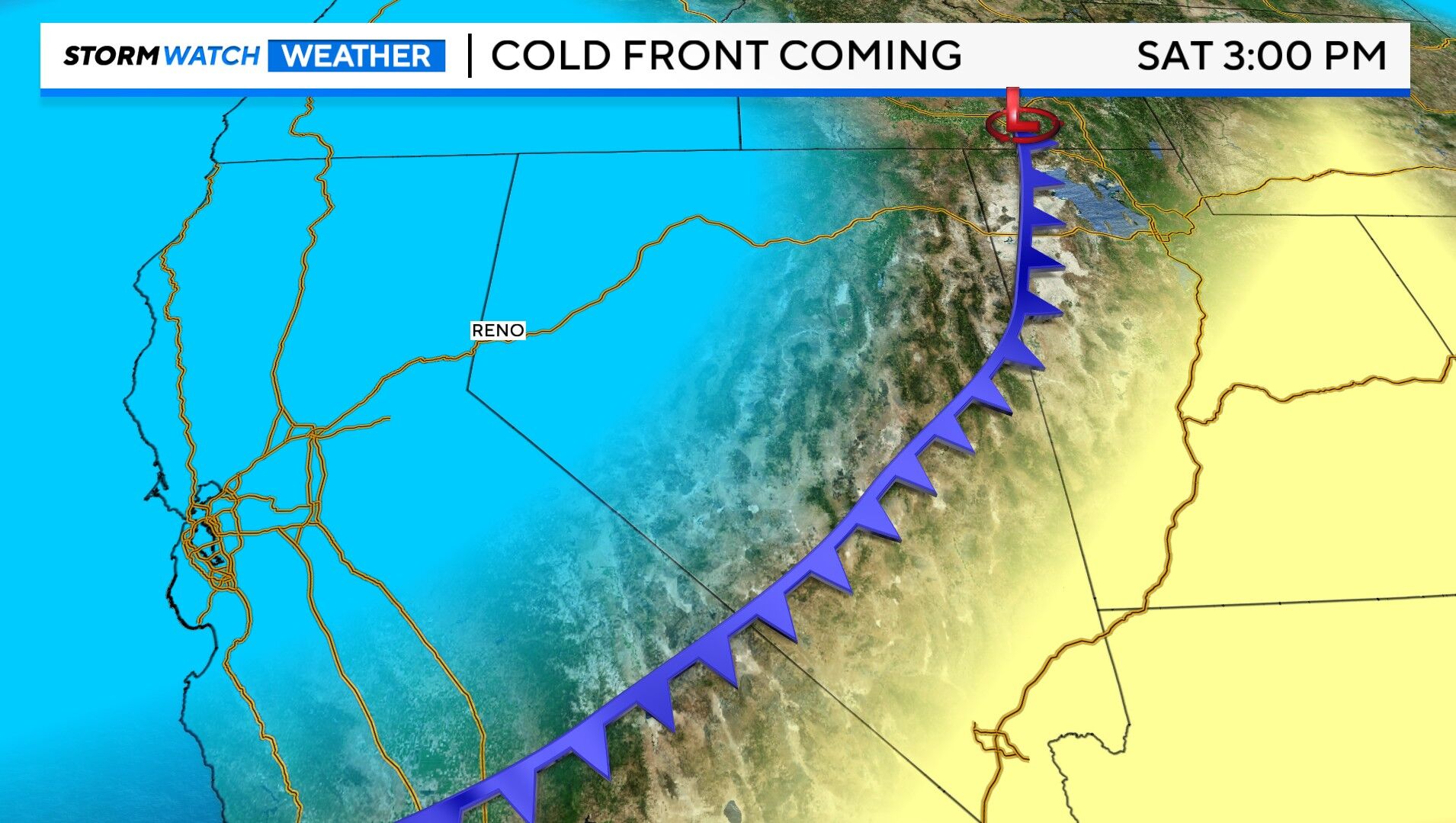

Cold fronts are the beginnings of colder air moving in. Cold air is more dense than warm air, allowing the more buoyant warm air to ride overtop of the cold air and if there is enough moisture it will turn into clouds and rain. The bigger the temperature and pressure change the more steep the dome of cold air will be. Really strong cold fronts in the spring are oftentimes triggers for tornado outbreaks. We usually get just wind out of the fronts, but we can get some rain and snow too. Cold fronts can help improve our air quality by picking up our winds and mixing the air, but the wind can also increase fire danger.
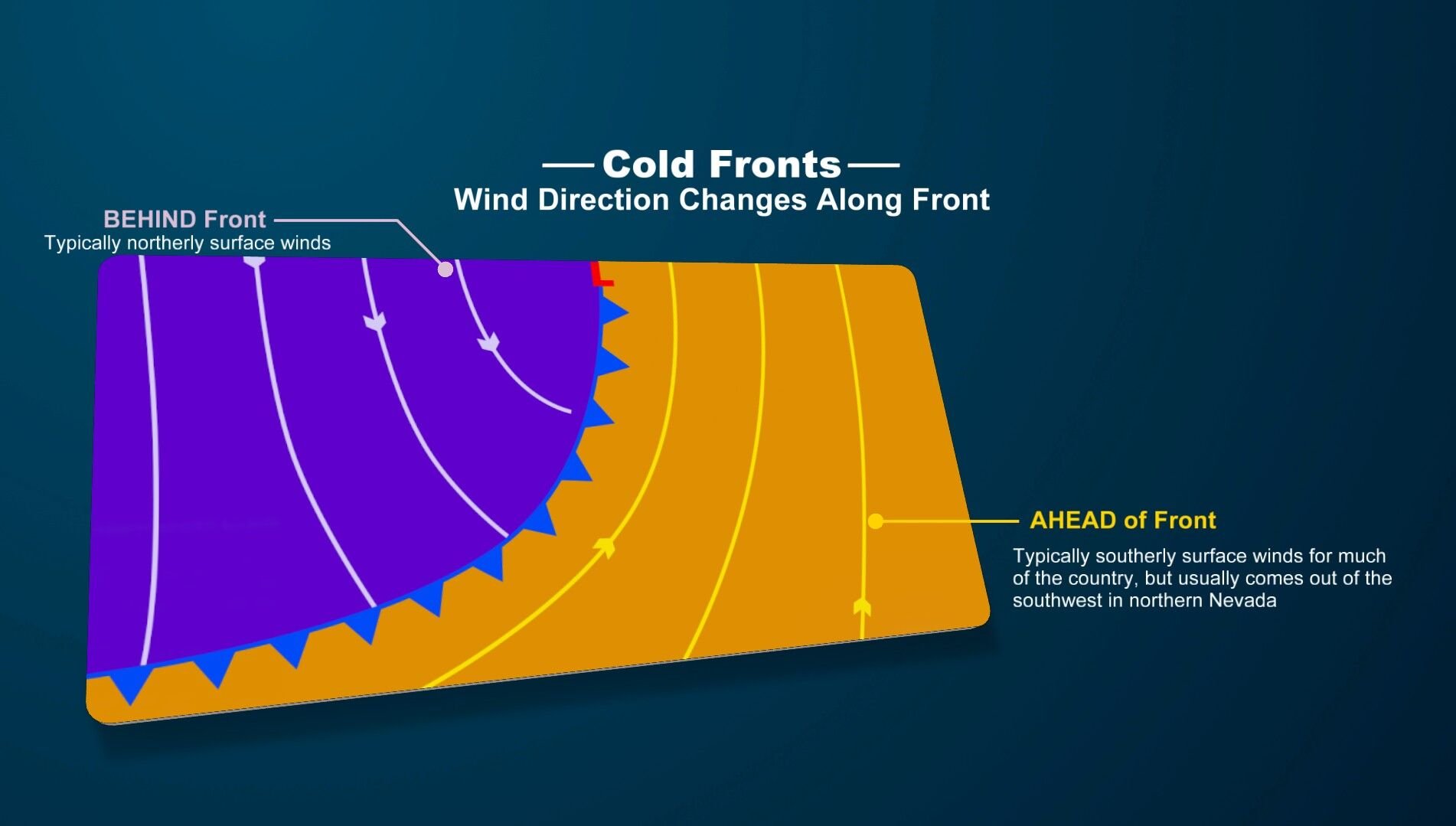
Cold fronts usually change the moisture content too, with dry air moving in behind them. You can get rain behind them too, but usually it clears out. Cold fronts are attached to mid latitude cyclones, which usually have a warm front attached to the low as well. Mid latitude cyclones are much easier to pick out in the central part of the country, because they can get washed out along the west coast. You can pick out a front with a change in wind speed for most of the country going from a southerly wind to a west wind, but in northern Nevada the changes in elevations leads to a southwesterly wind before a front most of the time. Rarely do we have a southerly wind in advance of a front with a well defined warm front and cold front. Storms along the west coast usually develop in the ocean, not giving us much time to analyze them before they arrive. In the Plains you can watch the low develop to the west and move east over land.