(December 1, 2022) The U.S. Fish and Wildlife Service today announced it has finalized Endangered Species Act protections for the highly imperiled Dixie Valley toad.
The toad was protected under a rare emergency order in April, and those emergency protections expire tomorrow, Dec. 2.
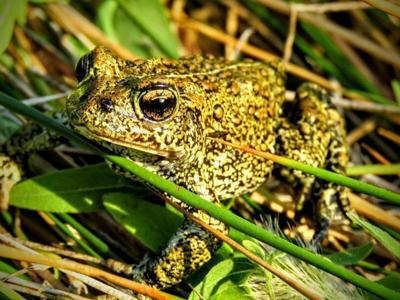
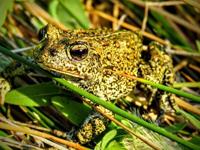
The toads live in a single hot spring-fed wetland in Churchill County, Nevada. With copper skin and dark freckles, they have a song like a baby bird and are scarcely bigger than a quarter.
“Dixie Valley toads are among the most vulnerable amphibians in the United States, and I’m relieved they’re getting the life-saving protections they need,” said Patrick Donnelly, Great Basin director at the Center for Biological Diversity.
“We’re pleased that the Biden administration is taking this essential step to prevent the extinction of an irreplaceable piece of Nevada’s special biodiversity.”
This unique species of toad faces extinction because of a geothermal energy project being developed directly adjacent to its sole habitat.
Geothermal energy production has been extensively documented to dry up nearby hot springs. If the Dixie Valley toad’s hot springs dry up, the species will go extinct.
The Center submitted an Endangered Species Act petition for the toad in 2017, when the geothermal project was proposed by developer Ormat and the U.S. Bureau of Land Management. The BLM approved the project in 2021, and the Center and the Fallon Paiute-Shoshone Tribe filed a lawsuit challenging that approval. The lawsuit is still working its way through the courts.
Geothermal energy involves pumping and recirculating billions of gallons of groundwater, which can alter subsurface hydrology and change the flow, temperature and geochemistry of hot spring discharge.
An independent scientific panel convened by the Service determined that Ormat’s project had a high likelihood of driving the Dixie Valley toad extinct.
“This is a significant victory in the fight against the extinction crisis in Nevada,” said Donnelly. “Renewable energy is essential to combating the climate emergency, but it can’t come at the cost of extinction.”
-------------------------------------------------------------------
(April 8, 2022) The Fallon Paiute-Shoshone Tribe and the Center for Biological Diversity filed a formal notice of intent on Thursday, April 7th, 2022, to sue the U.S. Bureau of Land Management to halt construction of the Dixie Meadows geothermal power plant.
Federal wildlife managers say the plant poses a significant risk of extinction to the Dixie Valley toad.
On Monday, April 4th, the U.S. Fish and Wildlife Service gave the toad, which lives only at the hot spring-fed Dixie Meadows in central Nevada, an emergency listing under the Endangered Species Act. In the emergency listing rule, the Service said there was “a high degree of certainty that geothermal production will have severe, negative effects” on the springs the toad relies on for survival.
“The emergency federal protection is a crucial lifeline for Dixie Valley toads, but bulldozers are still digging up their habitat,” said Patrick Donnelly, Great Basin director at the Center of Biological Diversity. “It’s outrageous that the Bureau of Land Management is putting these animals at risk of extinction by allowing construction to continue. We’ll do everything possible to ensure the agency follows the law and protects these toads.”
Thursday’s legal action seeks to stop construction of the geothermal project and enforce the emergency listing’s requirement that the BLM, which approved the geothermal project, doesn’t jeopardize the endangered toad.
In 2017 the Center submitted an Endangered Species Act petition to protect the Dixie Valley Toad, but despite concerns from federal and state wildlife managers, the BLM approved the geothermal project in December 2021.
The Center and the Fallon Paiute-Shoshone Tribe sued the agency shortly thereafter. A federal judge imposed a preliminary injunction to halt construction of the project by Ormat, the developer. In February the 9th U.S. Circuit Court of Appeals overturned the lower court without explaining its ruling. That case is pending.
The Dixie Valley toad was identified as a distinct species in 2017. It is the smallest of the Western toads, with an average length of just 2.2 inches. It has a unique coloration, with an olive-colored body covered in gold and rust-colored flecks. It is adapted to living in hot spring-fed wetlands, with the hot water providing a thermal refuge during the long, cold Great Basin winters.
“We’re pulling out all the stops to save this little toad from extinction,” said Donnelly. “Emergency listing was an important milestone, but it’s not over yet. We’re hopeful a judge will tell the BLM to halt construction of this project and put the toads out of harm’s way.”
The Center says the Dixie Valley toad is one of more than 200 species of plants and animals that live in Nevada and nowhere else in the world.
(Center for Biological Diversity)