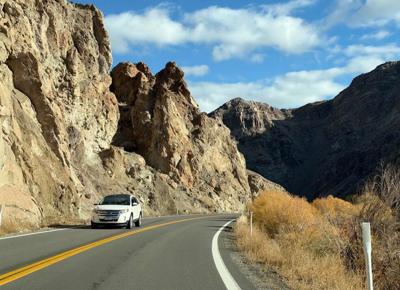

If you'll be driving through rural Nevada this holiday season, be extra careful - new information is showing that crashes on our rural roads are more likely to be deadly.
NDOT says the risk of a crash on rural roads is 62% higher than more urban settings and nearly a quarter of deadly crashes in Nevada happen on rural roads despite having much less traffic.
They're urging drivers to take precautions including sticking to posted speed limits, passing with caution, avoiding distractions and keeping your distance from the car in front of you.
NDOT offers these safety tips:
Before Driving
Allow extra travel time.
Fill your gas tank. Gas stations may be far apart.
Carry water, snacks, and basic emergency supplies.
Make sure your vehicle is road-ready. Check tires, brakes, and fluids.
Never drive impaired. If you will be celebrating, make a plan beforehand for a designated, sober driver.
Check NVRoads.com or dial 511 for highway conditions.
Behind the Wheel
Buckle Up. Seat belts cut crash injury risk in half.
Slow down. Speed increases crash risk. Drive the posted limit or slower for conditions. The faster you go, the less time you will have to react to anything on the road ahead. Follow posted speed limits, and be ready to slow below speed limit for adverse conditions such as weather.
Stay focused. Keep your eyes on the road. Put phones away. Avoid distractions.
Pass with caution. Head-on collisions are one of the most frequent crashes on rural roads. Only pass in marked areas. Make sure the road is clear.
Keep your distance. Stay at least 3–6 seconds behind other vehicles. Increase space in adverse conditions.
Stay in your lane. Keep right and give oncoming vehicles room.
Continually scan the roadway in front of you, including the potential of wildlife, merging vehicles and more. Watch for vehicles entering or passing on the roadway ahead of you.
Look out for wildlife and livestock. Slow down, stay alert and scan the road ahead, especially at dawn and dusk.
Use headlights. Nevada state law requires vehicle headlights to be on from 30 minutes after sunset to 30 minutes before sunrise, when raining or during other limited visibility, and when directed to do so by traffic signage. Daytime running lights can provide enhanced visibility.
Know your location. Milepost signs along state roads are an important source of driver information. Note milepost locations as you pass to more efficiently provide location if service/emergency response is needed on your drive.
Watch for farm equipment and slow vehicles. These are common on rural roads.
Avoid drowsy driving. Take breaks if you feel tired.
About a quarter of fatal crashes happen on rural roads despite there being far less traffic.