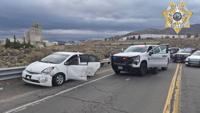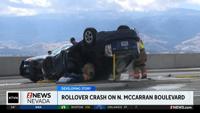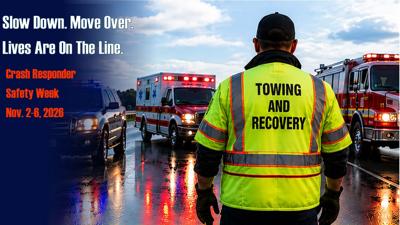
A few seconds of caution behind the wheel could help save the life of someone working along a Nevada roadway. As first responders continue to face dangers from passing traffic, state officials are reminding drivers to slow down and move over when approaching emergency vehicles and other roadside workers.
The reminder comes during Crash Responder Safety Week, which runs Nov. 2-6. Governor Joe Lombardo has proclaimed the week in Nevada to recognize first responders who put themselves at risk while helping people on the state's roads and to highlight the importance of the state's Move Over law.
Under Nevada law, drivers must slow down, proceed with caution, and move to the far lane when possible when approaching emergency response vehicles stopped along the road with flashing amber lights.
The requirement also applies to Nevada Department of Transportation vehicles, Freeway Service Patrol vehicles, tow trucks, utility vehicles, and other vehicles stopped along the roadside. Drivers must also take the same precautions around road work vehicles with flashing amber or non-flashing blue lights.
The danger is significant. Traffic incidents are the leading cause of death for police officers and emergency medical responders nationwide. Thirty-six roadside first responders were struck and killed on U.S. roads last year.
Officials are also reminding drivers involved in minor crashes without injuries to move their vehicles out of travel lanes when it is safe and possible. Leaving vehicles in traffic lanes can increase the risk of additional crashes.
Other safety reminders include wearing seat belts, avoiding impaired, drowsy, or distracted driving, obeying speed limits, and leaving enough space between vehicles to react to changing road conditions.
Drivers can check current Nevada road conditions at nvroads.com, through the Nevada 511 app or by dialing 511 before traveling.
Training helps responders work together
Nevada agencies are also working to improve how emergency crews respond to roadway incidents.
The Nevada Department of Transportation, Nevada State Police, local law enforcement, fire departments, emergency medical responders, public works agencies, and private towing and hazardous materials responders participate in regional traffic incident management coalitions.
The groups work together to improve roadside safety, coordinate responses, and clear traffic incidents more efficiently.
National statistics show that the likelihood of a secondary crash increases nearly 3% for every minute a freeway lane remains blocked.
Since Nevada's first traffic incident management coalition was established in Southern Nevada, coalitions across the state have trained more than 83% of Nevada road incident responders. More than 1,800 first responders have received traffic incident safety training in recent years.
More information about the program is available at NVtim.com.