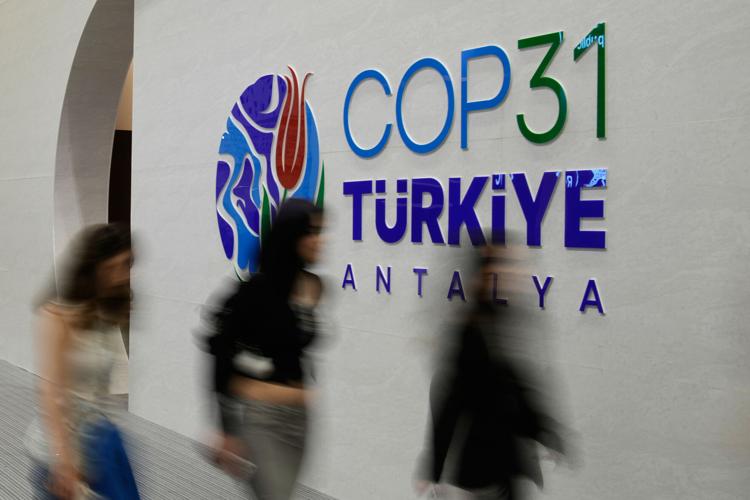
















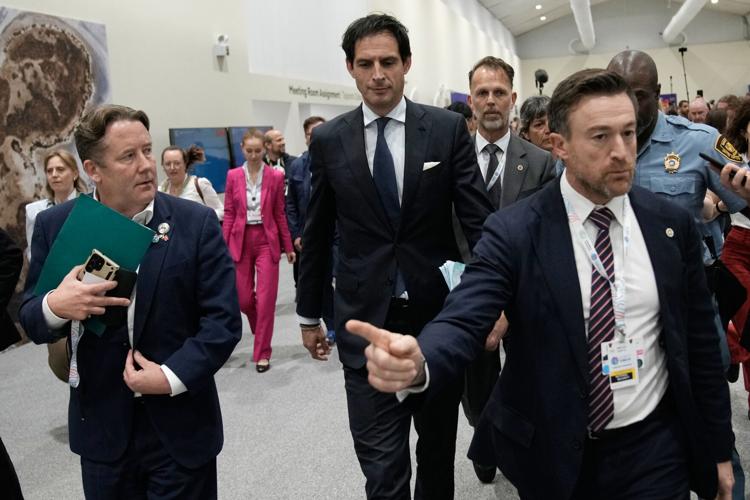
ANTALYA, Turkey (AP) — Negotiators at the United Nations climate conference are being asked to consider a last-minute proposal by Turkish officials, an attempt to reach an agreement and salvage the talks that have stretched into a second day of overtime and been characterized by sharp disagreements over how, and whether, to confront the root cause of global temperature rise.
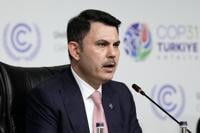
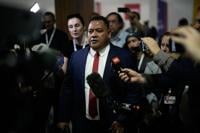
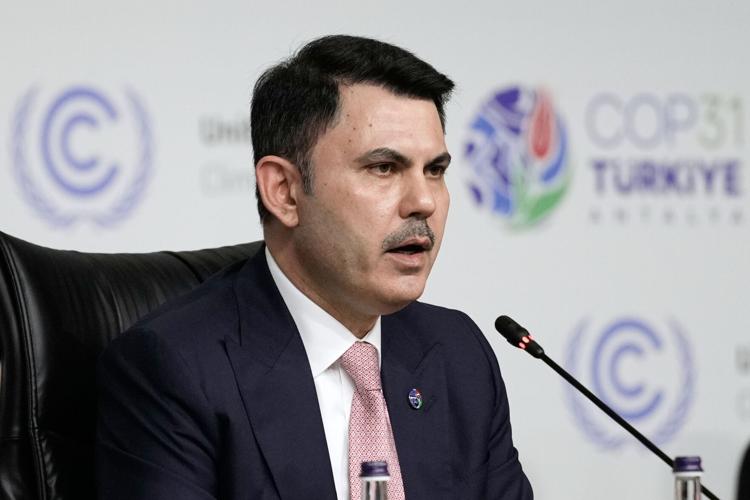
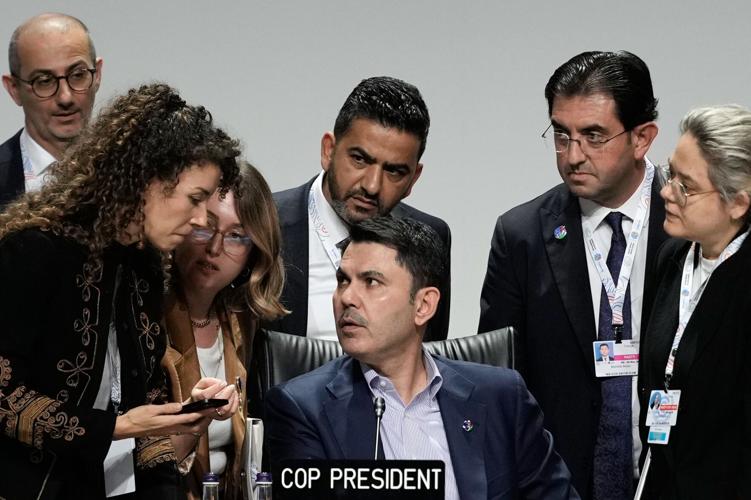
Early Sunday, Turkish environment minister Murat Kurum, president of the two-week talks in Antalya, Turkey, called COP31, said he had “a text which all parties can agree to.” The text was not immediately made public and it was unclear if negotiators had received the wording overnight, which would give nations only a few hours to submit objections and changes.
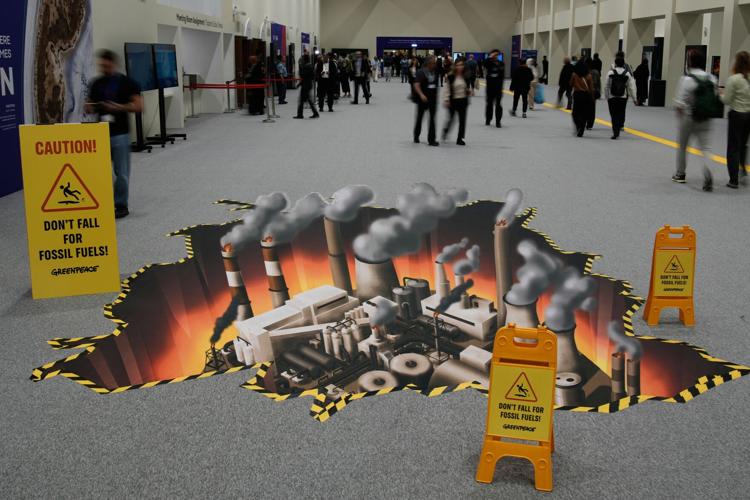
Key issues have bogged down the negotiations. They include the amount of concerted effort by countries to wean themselves from fossil fuels including coal, oil and gas, which are the main drivers of climate change, whether to encourage industrial carbon capture and storage of pollutants and whether ramping up electricity should only be done with renewables such as wind and solar or also involve other energy sources including natural gas and coal.
“Outside of this hall there are people who are living with the effects of climate change,” Kurum told negotiators early Sunday. “The children, the parents are waiting for this.”
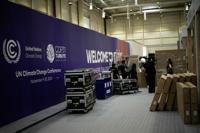
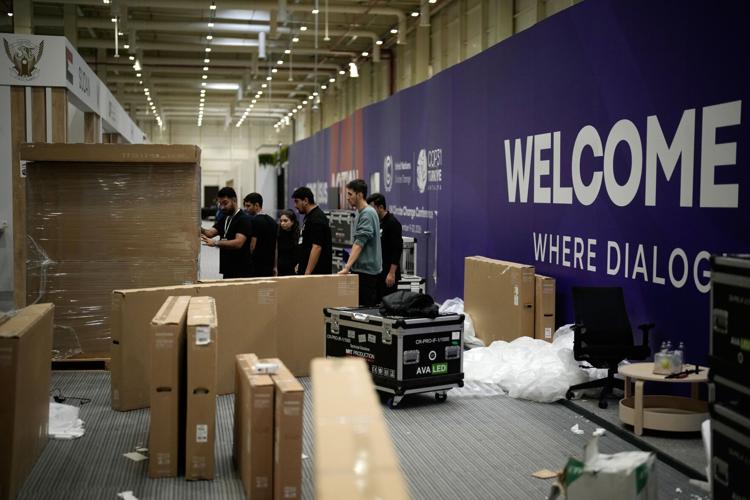
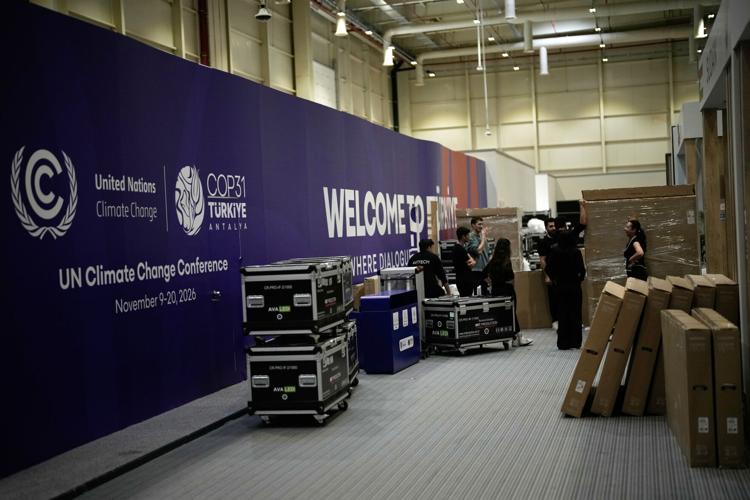
Talks were scheduled to end Friday and work crews boxed up the venue Saturday, although it is common for negotiations to go beyond the scheduled time.
This year's negotiations drew strong condemnation for failing to mention fossil fuels in an earlier draft of the final agreement. The document is meant to address how the world will deal with climate change, which drives heat waves, floods and other disasters.
To avert the most catastrophic effects of warming, experts said the world needs to urgently and drastically cut emissions from the use of coal, oil and gas.
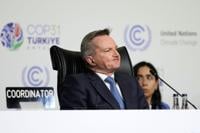
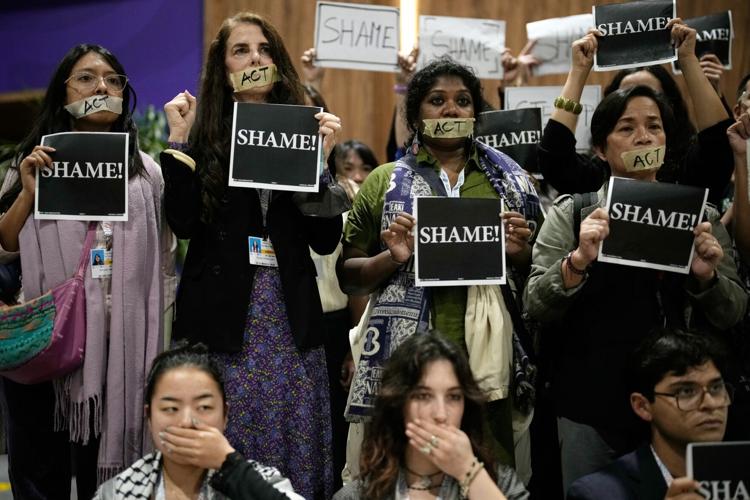
In a letter sent on Saturday to this year's co-hosts, Turkey and Australia, 100 civil society groups warned that they were “on course to preside over one of the most disappointing COPs” the U.N. has ever held. The letter stated there were only hours left “to save this COP from becoming a low point of three decades of climate negotiations.”
In the lead-up to these talks, the U.N. announced that the world will likely blow past the 2015 Paris Agreement goal of limiting warming to 1.5 degrees Celsius (2.7 degrees Fahrenheit) above pre-industrial temperatures.
“No one knows what is happening behind closed doors, or what the outcome of COP31 will be,” said Teresa Anderson, global lead on climate justice at ActionAid International.
Climate talks enter overtime
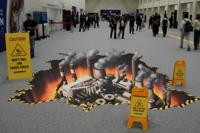
Inside an area of the COP31 venue known as the pavilions, where countries showcased innovations and hosted panels, workers were seen packing up electronics and boxing up belongings on Saturday.
The hallways, previously bustling with tens of thousands of participants, stood largely empty, with only a handful of security guards seen taking photos by deserted pavilions.
“COP31 is in a bleak overtime, with dwindling food and water, and no sign of any progress since the alarmingly underwhelming texts we saw earlier,” said Rachel Cleetus of the Union of Concerned Scientists, who is at the venue in the Mediterranean coastal city of Antalya.
Earlier during the summit, the nonprofit Climate Action Tracker warned that progress on slowing global warming has stalled for the past five years, even as disasters become more deadly, including this year’s heat waves in Europe and flooding in Nepal.
Countries most vulnerable to climate change, including small island nations whose lands are battered by rising seas, also say wealthy nations that caused the climate crisis must contribute more to U.N. funds to help them recover from disasters and adapt to a warmer world.
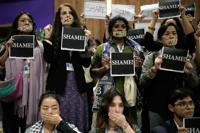
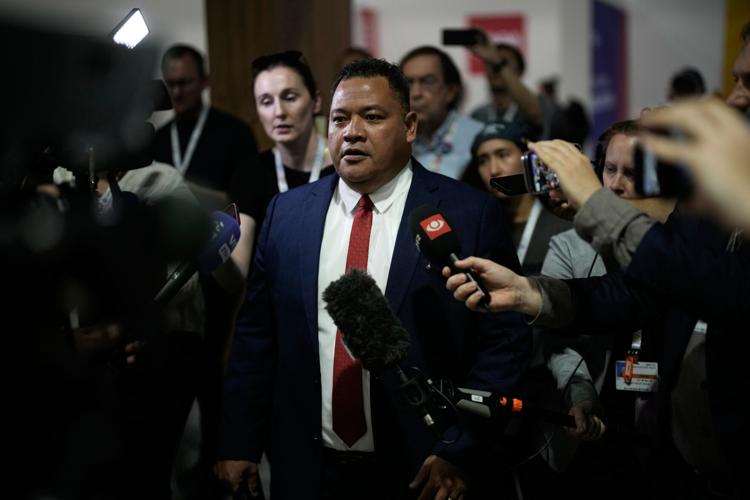
“Every year there seems to be a greater discontent, a mistrust and frustration for civil society, Indigenous people and countries that are more climate vulnerable,” Tuvalu's Minister of Environment Maina Talia said during a Saturday press conference.
“I am still holding the line, trying to be very optimistic until we see the text,” he said.
The United States, a major polluter and the world’s largest economy, did not participate directly in this year's talks.
The next climate summit will take place in Ethiopia’s capital, Addis Ababa, in November 2027.
Criticism of COP31 grows
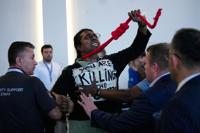
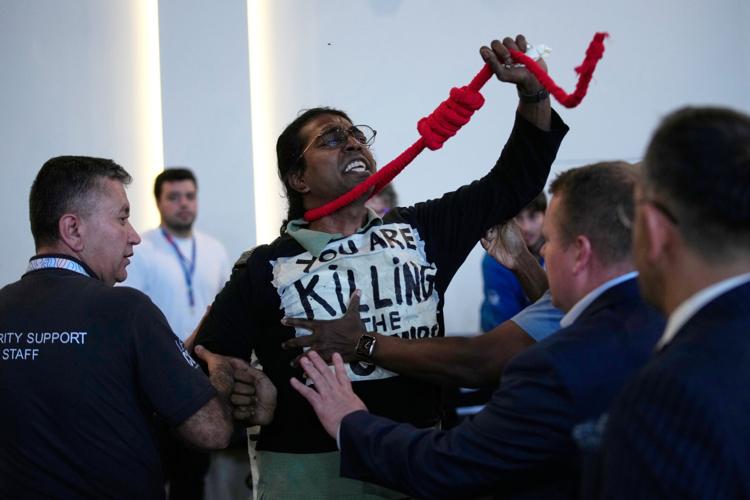
On Friday, a protester wearing a red noose around his neck and a vest emblazoned with the slogan “you are killing the future” interrupted official proceedings by clambering onto a table and shouting: “You take out fossil fuels. You killed 1.5. There is no money. Just kill me now. The Global South cannot wait.”
The Global South isn’t a geographical term, but a reference to developing countries in general. As the protester was escorted out by security, he shouted: “You keep doing nothing at all. Nothing at all. Kill me now. Kill me now.”
The demonstration interrupted Kurum, who said “let’s try to maintain the peace in the room” before continuing with his scheduled remarks.
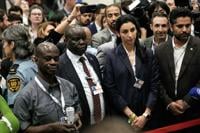
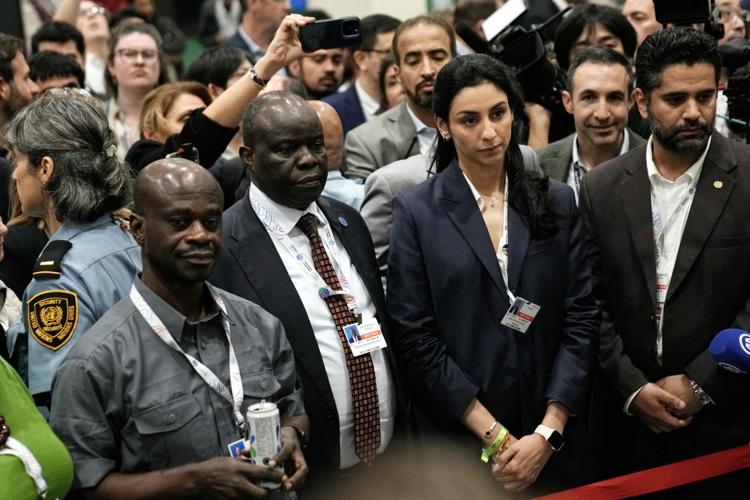
“Yesterday, of course, this place was buzzing and today it’s nearly empty. But all the key negotiators are here, civil society is here, watching the negotiations,” said Harjeet Singh, a strategic adviser to the Fossil Fuel Treaty Initiative, who has attended 18 climate summits.
“We are still stuck with many, many disagreements and nobody knows how long this will go on,” he said.
Borenstein reported from Kensington, Maryland, Delgado from Bangkok, Arasu from Bengaluru, India, and Milko from Islamabad, Pakistan. Associated Press journalist Tammy Webber contributed from Fenton, Michigan.
The Associated Press’ climate and environmental coverage receives financial support from multiple private foundations. The AP is solely responsible for all content. Find the AP’s standards for working with philanthropies, a list of supporters and funded coverage areas at AP.org.