A generation of Black Americans across the South fought in courtrooms and in the streets during the Civil Rights Movement to dismantle barriers to voting. Their goal was to achieve political representation in a region scarred by the legacy of slavery and its aftermath. One of the crown jewels of that struggle was the Voting Rights Act of 1965, and this week it was hollowed out by the Supreme Court. The majority opinion described racism as a problem of the past. Others saw the decision as another example of its resurgence. The ruling could make it harder for minorities to get elected.
From
To

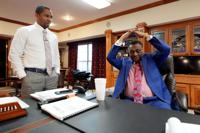
Attorney Edward Blackmon Jr., 78, a civil rights attorney and a former state representative, right, demonstrates how he and other civil rights marchers were taught how to protect themselves if physically set upon by lawmen to his son State Sen. Bradford Blackmon, D-Canton, in Canton, Miss., Friday, May 1, 2026. (AP Photo/Rogelio V. Solis)


Attorney Edward Blackmon Jr., 78, a civil rights attorney and a former state representative, left, and his son, State Sen. Bradford Blackmon, D-Canton, review a 2022 redistricting map in their law office in Canton, Miss., Friday, May 1, 2026. (AP Photo/Rogelio V. Solis)

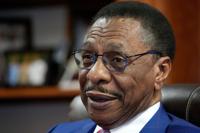
Attorney Edward Blackmon Jr., 78, a civil rights attorney and a former state representative, reacts to Wednesday's U.S. Supreme Court ruling, Friday, May 1, 2026, in Canton, Miss. (AP Photo/Rogelio V. Solis)

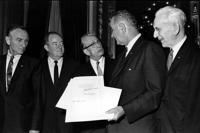
The Voting Rights Act over its six decades became one of the most consequential laws in the nation’s history, preventing discrimination against minorities at the ballot box and helping to elect thousands of Black and Hispanic representatives at all levels of government. On Wednesday, the U.S. Supreme Court knocked out a major pillar of the law that had protected against racial discrimination in voting and representation. It was a decision that came more than a decade after the court undermined another key tenet of the law. Voting and civil rights advocates say the decisions hollow out the law and will lead to a severe erosion of minority representation.

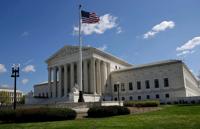
The Supreme Court has weakened a landmark Civil Rights-era law that has increased minority representation in Congress and elsewhere. In a 6-3 ruling, the court's conservative majority on Wednesday struck down a majority Black congressional district in Louisiana. The decision opens the door for more redistricting across the country that could aid Republican efforts to control the House. The effect of the ruling may be felt more strongly in 2028 because most filing deadlines for this year’s congressional races have passed. It's unclear now how much is left of Section 2 of the Voting Rights Act of 1965. That law is the main way to challenge racially discriminatory election practices.

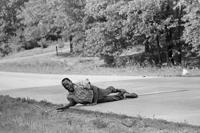
NEW ORLEANS (AP) — Former Associated Press photographer Jack Thornell, whose Pulitzer Prize-winning picture of a shotgun-felled James Meredith…

WASHINGTON (AP) — The Southern Poverty Law Center was indicted Tuesday on federal fraud charges alleging it improperly raised millions of doll…


AP
Amnesty International and dozens of U.S. civil and human rights groups issued a “ World Cup travel advisory” Thursday, warning tournament visi…


The Southern Poverty Law Center's indictment is sparking outrage among civil rights leaders. They have been preparing for increased legal scrutiny from the Trump administration. On Tuesday, a coalition of over 100 activist groups published a letter vowing solidarity with those “unjustly targeted” by the federal government. The DOJ alleges the SPLC violated federal law through its network of paid informants in extremist groups. Civil rights activists view the indictment as a political move that may empower extremist groups. They are now preparing for further legal action against organizations opposing the Trump administration.