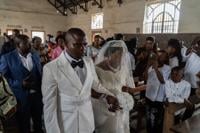
AP
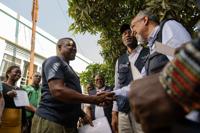
BUNIA, Congo (AP) — There were no kisses, long embraces or a crowded dance floor packed with well-wishers. But there was love.
BUNIA, Congo (AP) — There were no kisses, long embraces or a crowded dance floor packed with well-wishers. But there was love.
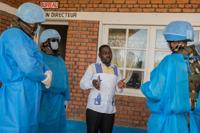
Health workers inside the epicenter of Congo's outbreak say they are working with little pay or rest. The mining town of Mongbwalu attracts a huge number of laborers for large gold mines who live in crowded mining camps. That makes the transmission of the disease easier. The virus spreads through close contact with sick or deceased patients’ bodily fluids. Congolese authorities said Sunday that there are 488 confirmed cases including 86 deaths. The Central African nation on Thursday recorded 71 new cases. Authorities say that's a sign of active community transmission. There have been 19 confirmed cases and two deaths in neighboring Uganda.

BUENOS AIRES, Argentina (AP) — Argentina on Friday said it was expanding its investigation into the origins of the hantavirus outbreak that st…
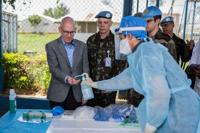
In Congo, the battle against the rare Bundibugyo type of Ebola has been complicated by skepticism, attacks on health workers and misinformation. The Africa Centres for Disease Control and Prevention reported at least 63 deaths from 397 confirmed cases as of Friday. Many locals dismissed the outbreak as a conspiracy. In response, journalist Vérité Johnson launched a radio program in Bunia to combat rumors and educate residents. The World Health Organization and Africa CDC have launched a $518 million response plan. Resistance to health protocols is common in Congo, fueled by mistrust and misinformation, complicating efforts to contain the virus.
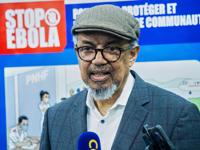
The World Health Organization chief says Congo's Ebola outbreak had a head start but that testing is improving, even as violence plagues the region. Since mid-May, 344 cases and 60 deaths have been confirmed in three eastern provinces. The number of suspected cases has dropped significantly. Uganda has 15 confirmed cases, including one death. The outbreak involves a rare Ebola type with no approved medicine or vaccine. Limited testing and access issues make assessing the outbreak's extent difficult. WHO's Tedros Adhanom Ghebreyesus said that only 45% of contacts have been traced, with insecurity and displacement complicating efforts. Health workers face challenges, including attacks and skepticism about Ebola's existence.
BUNIA, Congo (AP) — At least 282 cases of Ebola disease have been confirmed in Congo’s growing outbreak, the central African nation says, as m…
The head of the World Health Organization has visited Bunia in eastern Congo, where a rare Ebola outbreak is spreading rapidly. WHO Director-General Tedros Adhanom Ghebreyesus emphasized building community trust and safe burials to prevent the virus's spread. He urged countries to reconsider travel bans, saying they discourage transparency. He said that Congo had faced Ebola 16 times before and ended each outbreak. The current outbreak has 906 suspected cases and 223 deaths. Medical aid from the EU and the U.S. has arrived, but Doctors Without Borders warns the response is not keeping pace with the outbreak.
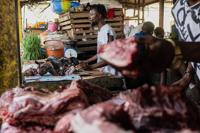
For many in Congo and elsewhere in Central and West Africa, there is no shame in craving wild meat, a key part of the culture. Even a disease as terrifying as Ebola, which is currently ravaging a remote part of eastern Congo, has failed to stem demand for wild meat emerging from the Congo Basin. The Congo Basin is an expansive forested ecosystem rich in wildlife from great apes to serpents — both of which are hunted for their meat. Although Ebola is not spread by food, cases in Africa have been associated with hunting, butchering and processing meat from infected animals.
KINSHASA, Congo (AP) — The head of the World Health Organization has arrived in Congo's capital, Kinshasa, to support efforts against an outbr…
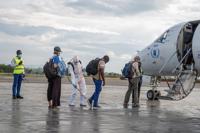
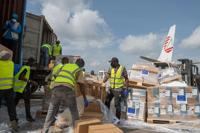
Aid supplies have been rushed in to the center of Congo's Ebola outbreak where medical workers are struggling with equipment shortages, distrustful locals and armed groups. On Thursday, a white cargo plane delivered masks, gloves, boots, and medications donated by the European Union to Bunia, a northeastern town at the heart of the outbreak. The World Health Organization has declared the outbreak a public health emergency. The Congolese government has confirmed over 1,000 suspected cases and at least 220 deaths. The virus has also reached Uganda. The response faces challenges like customs delays, bad roads and weak telecommunications.
Get up-to-the-minute news sent straight to your device.