
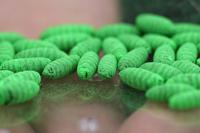
The return of the screwworm parasite to the U.S. has some politicians trying to figure out who to blame. The fly larvae feed on living flesh, posing a threat to cattle and livestock. Democrats blame spending cuts and fewer inspectors at the USDA. Meanwhile, President Donald Trump's Agriculture secretary says the flies left their containment zone in Panama under former President Joe Biden's administration and moved north through lax immigration enforcement. Scientists say the return was inevitable due to a slowed eradication campaign and the warming planet. The USDA plans to spend over $1 billion to combat the pest, including producing sterile flies to control the population.
From
To

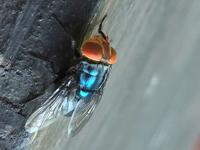
Three more cases of the New World screwworm have been confirmed, including one outside Texas, demonstrating the difficulty of stopping a pest that could potentially devastate the nation’s cattle industry. The U.S. Department of Agriculture announced Monday the new cases were found in a dog from New Mexico and hundreds of miles away in a goat and calf in Texas. The screwworm is actually a fly, which produces a larva that eats live flesh instead of dead material. Females lay their eggs in open wounds any any warm-blooded animal such as cattle, but wildlife, pets and occasionally even humans can be infested. Before it was irradicated in the 1960s, the fly was an annual warm-weather scourge of cattle ranchers.
Texas Gov. Greg Abbott expressed concern Friday that a new factory isn't expected to start breeding sterile New World screwworm flies for more…
The New World screwworm fly is threatening the $113 billion U.S. cattle industry for the first time in more than a half century. An infestation from its flesh-eating larvae has been confirmed in south Texas in a 3-week-old calf in La Pryor, about 100 miles southwest of San Antonio. Federal and state officials had been working to keep the parasite from reaching Texas since its late 2024 appearance in southern Mexico. Before that, it had been contained in Panama for years. The U.S. eradicated the pest by the early 1970s by breeding sterile male flies and dropping swarms from planes to mate with wild females. Millions are being released each week now.
The New World screwworm fly has reached south Texas, the U.S. Department of Agriculture confirmed Wednesday, the first time in decades that th…

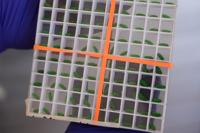
FILE - A test container of dyed fly pupae are displayed at a Domestic New World Screwworm Sterile Fly Production Facility to combat the northward spread of NWS and protect American livestock, in Edinburg, Texas, Feb. 9, 2026. (AP Photo/Eric Gay, File)


Medicine
A new study looks at which treatment may be best for couples who have normal fertility test results. But still struggle to conceive.

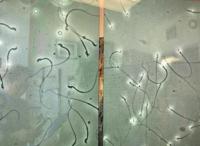
A major medical breakthrough for male infertility was recently discovered by a research team at the University of Nevada. Researchers identified the exact gene responsible for headless sperm.