
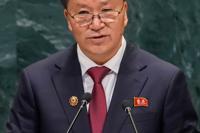
North Korea used its yearly U.N. platform on Monday to warn other world leaders of “a harsh reality rampant with unprecedented mutual distrust…
From
To

AP
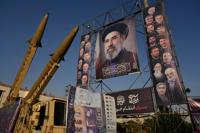
Iranian missiles and banners showing portraits of the Iranian Supreme Leader Ayatollah Mojtaba Khamenei, center, and the late armed forces commanders and nuclear scientists, who were killed in Israel and U.S. strikes, are displayed in a military exhibition commemorating the anniversary of the start of the 1980-88 Iraq-Iran war at Baharestan Square, in Tehran, Monday, Sept. 28, 2026. (AP Photo/Vahid Salemi)


Tom Kean Jr., the New Jersey Republican congressman whose four-month absence from the House this year went unexplained until he disclosed that…

AP Featured Top Story
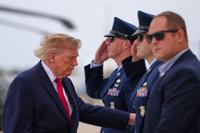
U.S. President Donald Trump has rejected Iran’s proposal to reopen the Strait of Hormuz. Trump spoke to reporters Saturday outside the White House before leaving for a college football game. This week, Iran offered to reopen the strait and resume talks on its nuclear program in seven days if the U.S. lifts its blockade of Iranian ports, waives sanctions on Iranian oil sales and observes a ceasefire that would include Lebanon. Iranian media says the country’s president has left New York after a U.N. gathering. During that event, Iran held hours of indirect talks with the U.S.

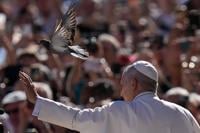
Pope Leo XIV has warned that a “paradise of machines” could undermine humanity. He raises concerns about artificial intelligence, nuclear arms, and human rights during his visit to France. Speaking to President Emmanuel Macron and others, Leo reaffirms the Vatican's opposition to nuclear weapons and emphasizes peace through dialogue. Thousands welcomed him, highlighting interest in his visit, the first by a pope to France in 18 years. Macron sees Leo's visit as a capstone to his presidency. Leo called for reflection on life’s dignity, urging AI developers to prioritize the common good. Later, he presided over prayers at Notre Dame cathedral.


France is working on a draft United Nations Security Council resolution backing freedom of navigation in the Strait of Hormuz, a U.N. diplomat…

AP
Iran has offered to reopen the Strait of Hormuz and resume talks on its nuclear program in seven days if the United States lifts its naval blockade, waives sanctions on Iranian oil sales and observes a ceasefire that would include Lebanon. Iran’s foreign minister detailed the proposal to reporters outside the U.N. Security Council on Friday. The deal mirrors the so-called Memorandum of Understanding reached in June, but with an accelerated timetable and would also set a start date for the resumption of nuclear talks with the United States. The earlier agreement quickly collapsed as Iran resumed attacks on shipping in the strait.

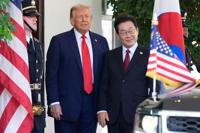
SEOUL, South Korea (AP) — With North Korea refusing dialogue and ramping up its provocative missile tests, South Korea's liberal President Lee…

AP
The Trump administration has approved visas for top Iranian officials to attend next week’s U.N. General Assembly high-level session in New York despite the two countries being at war. The State Department said Thursday that it had approved visas for Iran’s “core delegation,” along with essential staffers to allow them to participate in the U.N. meetings. The core delegation includes President Masoud Pezeshkian and Foreign Minister Abbas Araghchi. The move is unusual due to the more than six-month-long conflict between Iran and the United States and no sign that agreements to reopen the Strait of Hormuz or return to talks on Iran’s nuclear program are close.

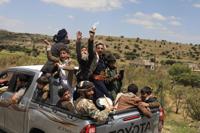
Yemen's Houthi rebels have seized the strategic islands of Greater and Lesser Hanish in the southern Red Sea. This move strengthens their control over a key maritime shipping route. Houthi officials announced the takeover Monday amid Saudi-backed government forces' attempts to reclaim territory. Repairs to a crucial Saudi oil pipeline that was struck in an attack last week could last three to five weeks. Hundreds of people have died in Yemen and thousands more have fled because of recent fighting between Houthi rebels and government forces. An Israeli rights group says Israel is carrying out a systematic and accelerated project aimed at “dismantling the foundations of Palestinian existence” in the occupied West Bank.