
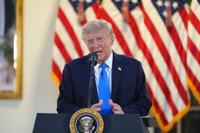
According to a person familiar with the matter who spoke on condition of anonymity, federal prosecutors have charged a U.S. Immigration and Customs Enforcement officer with lying to investigators about the events leading up to the nonfatal shooting of a Venezuelan man during the Minneapolis immigration crackdown earlier this year. Authorities say the officer, Christian Castro, shot Julio Cesar Sosa-Celis in the leg in January. Also, President Donald Trump has urged Republican lawmakers facing tough reelection campaigns to run on his record in the White House despite his sagging popularity, and he pledged to campaign in all of the roughly three dozen contests that are likely to determine control of Congress.
From
To

The Latest: Kennedy Center board votes to close for renovations and add Trump’s name to the building
The Kennedy Center will move forward with a two-year closure of the performing arts venue to allow for substantial renovations. That's according to two people familiar with the matter who were not authorized to publicly discuss the board’s action before an official announcement and spoke on condition of anonymity. Ahead of the Thursday meeting, the Kennedy Center’s management said it would present the board with three approaches for consideration. Also, White House press secretary Karoline Leavitt will leave the Trump administration at the end of the month to spend more time with her young family.


President Donald Trump says White House press secretary Karoline Leavitt will leave the administration at the end of the month to spend more time with her family. The 28-year-old Leavitt is the youngest person to hold the role. She served Trump as a press aide during his first term in the White House. She's been one of the most visible advocates of Trump’s “Make America Great Again” movement. Trump did not outline any plans for who might replace her in the high-profile role.