FILE - This image provided by NASA and captured by the Artemis II crew from lunar orbit, April 6, 2026, shows the Moon eclipsing the Sun. (NASA via AP, File)
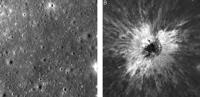
A SpaceX rocket is on a collision course with the moon after launching a pair of lunar landers last year. Space tracking experts say the upper stage will unintentionally slam into the moon on Wednesday. The high-speed impact will carve out a crater and send up a plume of dust and rubble that scientists and skygazers are eager to observe. The eastern portions of the U.S. and Canada, and much of South America, should have the best views. SpaceX's abandoned rocket stage hoisted a pair of private lunar landers in January 2025 and has been drifting ever since.
LONDON (AP) — Scientists have reacted with alarm to news that the British government will cut funding to the world-famous radio telescope at t…
MOSCOW (AP) — A U.S.-Russian space crew landed safely in the steppes of Kazakhstan on Sunday after an eight-month stint on the International S…
CAPE CANAVERAL, Fla. (AP) — America’s most daring, extraordinary feat — landing astronauts on the moon — remains the pinnacle of achievement b…
SpaceX’s mega Starship rocket came within a second or so from blasting off on a test flight Thursday, but some of the engines failed to ignite…
Astronomers have discovered a faint new world orbiting a young star after more than a decade of cosmic hide-and-seek. In an unusual twist, two teams working independently discovered the planet a few days apart late last year using different telescopes. Both studies appear Wednesday in the Astrophysical Journal Letters. It's the third planet found around the star Beta Pictoris, which is 63 light-years away. This one is a cold gas giant like its companions, but less massive and much fainter. It was hidden in archival data, overshadowed by its partners for more than a decade.
A U.S.-Russian space crew has arrived at the International Space Station for an eight-month mission. NASA astronaut Anil Menon and Russian crewmates Pyotr Dubrov and Anna Kikina lifted off Tuesday from the Russia-leased Baikonur cosmodrome in Kazakhstan and docked at the station three hours later. NASA Administrator Jared Isaacman attended the launch, marking the first visit to Baikonur by a NASA chief in eight years. This highlights ongoing cooperation between Moscow and Washington in space, despite tensions over Russia’s military actions in Ukraine.
A Soyuz rocket launches to the International Space Station carrying Expedition 75 crewmembers, NASA astronaut Anil Menon, Roscosmos cosmonauts Pyotr Dubrov and Anna Kikina, at the Baikonur Cosmodrome in Kazakhstan on Tuesday, July 14, 2026. (Bill Ingalls/NASA via AP)
The Soyuz rocket launches to the International Space Station with Expedition 75 crew members: NASA astronaut Anil Menon, Roscosmos cosmonauts Pyotr Dubrov, and Anna Kikina onboard, Tuesday, July 14, 2026 at the Baikonur Cosmodrome in Kazakhstan. (Bill Ingalls/NASA via AP)