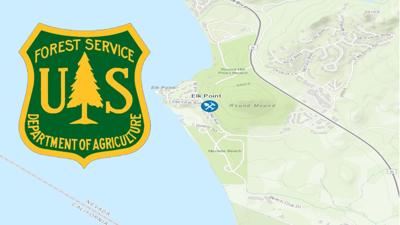
The USDA Forest Service Lake Tahoe Basin Management Unit has begun hazardous fuels reduction mastication treatments off Elks Point Road near Nevada Beach starting the week of May 27 and may continue operations through June 6.
Concentrations of fallen dead vegetation (fuels) and dense bushes that can fuel wildfires, like manzanita, whitethorn, and bitterbrush, will be the focus of these operations. Mastication may also occur in certain tiny trees that might serve as ladder fuels.
Mastication, or forest mulching, is a mechanical process that uses heavy equipment to chop, grind, or shred ground vegetation into smaller pieces. These pieces are then spread across the area to decompose naturally.
Access to certain areas may be temporarily restricted while work is underway.
The public is advised to remain aware of mastication activity and to stay at a safe distance from operating equipment.
Fuels reduction treatments like mastication are tools used by the Forest Service and other land managers to help protect communities by removing excess vegetation that can fuel wildfires.
Tahoe Basin forests are currently overstocked and highly susceptible to insects, disease, and wildfire.
Hazardous fuels reduction treatments lower wildfire risk near communities and neighborhoods by removing ladder fuels and creating space between surface and crown fuels, helping to keep fires on the ground.
These projects support defensible space and home hardening work on private property and also enhance forest health, wildlife habitat, and watershed and forest resilience.
Short-term effects of mastication may include noticeable changes to forest appearance, as freshly chipped or masticated vegetation can be visually prominent.
However, treated areas typically recover quickly, with new vegetation growth appearing within a few years.