
Both Nevada gubernatorial candidates, incumbent Joe Lombardo and challenger Attorney General Aaron Ford, have traded shots back and forth for a while now.
Attack ads have aired on KTVN 2 News Nevada numerous times, so we wanted to take a reality check to see how factual they are.
The Lombardo-supporting political action committee, Better Nevada, is running an ad,“Fifteen,” claiming that’s how many times Ford has tried to increase taxes.
The ad points to specific allegations as well.
Claim one: Tax increases totaling billions of dollars
“In the legislature, Ford supported 15 tax increases worth more than three billion dollars,” the narrator said in the ad.
Verdict: False
That’s just a blanket statement, but we have to examine all 15 allegations of tax increases and then look into the money.
Better Nevada PAC provided the 15 it was pointing to.

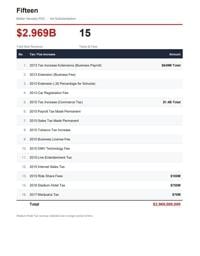
The first three: False
They are not increases; they are extensions of prior tax increases from before Ford was in the Legislature.
Number four: False
The bill diverts revenue from the State Highway Fund to the State General Fund. It’s also an extension.
Five through nine: Misleading
Senate Bill 483 from the 2015 Nevada Legislative Session was led by Republican Governor Brian Sandoval’s massive tax bill that received bipartisan support.
Part of the taxes were part of Sandoval’s plan to put millions into education initiatives.
Ford did vote ‘yes’ on the bill, along with 17 other State Senators and 30 Assemblymembers.
Between the two houses, there were 13 ‘no’ votes.
Number 10: True
The bill created the $1 DMV technology fee for every transaction at the DMV to be used to keep up with technological infrastructure.
Number 11: False
The Live Entertainment Tax increased nongaming collections while reducing gaming collections, which overall decreased revenues.


12 through 15: Mostly true
These did increase, or look to increase, taxes for specific users, but not a blanket tax for the general public.
Number 12, the Internet Sales Tax, did not pass, but instead a similar tax did make it through the session.
13, centered around taxing rideshare companies, and 14, created the Stadium Hotel Tax.
15, the Marijuana tax was only for people who purchased weed, both recreationally and medically. The tax revenue went into the Rainy Day Fund and that State Distributive School Account.
In terms of the “more than $3 billion” claim: Misleading
The Legislative Council Bureau crunched the numbers.
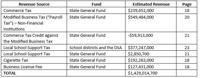
The first three extensions generated about $633 million.

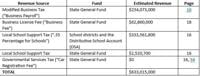
The massive 2015 tax bill brought in about $1.4 billion.

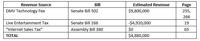
10 and 11 brought in about $4.9 million.

Both portions of the Marijuana Tax brought in about $70.5 million.
The Stadium Hotel Tax was passed in the 2016 Nevada Special Session, raising hotel room taxes in Clark County.
Senate Bill 1 allowed Clark County to grant up to $750 million in bonds towards the NFL stadium.
The tax was created to pay off those bonds in a 30-year period.
The estimated total is about $2.9 billion when that room tax is fully collected to recoup the bonds.
Claim two: Car registration
The narrator then continues to say, “votes to tax your car registration.”
Verdict: Misleading
AB491 moved tax revenue from the State Highway Fund to the State General Fund.
The revenue started in 2009 when Ford was not in the Senate.
The amount of Governmental Services Tax due annually was increased for used car owners by reducing the amount of depreciation.
In 2015, Ford did vote in favor of the bill that would charge people the $1 technology fee, but it was for every transaction at the DMV.
Claim three: Paycheck
The narrator then lists “your paycheck” as another alleged tax Ford approved.
Verdict: False
This is directly tied to Senate Bill 475 from the 2013 session and to the massive $1.4 billion tax bill from the 2015 session.
This is the “Payroll Tax” referenced in the picture that Better Nevada PAC is referencing. It includes a portion that taxes the employer, but specifically says they can’t deduct wages from employees.
The Modified Business Tax threshold was lowered to $50,000 from $85,000 for taxable employee wages.
The payroll tax was increased to 1.45 percent, but it only falls on the employer.
Claim four: Rideshare services
“Even your Uber ride,” the narrator said.
Verdict: Misleading
It centers around AB175, which Ford originally voted ‘no’ on.
The bill created a three percent excise tax on rideshare companies, taxicabs, and other motor carriers of passengers.
The tax was not imposed on riders.
These companies could have raised their prices to help pay off the tax, but it’s not confirmed.
