

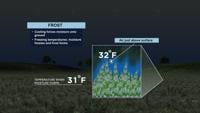
No snow in the Truckee Meadows yet, but we have had some frosty starts.
Not every freezing temperature leads to frost, though, and even though your thermometer might say it’s above freezing, the ground could be cold enough for frost to form.
For frost to form, you need moisture and cold air.
There are two different kinds of frost. There is frozen dew and frost through deposition. The latter is when gas molecules go directly into a solid, skipping the liquid phase.

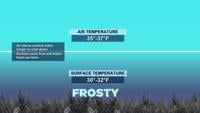
You can also get frost on your roof or windshield and not on the ground.
What happens is temperatures start out around 37 degrees, for example. As skies clear, the temperature drops and eventually reaches the dew point at 35 degrees.
Moisture then forms as the windshield continues to cool, eventually falling below freezing and turning water droplets to ice.
Not only does it need to be freezing out for frost to form, but there also needs to be enough moisture.
A low dew point makes it challenging for frost to form, because the temperature has to reach the dew point for moisture to develop. This happens in Reno a lot.

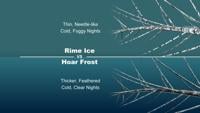
Frozen dew is harder to see, while depositional frost can look like snow.
The colder the temperature, the harder it is to scrape your windshield.
The ice can be quite thick when the temperature reaches the mid-20s. Warmer ice crystals have weaker bonds than colder crystals.
Frost is less likely on Thursday due to warmer temperatures, but it will be cold Sunday and Monday morning as skies clear.