A group of local men and women met for a crash course on how to plan for the new tax plan. The law will slash taxes for businesses and corporations, which some say will help the economy.
"Reducing income tax rates by most businesses by about 50 percent is going to put a lot more cash in these businesses and a lot more cash into the economy," Mike Bosma, Principal of CliftonLarsonAllen CPAs said.
Darren McBride was at Thursday's presentation, learning how to maximize savings as the country transitions into the new tax era. The owner of Sierra Computer Group says his business will see immediate gains.
"The overall, over the next couple of years, lower tax rate puts more money back in the business, which let's us buy more inventory and hire more people," McBride said. "It's going to save me several thousand dollars doing those changes."
McBride says he is already planning to add to his staff now that tax reform has passed.
"We've literally already placed an ad based on trying to ramp up for 2018 for one more person," McBride said.
The purpose of Thursday's presentation was to give advise to small business owners. One of them is to make the most of this year's exemptions before they expire on January 1.
"Pay as many of those deductions and make your charitable contributions by the end of the year," Amy Allen, Partner with J.A. Solari & Partners said.
Deductions for property tax, state income tax, and sales tax will be capped at $10,000 but that will not take effect until the new year. People who would be able to deduct more than that are encouraged to make their final tax payment by the end of December.
"The third-quarter installment for real estate tax is due on January first," Bosma said. "Everybody, pay that now."
Nevada does not have a state income tax, but the write-offs for property and sales tax, as well as mortgage interest is affected. One example is if someone owes $16,000 in property tax, that is deductible in 2017, but it is capped in 2018.
"It is the 2017 tax bill," Allen said. "Just get that paid before the end of the year, so that you preserve that deduction while it's still fully deductible."
McBride says the idea of paying those taxes early is some of the best advise he got at the meeting.
"A lot of people would by default, wait to pay those taxes but they told us if we pay them in 2017, it's actually tax advantage to do that," McBride said.
Along with the $10,000 limit on property, income and sales tax, individuals will see other changes. Home equity loan interest and miscellaneous itemized deductions are suspended. Mortgage interest deduction is limited to $750,000 of underlying acquisition indebtedness, but existing debt up to $1 million is grandfathered. There is no deduction for college athletic seating rights. The overall 3 percent phase-out for high income taxpayers is suspended.
"For the most part, there's some wins for individuals, there's some losses for individuals but the big winners out of this new tax law is business," Allen said.
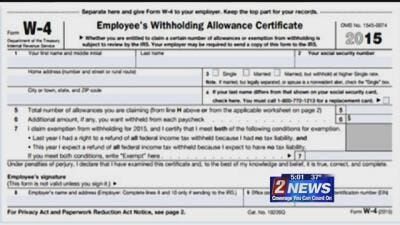
Taxes are withheld from many employees' paychecks, so they probably will not have to make any changes with that, but Allen encourages people to fill out a new W-4 tax form in January, to adjust to the new policy.
"If you just default to what you've always done, the tables will reset, and it might not work for you when you get your W2 and go to file your 2018 tax return," Allen said.
Allen says it is also a good idea to make your charitable contributions before January 1 to take advantage of the deductions under the current tax plan.
"There's the human interest incentive reason to do it but you might want to double up this year just to preserve a tax deduction," Allen said.
Experts say it is also a good idea to defer revenue to 2018 to take advantage of lower rates. Allen says if you have a bonus coming from your employer, it would be best if you receive it after January 1.