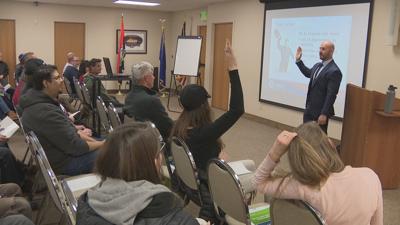
Dozens gathered in Stateline, Nevada for a class taught by South Lake Tahoe Police Detective Scott Crivelli on how to be prepared for an active shooter situation.
"An active shooter [situation] is all of our responsibility to be trained on these days," Marketing Director for Belfor Property Restoration Michelle Turner says. "It's very scary and very real in this day and age... If you're a large business or a small business it can happen there. Mental illness is everywhere."
Crivelli has been giving training classes for a couple years now, and says preparation is vital to responding quickly and appropriately.
"If and when it ever were to happen, your mind has something to think back on in the time of stress and you won't freeze," Crivelli says. "Where you can do something to ensure your safety."
When you're caught in an active shooter situation, Crivelli says you can either run, hide or fight. He says if you're at a place where there's a potential for an active shooter, you should know your two quickest exits.
"If you're not able to [exit] and you're forced to hide," Crivelli says. "Just make sure that hiding place is out of view of the assailant."
He also says if possible, look for cover that is thick or sturdy enough to block bullets and other projectiles for added protection.
Crivelli says there are people who try and stop the attacker in active shooter situations, and he says they recommend those people go "all out." If you attempt to stop an active shooter, there's a higher chance you become a target. That's why it's important to know the risk, and know intervening means you may need to take a life.
"If it becomes that day that you think it's your day to do something and you want to fight back the assailant, just know you're putting yourself at serious amount of risk or harm or possible death," Crivelli says.
Preparing people to react to an active shooter is why Crivelli holds these classes, but he says an important part of the training is knowing what law enforcement will do, and what they want you to do when they arrive.
"Even though you may be a good person I don't know that yet," Crivelli says. "So we ask that you are 100 percent compliant, hands in the air, spread your fingers. You may get handcuffed. You may get placed on the ground."
