It does not take much snow or ice to make the roads slick especially on a bridge. Which is why NDOT has an automatic anti icing system for some of it's bridges along 580 from Reno to Carson City. In the summer it sprays water to keep it clean but during the winter it sprays potassium acetate. The great thing about it is that is it only puts the solution down when the time is right.
"This system is very effective in precisely applying that chemical and can actually reduce the use of chemicals by three times," said Meg Ragonese of NDOT.
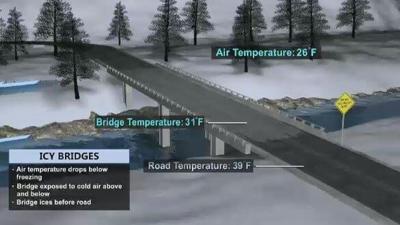
It looks more at the current conditions than the forecast so the treatment is only applied when necessary. Since bridges are exposed to the cold on multiple sides they tend to cool off quicker than regular roadways. The ground can have a very different temperature than the air and different parts of the road can have a different temperature as well, which means while one part of the road might be fine, the bridge might not be.
The Galena Creek bridge is one of four bridges with the automatic deicing system, you can't see it on quiet days because it's located underground but when conditions are right it sprays for three seconds and then traffic spreads the deicer around. Each of the four bridges has more than one of these systems, the exact number depends on the size of the bridge, and just because deicer is applied does not mean you can drive normally.
"It's still important and imperative that drivers make sure that they slow down and that they drive appropriately for the current roadway conditions," said Ragonese.
The deicing systems are just add ons to their fifty five or so other weather systems that monitors the temperature, wind, and precipitation.