


With all of the heavy snow this week, hiking or skiing in the backcountry is not advised with a high risk of avalanche danger.
The Sierra Avalanche Center has considerable risk for avalanches in the mountains the next couple of days.
Always ski with a buddy and carry avalanche rescue location gear.
Portions of Mt. Rose Highway remain closed to traffic.
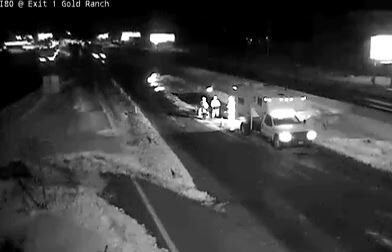
As of 10 p.m. Wednesday, east and westbound lanes are back open to passenger car traffic on I-80.
WB Interstate 80 is back OPEN to passenger vehicles tonight with chain controls. Big rigs are still being held at @nevadadot state line and also EB at Applegate. We're working hard to release those trucks! @PlacerCA @NevadaCountyCA @CHP_Truckee @CHPAuburn
— Caltrans District 3 (@CaltransDist3) March 2, 2023
UPDATE: EB Interstate 80 is back OPEN to passenger vehicles. Big rigs still restricted. Chain controls from Kingvale to Truckee. WB 80 remains closed at @nevadadot state line. Thanks to motorists for patience and big thanks to our staff! @CHP_Truckee @CHPGoldRun @CHPAuburn pic.twitter.com/cTWavZRNnm
— Caltrans District 3 (@CaltransDist3) March 2, 2023
There is some light at the end of the tunnel today! We're making progress cleaning up Interstate 80 now that the snow has finally stopped falling. The highway remains closed but should reopen sometime this afternoon. Stay tuned. @CHP_Truckee @CHPAuburn pic.twitter.com/9NOC00gBcC
— Caltrans District 3 (@CaltransDist3) March 1, 2023
Caltrans will keep all of its current closures in place overnight in eastern Kern, Mono, and Inyo counties due to low visibility on the highways from high winds. Those closures include:
- · State Route 58 from Towerline Rd. to Exit 172 near Mojave
- · U.S. 395 from Mammoth Lakes to Bridgeport
- · U.S. 395 from Sonora Junction to Walker
- · State Route 167 from U.S. 395 to the Nevada State Line
- · State Route 168E from Death Valley Road to State Route 26
- · State Route 266
We will have a break in the storms on Thursday and Friday with more Sierra snow on the way Saturday afternoon through Sunday with another 1-2 feet of snow possible in the mountains.
Check out https://www.sierraavalanchecenter.org/ for the latest conditions in the backcountry.
The University of California, Berkeley Central Sierra Snow Laboratory near Donner Pass reported that nearly 41.7 feet (12.7 meters) has fallen since October, more than in any snow year since 1970 and second only to the record of 66.7 feet (20.3 meters) in 1952.
Mammoth Lakes, traditionally one of the snowiest places in California, had nearly 4 feet (1.2 meters) of snow over the past three days. Snow drifts were taller than houses, and crews worked around the clock to keep roads and sidewalks clear.
Wednesday, March 1, 2023 7:00AM
— Sierra Avy Center (@sierraavalanche) March 1, 2023
Today the avalanche danger is CONSIDERABLEhttps://t.co/J9iDhuCJ2H
The weather service predicted that a powerful weather system would affect most of the lower 48 states into Thursday, with heavy snow across the Southwest and some portions of the high Plains, but also record high temperatures in the Gulf Coast into the Ohio Valley and a threat of tornadoes from the southern Plains to the mid-South.
“The system is going to be moving generally east-northeast and fairly fast, so it’s going to cross the country in a few days,” said meteorologist David Roth. Six to 12 inches (15 to 30 centimeters) of snow could eventually fall in upstate New York, Vermont and New Hampshire, Roth said.
Areas in the dividing line between hot and cold, such as the lower Mississippi Valley and Tennessee Valley, could see heavy rain, thunderstorms and some flash flooding. The high could top 100 degrees (38 Celsius) across far south Texas, and windy, dry conditions would make for a critical risk of wildfire conditions across in parts of the Southwest for the next few days, according to the weather service.
Recent storms around the country have delayed travel, shuttered schools and overwhelmed crews trying to dig out of the snow and repair downed power lines. More than 62,000 customers were without power Wednesday morning in Michigan, which is still recovering from ice storms, and nearly 110,000 in California, according to the website poweroutage.us.
In Arizona, snow began falling Wednesday morning from a storm that was expected to dump 18 inches to 2 feet of snow in northern areas of the state by Thursday morning, the weather service said.
Many schools in the Flagstaff area closed ahead of the system.
The weather service said Flagstaff received nearly 33 inches of snow in February, just shy of double the city's annual average of 18.6 inches for the month, and has already received 118 inches of snow this year, topping the annual average of 90.1 inches, with 10 months of the year remaining.
Weather also continued to play a role in the cancellation of nearly 100 flights and delays of nearly 1,000 more around the country.
In California's Sierra Nevada, the weather service warned that travel could be difficult to impossible because blowing snow could cause whiteouts on roads, while wind chill factors as low as minus 30 (minus 34 Celsius) could quickly cause frostbite.
The Lake Tahoe area that straddles the California and Nevada borders in the Sierra Nevada was expected to have blizzard conditions with winds gusting to 100 mph along the ridgetops, while the lake itself could see waves large enough to capsize small boats, the weather service warned.
“If you risk travel you could become stranded in vehicles for hours,” the weather service warned.
Yosemite National Park, closed since Saturday because of heavy, blinding snow, postponed its planned Thursday reopening indefinitely.
The Sierra snowpack provides about a third of the state’s water supply and the water content of the snowpack Tuesday — in a state grappling with years of drought — was 186% of normal to date. It was 162% of the average on April 1, when it is historically at its peak, according to the state Department of Water Resources’ online data.
(The Associated Press contributed to this report.)