

Have you ever wondered what actually happens when the snow starts piling up, who decides when the highways or which streets get cleared first, and why your neighborhood might still be covered hours after the storm ends?
After several days of heavy snowfall across the region, there have been multiple crashes, a tragic avalanche, and hazardous driving conditions throughout Northern Nevada and surrounding areas. As crews work around the clock, each agency has a different role, and that can shape what gets cleared first and what does not get plowed at all.
Here is how it breaks down across the region.
City of Reno
The city maintains about 2,361 lane miles of roadway divided into 20 snow and ice removal routes.
Reno gives priority to arterial and collector streets along with school zones. Secondary streets are plowed after Priority streets as resources become available.
Priority 1 and 2 streets include major streets, collector streets, and areas around schools and emergency service sites such as police stations, fire stations, and hospitals. Examples of Priority 1 streets include portions of Virginia Street, Longley Lane, and Stead Boulevard. Priority 2 examples include Center Street, Evans Avenue, and Hunter Lake Drive.
As of the 2024 to 25 winter season, Reno uses a salt brine method to treat streets. Before a snow or ice event, crews apply salt brine to Priority 1 streets, bridges, and inclines. The brine is a solution of tap water and sodium chloride mixed at 23.3 percent salt, with a freezing point of minus 6 degrees. The treatment is designed to prevent snow from bonding to the street surface, making it easier and safer to plow.
Most plowing occurs in higher elevation routes and outlying areas, where snowfall tends to accumulate more quickly.
City of Sparks
City officials say crews focus first on Priority 1 and Priority 2 streets, main arterials, and connector roads that feed into those arterials. They also plow high-impact streets around schools, hospitals, and nursing facilities.
Neighborhoods are not plowed.
Officials say that is because crews plow snow, they do not haul it away. If they plowed neighborhoods, there is a likelihood that berms would be left in front of driveways, preventing people from getting out. The goal, they say, is to avoid blocking driveway access while keeping major routes open.
Nevada Department of Transportation
NDOT oversees the main interstates and highways, not city streets or county roads. Local cities and counties clear ice and snow from city streets and county roads, and NDOT clears ice and snow from interstates and highways.
NDOT and local agencies work closely together during winter storms, sharing resources when available and needed. Agencies may allow access to roadway salt and salt stockpiles if another agency is running low during a weather event.
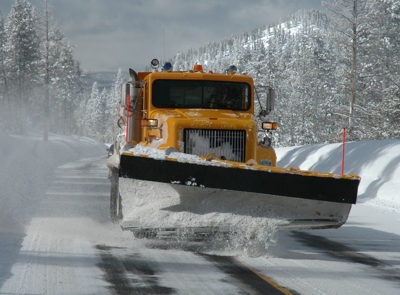
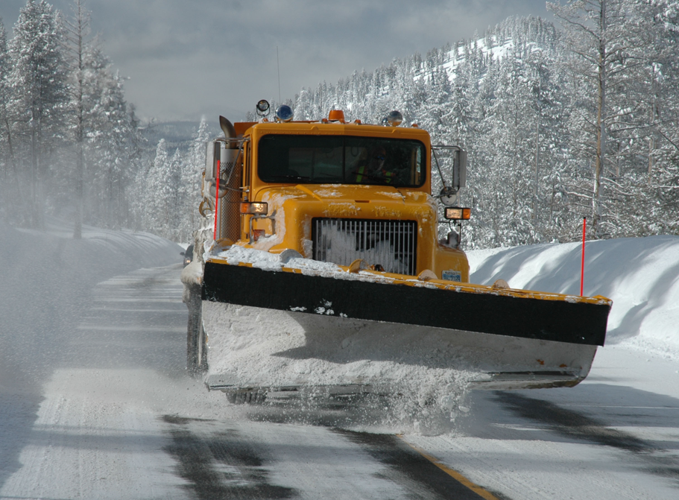
NDOT plows are typically larger and designed for higher speeds and wider highways. Equipment used on residential roads is often smaller to better navigate neighborhood routes.
NDOT crews have been working staggered 12-hour shifts to provide 24-hour coverage on interstates and highways.
Storey County
In an online post titled “Snow Removal Update,” officials said Public Works and NDOT crews will begin clearing C Street at 4:30 a.m. Thursday, Feb. 19.
People are asked to avoid parking on C Street to help with the removal process.
The post states, “Merchants, we appreciate your help by pushing snow out either before or while crews are working—not after. Snow left in the street after removal creates bigger, longer-lasting issues.”
Tracking conditions and plows
For statewide road conditions, people can visit NV Roads, use the Nevada 511 app, or dial 511 within Nevada or 1-877-NV-ROADS from outside the state.
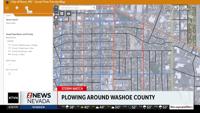
Washoe County also offers an online Quick Map, allowing people to search their area and view routes not maintained by the City of Reno by searching "plow".
Winter driving reminders
Transportation officials urge people to travel only when necessary during winter weather, allow extra time, and plan routes carefully. Drivers should remove snow and ice from their car, including windows, mirrors, lights, and license plates, buckle up, turn on headlights, and reduce speed.
Officials also remind drivers not to rely solely on GPS for alternate routes, to turn off cruise control, avoid sudden starts and stops, maintain extra distance from other cars, and watch for snow removal equipment.
People are encouraged to check tires, brakes, lights, battery, wipers, defroster, heater, and vehicle fluid levels before heading out. Recommended items to carry include tire chains, a flashlight, an ice scraper, a snow shovel, and first aid supplies.