

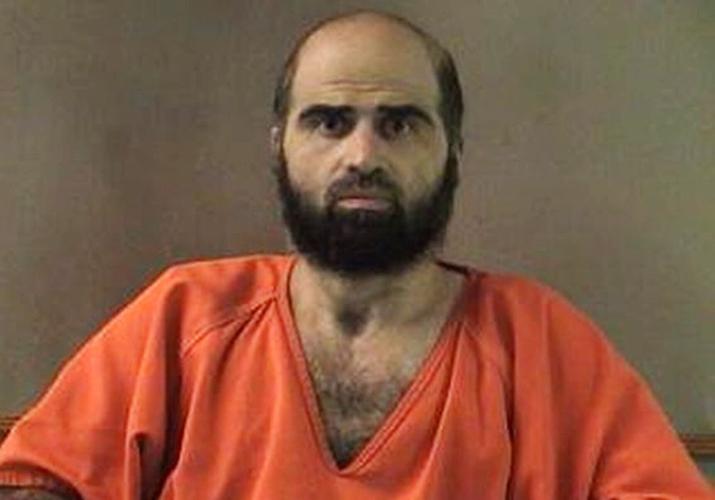
The former U.S. Army officer convicted of killing 13 people in the 2009 shooting rampage at Fort Hood, Texas, is scheduled to be executed by firing squad in December in what would be the first military execution in more than 65 years.
The announcement stunned an attorney who had represented Nidal Malik Hasan in a civil case, and raised concerns among experts on military law about whether the Army followed its mandated process for setting an execution and notifying a prisoner they’ve been condemned to death.
President Donald Trump's announcement on Monday that Hasan would be executed by firing squad also sparked questions about how a firing squad would be assembled and what procedure it would use. The last time the military executed someone by firing squad was shortly after World War II.
Here’s a look at what we know about the military execution process and how experts said this case may proceed.
Military officials declined to provide details
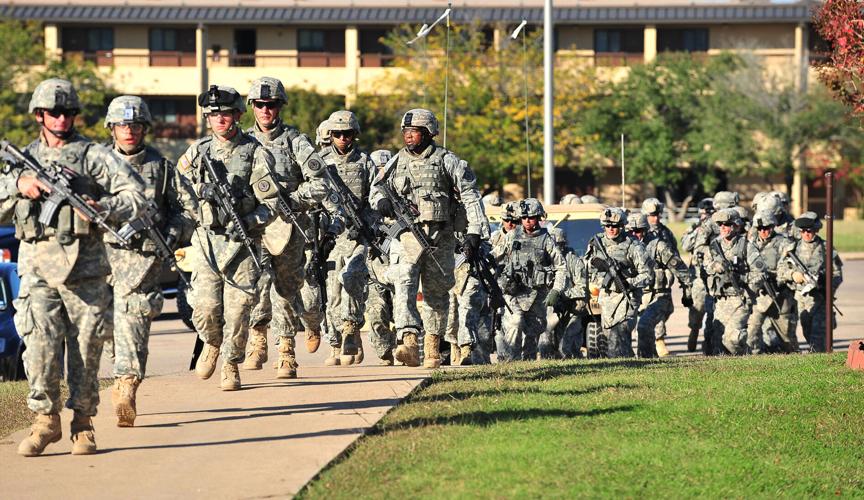
In a post on social media Tuesday, acting Secretary of the Army Adam Telle said he scheduled the execution for 1 p.m. on Dec. 3 at Fort Hood — the site where Hasan opened fire killing 13 people and wounding more than 30 others.
Telle confirmed in his post on X that Trump had approved the execution on Oct. 2, starting the clock in Army regulations that requires an execution date to be set no sooner than 60 days and no later than 150 days after that approval.
Telle also noted that the execution would be carried out by firing squad, but did not offer details of where on base the execution would take place, what personnel would be a part of that squad or what procedure they would follow.
The Associated Press asked both Pentagon officials and the Army for more details, but those requests were declined. A message to the Army seeking comment on the potential procedural issues was sent Wednesday.
The procedures for execution in Army regulations do not contain specific protocols for particular methods of execution. Experts said in previous iterations of the firing squad — nearly 80 years ago — one shooter would be given a blank so they all could plausibly believe they had not fired the fatal shot.
Hasan could file a Habeas petition in civil court
Hasan, an Army psychiatrist who held the rank of major, walked into a medical building where soldiers were getting checkups, shouted “Allahu akbar” — Arabic for “God is great!” — and opened fire with a laser-sighted handgun.
He said it was an effort to stop them from going to Afghanistan and killing his fellow Muslims — a defense a military judge barred him from presenting during his trial. Hasan made almost no effort to defend himself in court, telling jurors when he acted as his own counsel that evidence would show he was the shooter and describing himself as a soldier who had “switched sides.”
“What happens now, is if Dr. Hasan decides he wants to resist execution, he can go to federal civilian court for a Habeas Corpus petition … and that can last years,” said Eugene R. Fidell, a visiting lecturer at Yale Law School specializing in military law.
“It frankly might outlast the current administration, and who knows if the next one will have the same penchant for executions,” he added.
Trump resumed the federal death penalty after an informal moratorium during previous administrations. The federal government executed 13 people between 2020 and early 2021, contributing to making Trump the most prolific execution president in over 130 years.
Lawyer questions if notification was done incorrectly
Death sentences are extremely rare in the military justice system, and executions even rarer. Four men, including Hasan, are currently on the military’s death row at Fort Leavenworth, Kansas, and the last execution took place there by hanging in 1961.
John Galligan, a retired colonel and a former military judge, represented Hasan in civil matters. The attorney said Wednesday that he's limited on what he can talk about, but called the rush to conduct the execution “horrific.”
Galligan, who spoke with Hasan on Wednesday, said he believes the Army regulation to have the facility's Army commandant notify Hasan, accompanied by a chaplain and a Trial Defense Service attorney or civilian counsel if possible, was not followed. Galligan said that, according to Hasan, there was no legal counsel present.
“For the life of me, I don’t know what they are trying to accomplish in such a rush fashion … and by trying to conduct this execution at Fort Hood, when he has such medical issues,” Galligan said, raising questions about how Hasan, who is paralyzed from the waist down and uses a wheelchair, would be transported to Fort Hood.
Even states have spent time and money on planning
Before Hasan's execution was set for Fort Hood, there was speculation the Army might reach out to one of the handful of states that have recently reinstated the firing squad for use in executions — particularly South Carolina or Utah, where they've renovated facilities and established protocols.
South Carolina has killed three prisoners by firing squad in the past 18 months, the only such executions in the U.S. in the past 16 years.
It's unclear if the Army will borrow from the state's protocol, but it sets out for three volunteer shooters to stand 15 feet (4.6 meters) from the condemned prisoner, who is strapped to a chair. A medical professional uses an X-ray to find the prisoner’s heart and place a target over it. A hood is placed over the prisoner’s head after his final words, and a shade is lifted so the shooters can see their target.
All three shooters have live ammunition and fire at the same time without a verbal warning. South Carolina spent about $54,000 to renovate its death chamber for the firing squad.
Associated Press reporter Konstantin Toropin contributed to this report.