

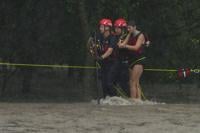

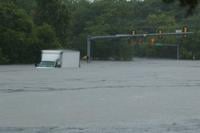


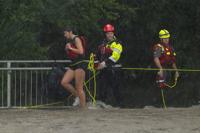

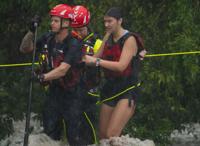

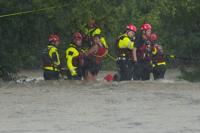

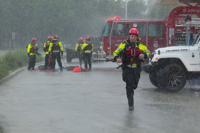

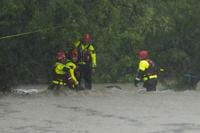
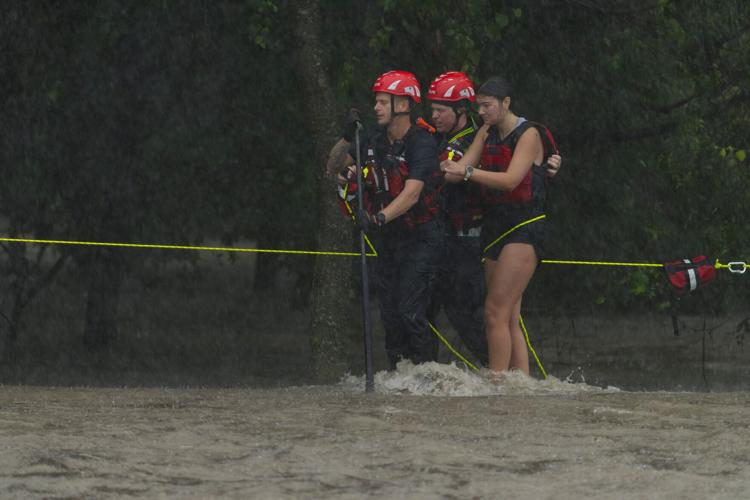
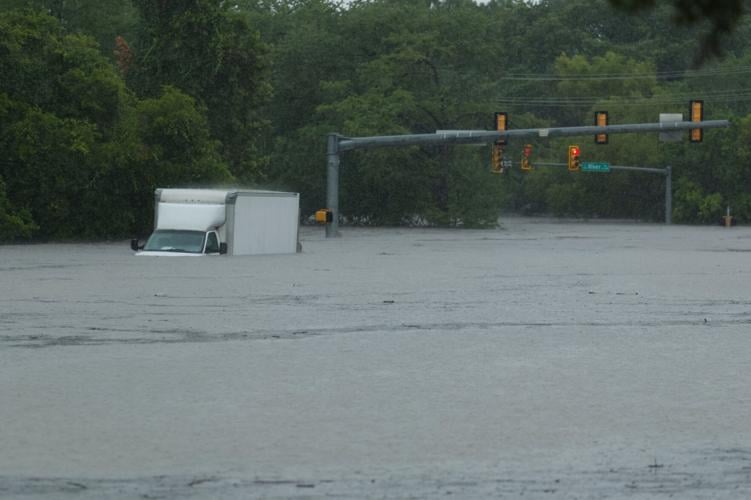
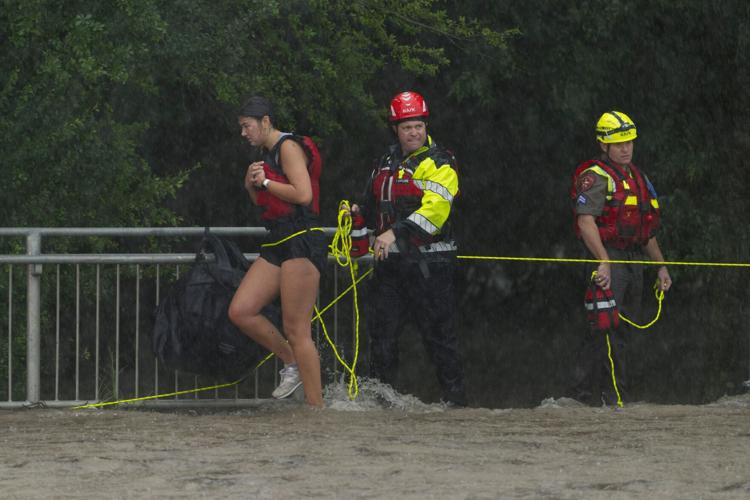
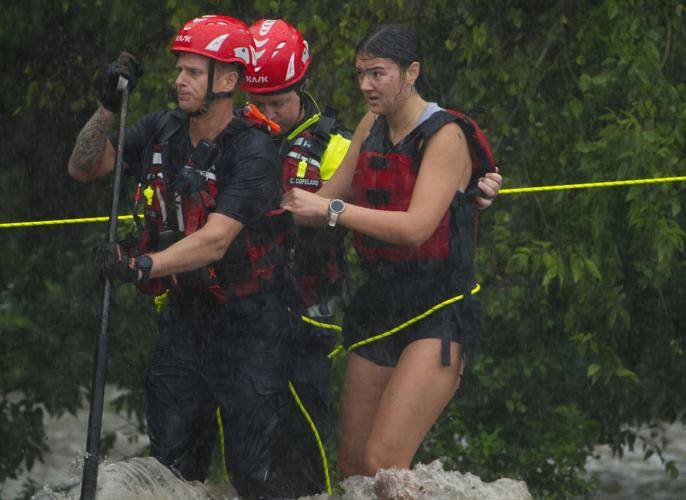
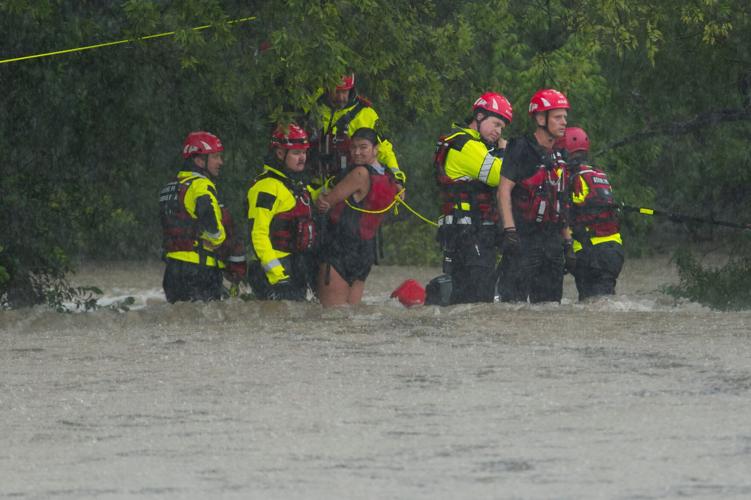
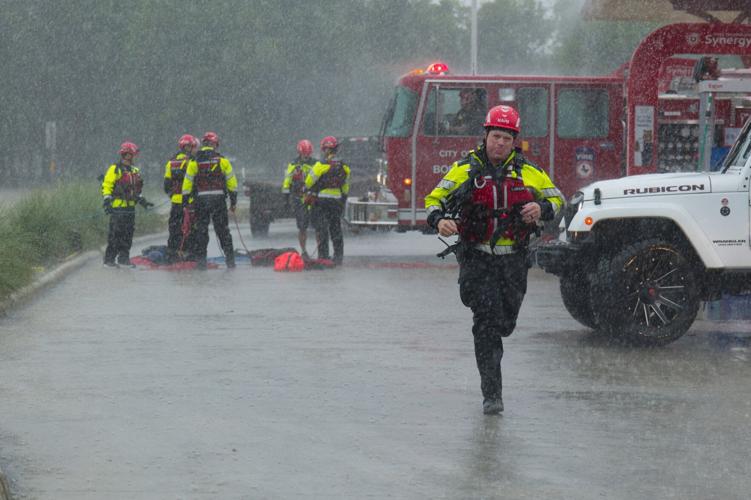
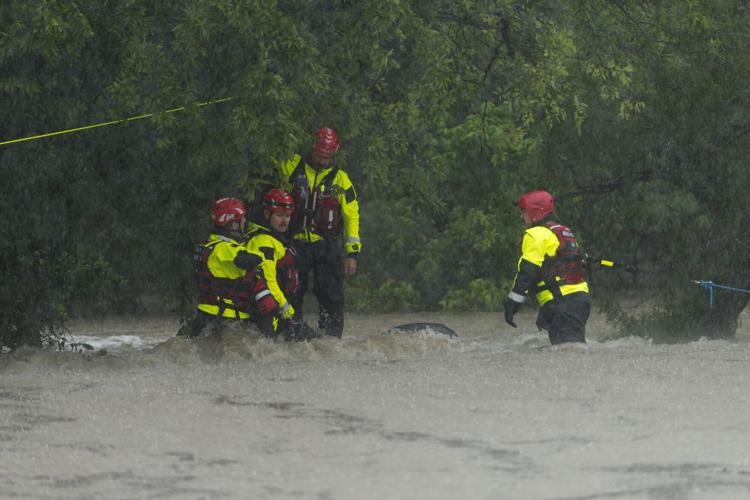
UVALDE, Texas (AP) — Slow-moving storms drenched much of southern Texas with more heavy rain on Wednesday, prompting warnings to evacuate flooded areas after downpours washed out roads and farmland and led to dozens of high-water rescues across the region.
The National Weather Service said a tornado touched down in the northwestern part of San Antonio near Interstate 10. Videos posted on social media showed what appeared to be a small twister. Local officials said apartment buildings and other properties were damaged.
Warnings of potentially dangerous flash flooding were in effect for some areas as the deluge was forecast to continue through Thursday evening, and authorities ordered mandatory evacuations for some parts of Uvalde County. They also urged people in other areas and the city of Boerne, outside San Antonio, to voluntarily evacuate rather than be marooned by high water.
In Kerr County, where catastrophic flooding last year killed more than 100 people, officials were in contact with summer camps and retreat centers near rising rivers.
As much as 10 to 20 inches (25 to 50 centimeters) of rain was possible in some places before the storms move out, the weather service said.
There have been no reports of deaths or injuries from the tornado or the flooding.
More than a foot of rain has fallen with more to come
The highest rainfall totals so far — up to 16 inches (40 centimeters) — have been in Uvalde County, where officials tallied 25 rescues as of 9 a.m. Wednesday, and said more people needed help as river levels rose. Highways and roads were closed across the region because of high water.
The county normally gets about 23 inches (58 centimeters) of rain a year, according to the Uvalde County Extension Office.
The Uvalde Police Department said on Facebook at 1 p.m. that a dam in the northern part of the county was still intact, but the Leona River was still expected to rise another 15 feet (about 4.6 meters). Police warned people along the river to get to higher ground.
State Rep. Don McLaughlin said that despite a “little lull,” the rainfall wasn’t done and waterways could become more dangerous. “The rivers and the creeks are going to be coming up, and they’re going to be coming up again with a vengeance,” McLaughlin said.
Frances McNamara and her 10-year-old son, Everett, watched the bloated Leona River in Uvalde sweep southward Wednesday as she considered possible evacuation routes. She pointed to a solid line of dirt, branches and twigs about 8 feet (2 meters) above the river where the water reached the day before.
“We’ve seen the water rise, but not to this extent,” she said, describing how it rushed through a ditch next to her home with enough force to sound like a river on Tuesday.
This week's severe weather brought back memories of last year's deadly flooding in Texas Hill Country.
“It scared me,” said McNamara, her eyes wet with tears as she recalled the 2025 floods. “Cause I have a son, and to know what those parents went through.” Her son reached up and patted her back.
Some mandatory evacuations ordered in Uvalde
Uvalde police ordered mandatory evacuations for some parts, with first responders notifying people affected directly, the department said on Facebook. Others were asked to stay vigilant in case more evacuations are needed.
Lightning flashed as clouds darkened the landscape Wednesday across Uvalde, where the typically calm Leona River poured over low bridges. The riverbanks were strewn with debris, including branches and grass, plastic bags and a cactus, from a day earlier when the river was several feet higher.
The night had brought booming thunder through a steady rain, swelling the rivers and creeks that ran through or just around the town. The rain would abate, then pummel the small town with heavy drops, before lifting again.
Texas Gov. Greg Abbott has issued disaster declarations for dozens of counties.
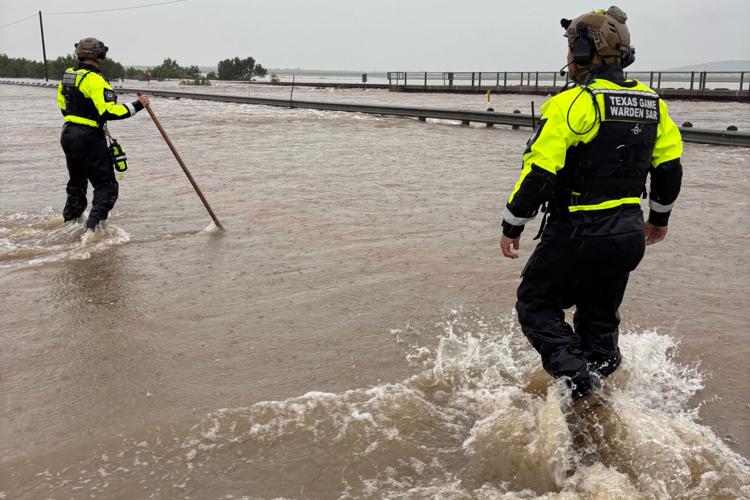
Authorities posted videos on Tuesday showing a rescue crew in a boat navigating flooded streets and a vehicle being swept away by fast-moving waters. Five people were rescued by the Texas Game Warden Search and Rescue Team and four were rescued by a local game warden, said Maggie Berger, a Texas Parks and Wildlife spokeswoman.
Other areas of Texas could see dangerous flooding
Forecasters warned that hilly terrain in other parts of the region could be especially vulnerable to heavy rain.
The highest level of concern for potentially dangerous flooding Wednesday was for areas west of San Antonio and north of Route 90, Weather service meteorologist Monte Oaks said.
In Boerne, a city of about 24,000 northwest of San Antonio, residents of several areas were told by officials to either evacuate voluntarily or prepare to shelter in place as waters rose. City spokesperson Chris Shadrock said in a video post on Facebook that high-water rescues were ongoing and that the city’s busiest intersection was “completely underwater.”
“This is a life-threatening weather event, I don’t want to mince words about how serious this situation is,” Shadrock said.
He said the water was rising even in areas that don’t usually flood.
First responders helped a woman escape after a car was swept off Boerne's River Road by the fast-rising Cibolo Creek.
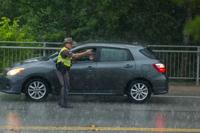
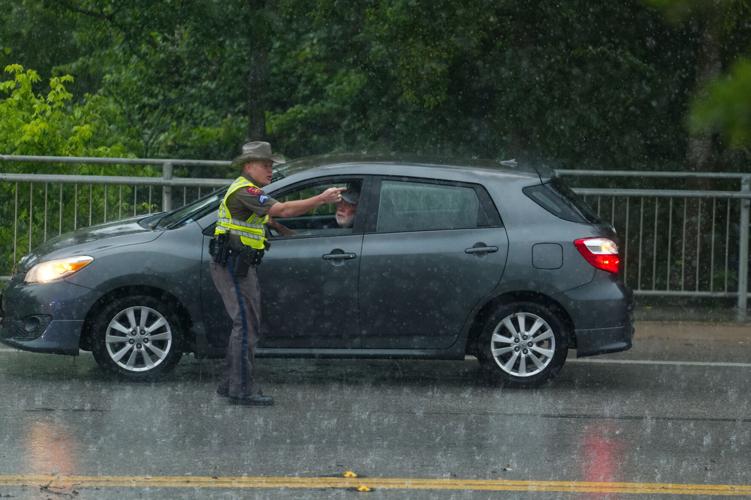
People in about 20 vehicles were stranded in a nearby gas station parking lot when every surrounding street quickly flooded. Police officers blocked the exits to keep people from trying to ford the roads.
Kendall County is home to nearly 53,300 people, according to U.S. Census Bureau estimates. About 45% of them live in the southern portion of the county in Boerne, where the Cibolo Creek reached 22.47 feet (about 6.8 meters) as of 1 p.m. according to a USGS gauge, about 19 feet (about 5.8 meters) higher than just two days before.
Oaks said the rain is being fueled with tropical moisture, mostly from the Gulf of Mexico and some from the Pacific Ocean.
“This is called a typical midsummer tropical weather pattern that happens in Texas,” Oaks said. “About once every five years, we’ll get socked in with a daily recurrence of heavy rain chances that’s generally produced by a stagnant kind of a pattern with a low-pressure center that’s just not moving very fast.”
Associated Press reporters Dave Collins in Hartford, Connecticut; Jamie Stengle in Dallas; Christopher L. Keller in Albuquerque, New Mexico; and AP freelance photographer Darren Abate contributed.