







ROME (AP) — Pope Leo XIV underwent surgery Tuesday that confirmed that he has lung cancer, and doctors removed the lower lobe of his right lung, the Vatican said.
Tests confirmed a diagnosis of lung adenocarcinoma, the Vatican said in a medical bulletin after the surgery. It said the diagnosis had been suspected by preoperative tests and was confirmed during surgery.
The statement made no mention of treatment going forward, and the Vatican said doctors were not currently speaking of chemotherapy or other therapies pending the results of other tests. The Vatican press office noted the medical statement spoke of the “radical” removal of the lobe as an indication that doctors removed all suspect tissue in hopes of removing any lingering traces of the cancer.
Leo's lymph nodes also would have been removed and tested, to determine if the cancer had spread, and there was no word yet on those test results.
“Adenocarcinoma is the most common (type of lung cancer), also with the most favorable prognosis,” said Dr. Stephen Liu, a lung cancer expert at Georgetown’s Lombardi Comprehensive Cancer Center. “While we know the diagnosis we now need to know the stage."
"We now need to know how big it is, how many spots in the lung are involved. Is it just one nodule, or more than one, and the lymph nodes, are they cancerous?” Liu said.
If the cancer has spread, more tests will be needed to determine what kind of therapy to pursue, he said. Options include chemotherapy, a combination of chemotherapy and immunotherapy or targeted therapy, which involves oral pills for specific cancers.
The Vatican says the surgery was successful
The 71-year-old was in the operating room for about three hours, the Vatican statement said. The surgery itself lasted approximately 90 minutes.
“The surgery was successful, and there were no complications,” the statement said, adding that the pope later returned to his room.
The right lung is divided into three sections or lobes while the left has two. After one lobe is removed, the remainder of the lung can gradually compensate, especially in otherwise healthy and physically active people.
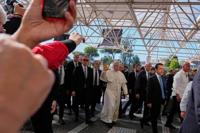
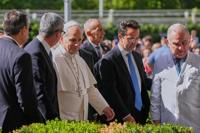
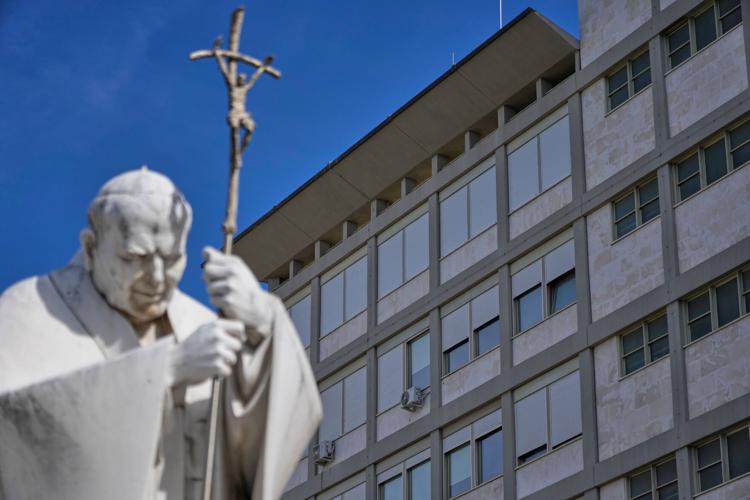
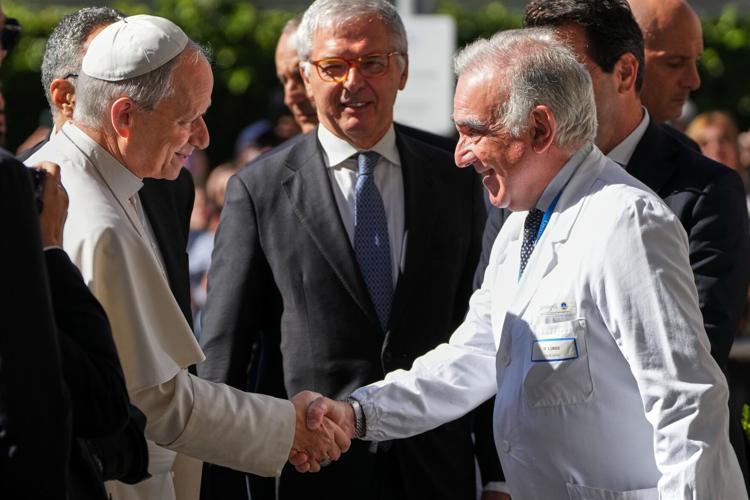
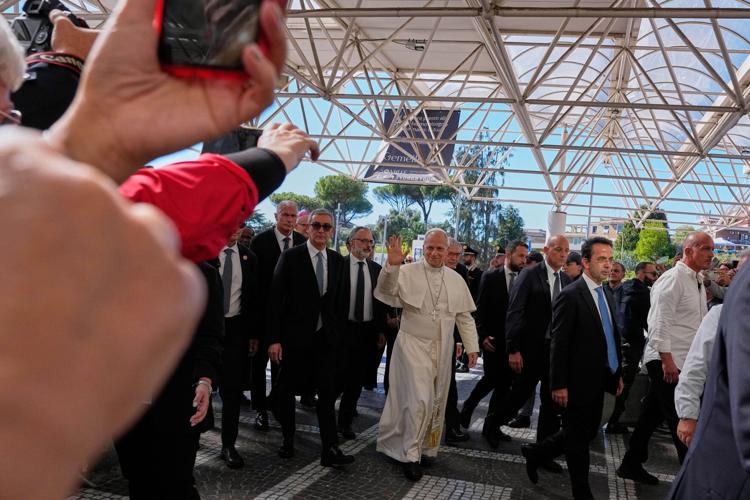
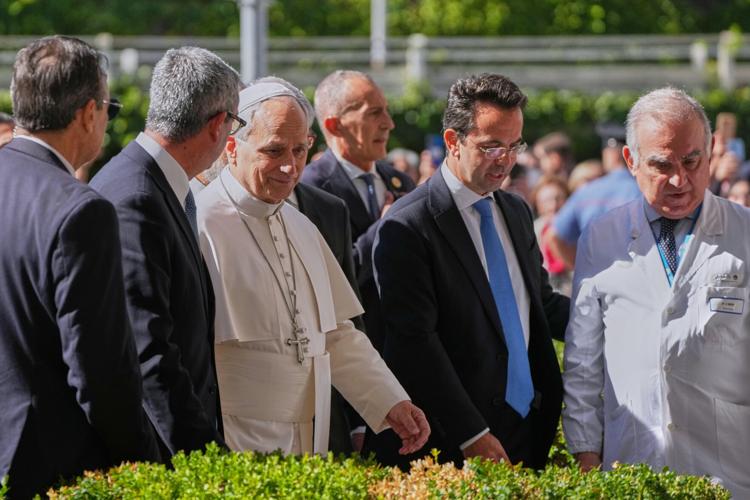
Leo had walked into Rome’s Gemelli hospital through the main entrance earlier in the day and waved to dozens of well-wishers who had gathered to greet him. The Vatican said the surgery would be performed by a team led by Gemelli’s chief thoracic surgeon, Dr. Stefano Margaritora.
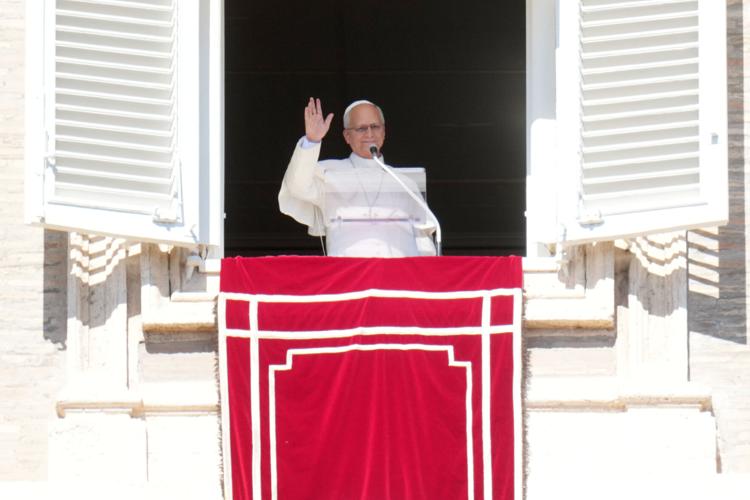
The American pontiff has offered a rare level of transparency about the first publicly disclosed major health problem of his 17-month papacy. He revealed the discovery of the localized nodule during his Sunday noon prayer and announced that he would have it removed.
Oncologists said prior to the operation that even if the nodule turned out to be cancerous, Leo’s prognosis would be “excellent” since it would have been removed at an early stage.
The Vatican on Monday canceled all Leo’s audiences through Oct. 20.
While Gemelli has a specific papal apartment that past popes have used, complete with a private chapel on the 10th floor, Leo will actually be staying in a nearby room since the papal apartment is undergoing renovations, according to the Vatican press office.
Recovery could allow November travel to South America
There was no word on whether Leo would be able to keep his planned trip to South America next month.
Oncologists often advise patients not to fly for three weeks after surgery — which would give the pope just the interval needed to make his planned Nov. 6-17 trip to Uruguay, Argentina and Peru, depending on his recovery.
The current itinerary for the trip is ambitious and the longest of his papacy to date, calling for Leo to clock just over 31,000 kilometers (19,000 miles) on a dozen flights and two helicopter rides, and a significant altitude change in Peru.
"He has decided to undergo surgery soon in order to not change his plans for future overseas trips, so there is no need to worry, as it is not an emergency,” said Tokyo Cardinal Kikuchi Tsutomu, who saw Leo on Monday.
A lung nodule is a small abnormal area measuring less than 3 centimeters (1.2 inches) that sometimes appears on a CT scan of the chest or abdomen. Often, the scans are done to investigate trauma or a lung infection, unrelated to a lung cancer screening. A nodule can be benign or malignant, and oftentimes surgical removal is recommended both to establish whether it is cancer and to treat a malignancy while it is still localized.
Pope was hospitalized for typhoid fever in 1985
This is believed to be the second hospitalization for Leo, who is known to be sporty and in good shape, with weekly tennis games and swimming.
As a young missionary priest, he came down with typhoid fever in 1985, soon after arriving in Chulucanas, Peru. The illness and hospitalization were a cathartic moment for him to decide to stay in the poverty and discomfort of Peru after living in relative comfort in Rome — a decision that ultimately paved the way to his papacy, according to an interview Leo gave to Elise Ann Allen in 2025 for “Pope Leo XIV: The Biography.”
According to the book, Leo said he prayed to God to let him die rather than suffer the “horrible” pain of the fever. “I was hooked up to an IV, and I said, ‘If this is your sense of humor, Lord, I think you could do a little better.’
“Obviously, I survived; I recovered, but it turned out to be a very significant moment for me, because it was like, ’Well, you’ve already dealt with the illness; you already see what the needs are here — the order, the Augustinians, the church are telling you, ‘We need you here; go for it.’ I never looked back.”
Barry reported from Milan. Associated Press writer Lauran Neergaard in Washington contributed to this report.
Associated Press religion coverage receives support through the AP’s collaboration with The Conversation US, with funding from Lilly Endowment Inc. The AP is solely responsible for this content.