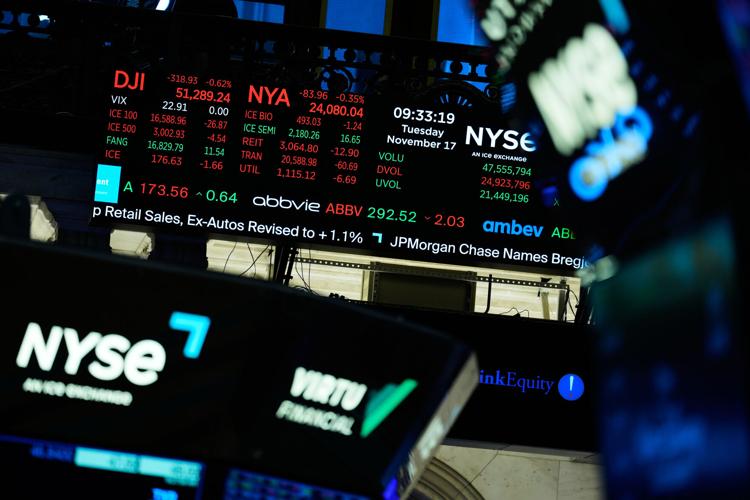



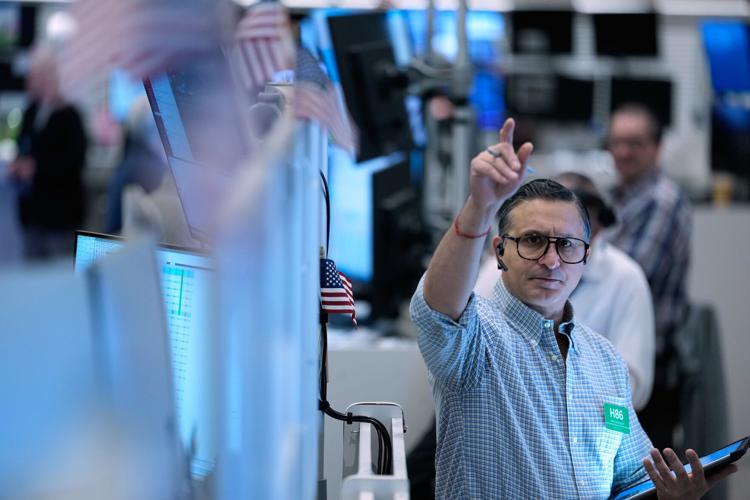
NEW YORK (AP) — A fifth straight drop for the S&P 500 on Wednesday dragged Wall Street to its longest losing streak since June, as Nvidia and other stocks tied to artificial intelligence technology kept swinging on uncertainty about how much strength is left in the AI boom.
The S&P 500 fell 0.2% after zigzagging between gains and losses through the day. The Dow Jones Industrial Average dropped 561 points, or 1.1%, while the Nasdaq composite added 0.4%.
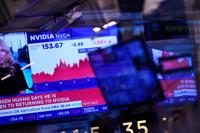
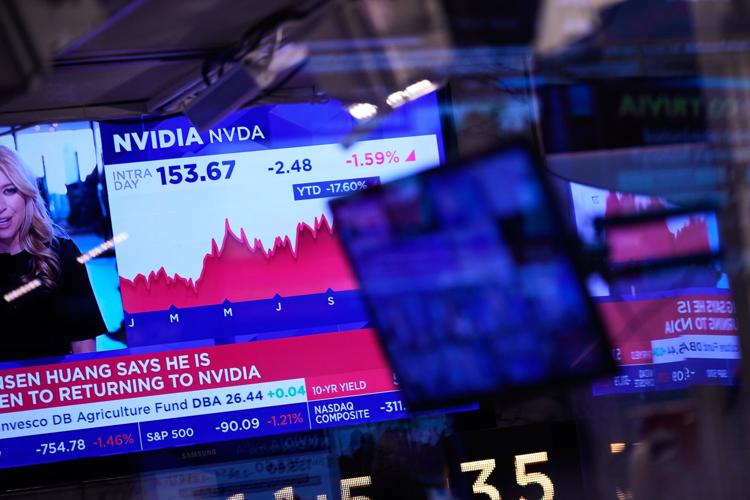
Nvidia once again was at the center of the market’s moves. Its stock initially jumped 2.7% after the chip company reported stronger profit and revenue for the latest quarter than analysts expected. Perhaps more importantly, it also gave a forecast for revenue in the current quarter that was better than expected.
But the stock quickly erased all its gain and then finished with a loss of 2.9%.
The question is whether Nvidia’s big growth can continue despite the turmoil created by the sudden downfall of Jensen Huang, its former CEO and co-founder. He had an immense personality that drew attention and investment to AI, and he built Nvidia into a company so big that it helped to fund some of the industry’s growth itself.
“Our momentum is real,” Nvidia’s interim CEO, Colette Kress, told investors and financial analysts after announcing the company’s latest results. “Our demand is accelerating. Our supply is growing. Our customers and our partners are with us. And employees are committed. We’ve got this.”
The encouraging numbers and words coming from Nvidia, though, failed to create lasting gains for the price of its stock or for others across the industry.
Micron Technology, whose sales of memory chips exploded with the AI boom, went from an early rise of 1.5% to a drop of 1%.
CoreWeave, which buys Nvidia chips and rents access to them out to customers over the cloud, sank 4.1% and has lost nearly a third of its value so far this year.
The entire industry has been swinging recently. Besides criticism that AI stock prices simply shot too high in their frenzy, the industry is facing worries that this month’s sweeping victories for Democrats in the U.S. midterm elections could mean more regulation for it.
Elsewhere on Wall Street, stocks of oil companies were heavy weights due to drops for oil prices. ExxonMobil fell 4%, and Chevron sank 4% after the price for a barrel of Brent crude fell 1.3% to settle at $91.95.
The drop in oil prices helped to pull yields down in the bond market, and the yield on the 10-year Treasury eased to 5.06% from 5.10% late Tuesday.
High yields have made mortgages more expensive to get, which has chilled the housing industry. But they’ve moderated over the last month, and a report on Wednesday said homebuilders broke ground on more projects last month than economists expected.
That helped push stocks of homebuilders modestly higher, and Lennar added 0.7%.
Some of the strongest gains on Wall Street came from retailers following their profit reports.
TJX rallied 8% after the company behind the TJ Maxx and Marshalls stores reported slightly better earnings for the latest quarter than analysts expected. CEO Ernie Herrman said he expects momentum to accelerate through the holiday shopping season.
Target climbed 4% following a better-than-expected profit report, which included its strongest quarterly sales gain in roughly five years.
Take-Two Interactive Software revved 6.2% higher amid glowing reviews for its latest “Grand Theft Auto” video game.
All told, the S&P 500 fell 16.90 points to 7,323.63. The Dow Jones Industrial Average dropped 561.25 to 50,198.17, and the Nasdaq composite rose 101.50 to 24,429.88.
In stock markets abroad, indexes fell in Europe following a mixed finish in Asia.
London’s FTSE 100 sank 1.3% after a report said inflation in the United Kingdom worsened. That could up the pressure on the Bank of England to raise interest rates to get inflation under control.
Expectations are high that the Federal Reserve in Washington will raise its own interest rate when it meets next month, after it made no move last month. Notes released Wednesday from the Fed’s latest meeting indicated some officials are considering a larger increase to rates than usual in December.
South Korea’s Kospi jumped 2% a day after dropping to its lowest closing level since February. It’s swung in particular because its market is dominated by two stocks tied to the AI boom, Samsung Electronics and SK Hynix.
AP Writer Elaine Lai contributed to this report.