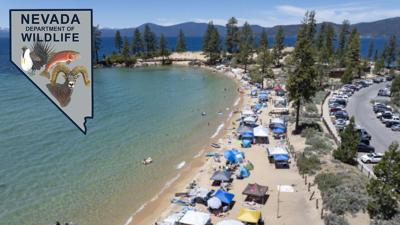

As more people take advantage of the summer heat at Nevada’s lakes and rivers, the Nevada Department of Wildlife (NDOW) is reminding those who use personal watercraft to follow boating laws to keep everyone safe.
Personal watercraft (PWCs) are small, motorized vessels designed to be operated by one or more people sitting, standing, or kneeling on the craft rather than inside it.
This summer, NDOW says game wardens have already responded to numerous complaints, including reckless boating, excessive speed, and leaving the scene of an accident.
Recently, Nevada game wardens assisted Bullhead City Police with the investigation of a hit-and-run collision involving a rented personal watercraft on the Colorado River that injured a 7-year-old child.
NDOW is encouraging all personal watercraft operators to remember these important safety and legal requirements:
Wear a life jacket. Every person operating or riding on a personal watercraft must wear a properly fitted, U.S. Coast Guard-approved life jacket.
Know the rules before you ride. Children under 14 may not operate a personal watercraft. Anyone born on or after Jan. 1, 1983, who operates a motorboat of more than 15 horsepower on interstate waters, including personal watercraft, must complete a NASBLA-approved boating safety course. NDOW recommends boating education for everyone.
Wear your engine cut-off lanyard. Attach the engine cut-off switch (kill switch) lanyard to your wrist or life jacket whenever you're operating a personal watercraft. If you're thrown from the craft, it will shut off the engine and help prevent the unmanned vessel from continuing on its own.
Maintain a safe speed. Slow down near shorelines, docks, swimmers, and other vessels, and always obey no-wake zones.
Keep a proper lookout. Always be aware of other boats, paddlecraft, swimmers, and changing water conditions.
Never operate under the influence. Alcohol and drugs impair judgment, reaction time, and balance, greatly increasing the risk of a crash.
Stay with your rental agreement. If operating a rented personal watercraft, ensure all operators are authorized under the rental agreement and understand the rules before leaving the dock.
Report collisions. Operators involved in a boating collision are required to stop, render aid when safe to do so, and report the incident as required by law.
NDOW encourages all boaters to review Nevada's boating laws before recreating on the water. Information about personal watercraft regulations and boating safety requirements can be found in the Handbook of Nevada Boating Laws.
(Nevada Department of Wildlife contributed to this report.)