Hot summer weather can either be a dry heat or it can be really muggy. Living in a desert, our heat is usually very dry, unlike the southeastern part of the United States. The relative humidity tells us how close the air is to saturation, with 100% meaning fully saturated, and zero meaning not at all. A relative humidity of 90% means the air is reaching 90% full of its capacity. You can have a 90% relative humidity in two different locations, with two different moisture levels, because the relative humidity correlates to the temperature. Typical relative humidity levels goes up at night as the air cools. Warmer air can hold more moisture than cold air can.

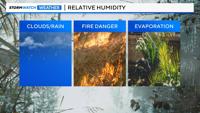
Relative humidity is an index meteorologists use to see if clouds or rain can form, as well as to forecast fire danger. Low relative humidity values, especially below 15% means moisture will be able to evaporate very quickly. Think of evaporation like getting out of a swimming pool, and drying off from sitting in the sun.

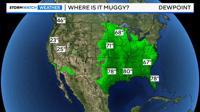
The dewpoint temperature is a better indicator for how humid or muggy it is outside. Sixty degrees is a general rule of thumb for it being muggy, especially east of the Rockies. Along the west coast, the threshold is a little lower. The dewpoint temperature is the temperature at which saturation can occur. If a dewpoint is high, that means not much cooling has to occur for the air to become saturated. We rarely see dewpoints even in the 50’s in the Truckee Meadows. Places like New Orleans can see dewpoints well into the 70’s, which is oppressive.