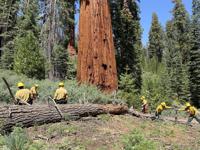
The Sequoia National Forest continues to make great progress toward achieving the Giant Sequoia Emergency Response goals. To date, 1,213 Giant Sequoias have been protected in 6 groves covering 404 acres, and that number is growing daily!
“What is the value of a single Giant Sequoia?” asked Teresa Benson, Forest Supervisor for the Sequoia National Forest. “In about a month, the Giant Sequoia Emergency Response project in Sequoia National Forest worked every day to make the Giant Sequoia groves more resilient to severe wildfires.”
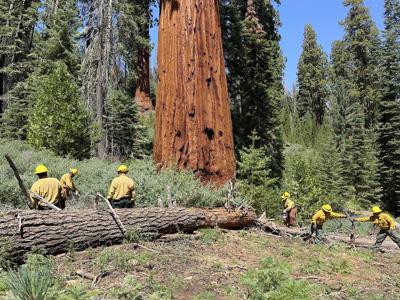
As of August 25, the project has spent approximately $1,000.000 to make 345 of the largest trees in the world safer by completing work around them, by clearing a circle of flammable trees, brush and duff. That is $2,898 per tree to make 345 monarch Giant Sequoia trees more resilient to wildfire in less than a month.
An Emergency Response was approved by U. S. Forest Service Chief Randy Moore on July 22, 2022, to expedite the implementation of approximately 13,377 acres of fuels reduction treatments in 12 Giant Sequoia groves.
The objective of this emergency response is to reduce the wildfire risk that currently threatens the Giant Sequoia groves. Forest resource staff and incident resource advisors are monitoring the effects of the associated emergency actions.
Fuels reduction treatments are being completed in three phases, starting with hazard tree abatement to facilitate safe access for crews working in the groves, then hand treatments to remove ladder fuels and duff from around monarch Giant Sequoias. Implementation is underway in six of the 12 groves: Bearskin, Black Mountain, Indian Basin, Landslide, Wishon, and the Sierra National Forest Nelder grove.
"It’s exciting that we have completed so much work so quickly and have already made a real difference on the ground,” stated Gretchen Fitzgerald, Ecosystems Staff Officer. “We have already removed fuels from more than 1000 giant sequoias. I am very grateful for all the hard work and community involvement to keep the project moving forward.”
Additional local and national resources have been used for the emergency response. A Type 3 Incident Management Organization has been assigned to manage the workforce and implement fuels treatments. Those resources include twenty-person crews, wildland fire use modules, teams of fallers, division leads, task force/crew bosses, emergency medical technicians, branch chiefs, incident commanders, resource advisors, tribal monitors, and technical specialists, among others.
Jeremy Dorsey, District Ranger for the Hume Lake Ranger District, stated, “What a privilege and honor it is to be a part of this monumental effort to help address the ecological needs required in order to protect the Giant Sequoias.” He continued, “This emergency response enables us to increase the likelihood that Giant Sequoias are here for current and for future generations.”
Crews will continue the fuels reduction treatments in the designated groves in the Hume Lake and Western Divide Ranger Districts.