

















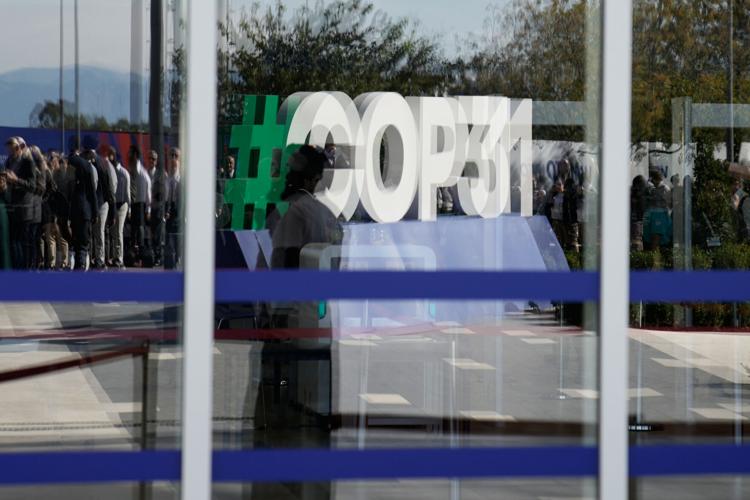
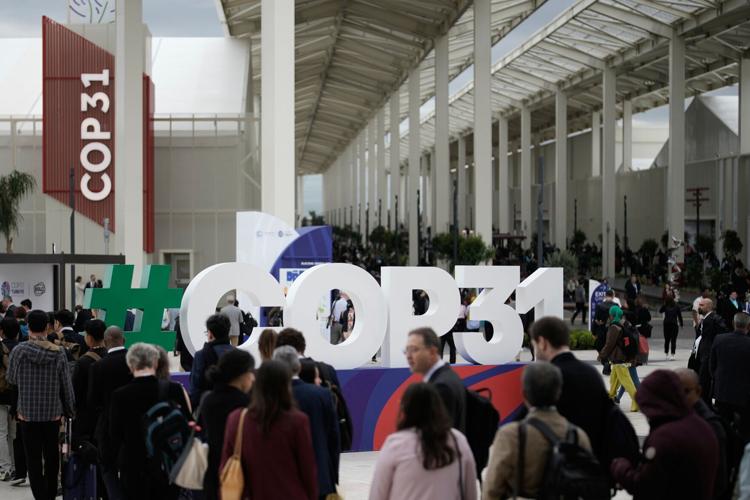
ANTALYA, Turkey (AP) — Urgent action is needed to help countries hardest-hit by the effects of climate change, small island leaders said Thursday at the United Nations climate talks in Turkey, describing global warming as a life-or-death issue for their people.
“It is time to move past the talking,” said Alix Sebastien Pillay, vice president of Seychelles, who said the survival of his country, a 115-island archipelago in the Indian Ocean, is at stake. “For Seychelles, climate action is not simply an environmental priority.”
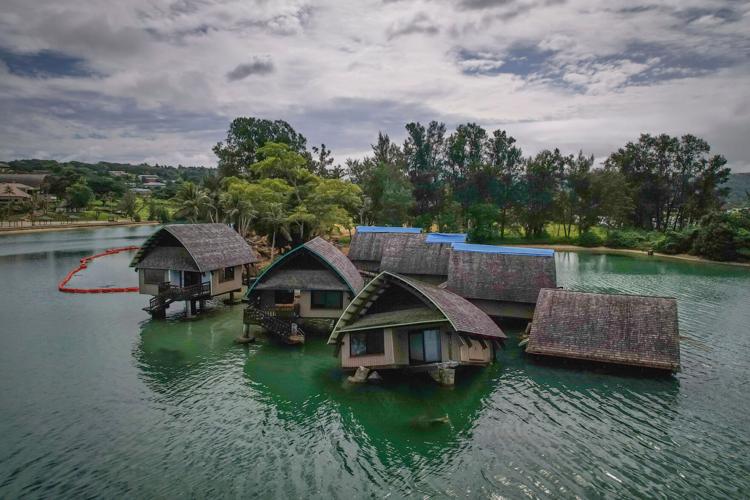
Pillay spoke on the second day of the leaders' summit at the U.N. climate conference, where governments are trying to reach consensus on how to address climate change and help countries at greatest risk. While the entire globe is threatened by souped-up storms, hotter heat waves, worsening droughts and bigger floods, island nations are among the hardest hit by climate change as they also have to deal with rising seas swallowing their land.
Pillay said Seychelles is experiencing millions of dollars of damage despite contributing little to global warming, and said a U.N. fund created for compensating vulnerable nations must be urgently strengthened.
“Climate recovery must not come at the expense of our development or push vulnerable nations further into unsustainable debt,” he said.
Report says world has failed to slow warming trends
A report released Thursday offered a grim assessment: Progress in slowing global warming has essentially stalled for the past five years because any steps forward were canceled out by inaction elsewhere.
The first five years after the 2015 Paris Agreement, the world did so much that it trimmed an entire degree Celsius (1.8 degrees Fahrenheit) from warming projections, but nothing has changed since, the independent Climate Action Tracker said in its report.
That means the world is now “headed toward an irrecoverable overshoot of 1.5 degrees Celsius” (2.7 degrees Fahrenheit) above pre-industrial temperatures, the threshold the world adopted during the Paris Agreement, according to the report.
Climate change is caused mainly by the release of greenhouse gases from the burning of fuels like gas, oil and coal. Confronting it means finding ways to drastically cut the amount of emissions put into the atmosphere each year. Countries establish plans to reduce emissions, with the speed of reductions and ways to achieve them differing by country.
But even if nations fulfill all their climate promises — which is a big if — the globe will end the century 2.6 degrees Celsius (4.7 degrees Fahrenheit) warmer than pre-industrial times, the report said.
The effects of inaction are already being felt, said Dalton Tagelagi, prime minister of the small Pacific Island of Niue. Climate change, coupled with this year’s extra-strong El Niño — a temporary warming in parts of the equatorial Pacific that increase extreme events such as heat waves, floods and droughts — are a warning of what could be in store.
“Sea temperatures in the central Pacific are more than three degrees above normal. It is a warning of what is coming if we do not cut emissions now,” Tagelagi said.
Vulnerable nations ask climate polluters to pay up
Leaders from countries ravaged by climate change said adequate financing must be made available to deal with climate disasters, such as the 2022 floods in Pakistan that submerged over a third of the country, resulting in thousands of deaths and over $30 billion in damage.
“The future we feared has become the present we are living,” said Pakistani Prime Minister Shehbaz Sharif. “Climate change knows no borders. No nation can face it alone.”
But how much can be accomplished at the summit is in question, as some of the top-polluting countries stayed away.
The United States — the world’s second-largest polluter after China and the largest historical polluter — was again absent after President Donald Trump withdrew the U.S. from climate negotiations. Still, a group of U.S. state and local leaders arrived in Antalya to show their commitment to combating climate change.
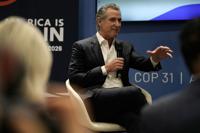
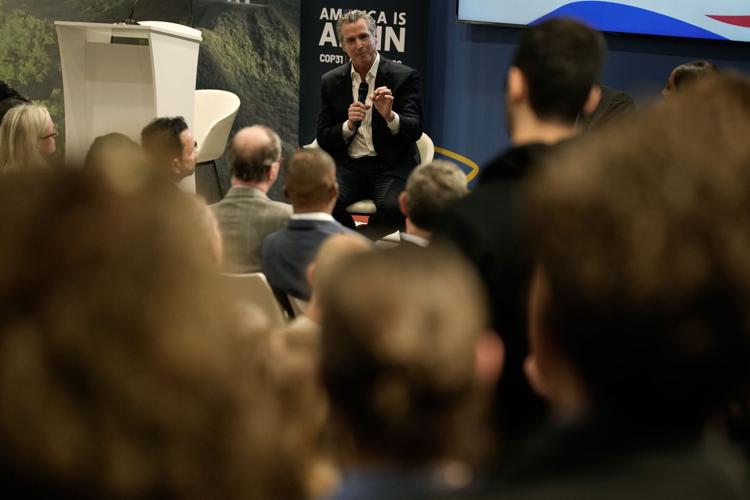
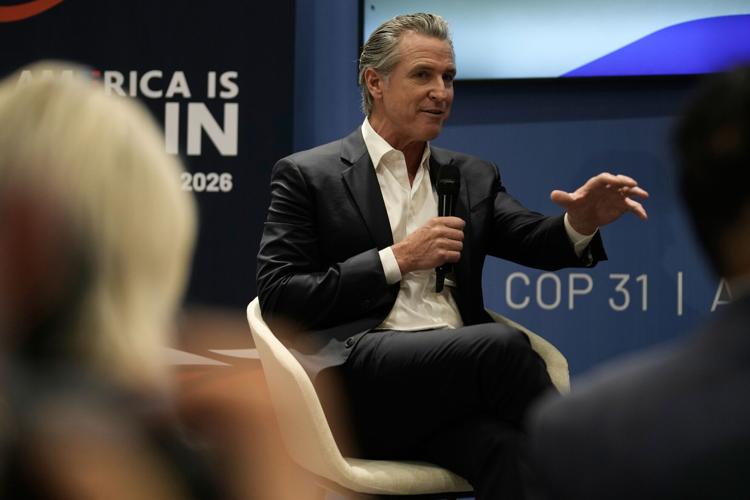
Speaking at an event on the sidelines of the talks, California Gov. Gavin Newsom said Trump’s “head is soaked with oil.”
“He’s a wholly owned subsidiary of Big Oil. And we have been on the receiving end of some of the most aggressive assaults on our climate leadership in a generation,” he said. “I don’t expect that his secretary of energy or secretary of interior are going to do anything but double down (on their current policies).”
In a side event with chanting and applauding activists, Luiz Inácio Lula da Silva, president of Brazil, which hosted last year's negotiations, said, "Nobody, no one from planet Earth, no country, no authority has more authority than Brazil when it comes to the climate, when it comes to the environmental issue.”
Lula challenged Trump, French President Emmanuel Macron by name and the governments of Germany and Portugal — “countries that used to dictate the rules to us” — to invest more in a fund to save tropical forestland, like Brazil has.
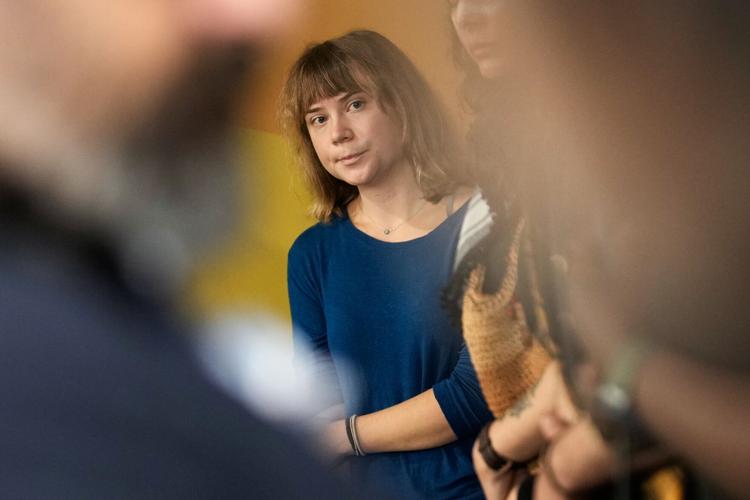
Climate activist Greta Thunberg chided those in power for failing to address the climate crisis.
“The planet is not dying, it is being killed,” Thunberg said at a news conference on the sidelines of the summit. “And we know by who. And it is being killed by the very same people often thought to come to our rescue. No one is coming to our rescue.”
The last time Thunberg attended a climate summit was the 2021 gathering in Glasgow, Scotland, where she dismissed world leaders’ promises as “blah, blah, blah.”
Britain announces appointment of first climate security risk envoy
The United Kingdom on Thursday announced the appointment of a special envoy to tackle security threats from climate change, one of the first such appointments anywhere in the world.
The appointment of Madeleine Alessandri follows a recent British government assessment warning that damage to ecosystems, driven partly by climate change, could disrupt food supplies and fuel conflict and migration since the island nation imports about 40% of its food.
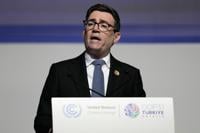
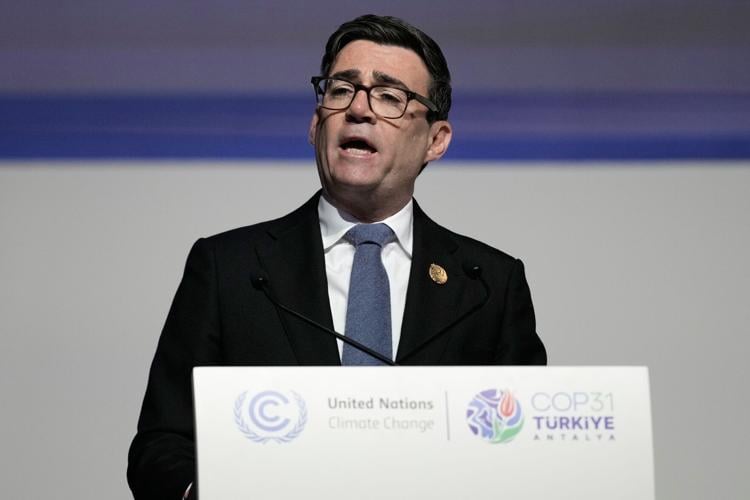
“The climate crisis is not a distant threat. It is upon us all now, devastating lives and livelihoods everywhere,” British Prime Minister Andy Burnham said at the summit, adding that Britain would place climate resilience high on the agenda when it assumes the G20 presidency next year.
Climate activists said Burnham’s policies do not fully align with the sense of urgency he expressed in his speech.
“Burnham needs to start bridging the widening chasm between words and deeds on climate action,” said Ami McCarthy of Greenpeace UK.
Webber reported from Chicago, Borenstein from Kensington, Maryland, and Arasu from Bengaluru, India.
The Associated Press’ climate and environmental coverage receives financial support from multiple private foundations. AP is solely responsible for all content. Find AP’s standards for working with philanthropies, a list of supporters and funded coverage areas at AP.org.