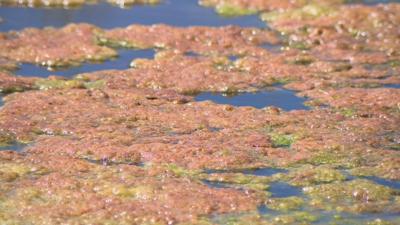


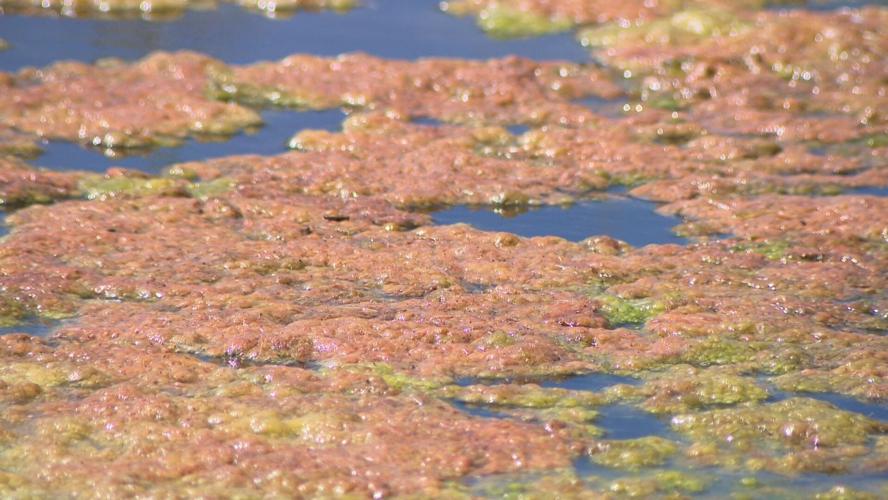
The red algae at Swan Lake was a popular public comment item at the Washoe County Board of Commissioners meeting this week. Area residents will not let their concerns go unheard; and today, the county has some test results for them.
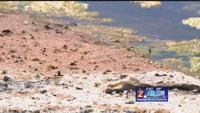
Lemmon Valley residents, especially those who live near Swan Lake, say they want answers from the county about the red algae that can be seen floating all over the water.
About two weeks ago, Tammy Holt-Still says the community began to notice green algae in the lake and surrounding runoffs turning a different color. Holt-Still says, "I was thinking, I hope it's not red algae, because I knew that was bad. When we got over there and took a look at it, we knew it was the red algae."
It's one thing that the blooms are quite the eyesore, but residents say the potential harmful effects concern them most. Holt-Still says, "It is a health hazard, it is an environmental health hazard."
Last week, the county took samples of the algae to gauge the toxicity and determine what steps need to be taken. Dwayne Smith, Director of Engineering for Capital Projects in Washoe County explains, "There's three tiers when dealing with harmful algae blooms." Smith continues, "We're basically at the bottom of a Tier 1, according to the test results we received."
According to Smith, state officials recommend monitoring any algae on a Tier 1 basis. He says the county plans to do that, "We're going to continue to take samples on a weekly basis just to understand if there are changes in the amount or density of the algae."
If further samples show the algae worsening, Smith says the county will notify the public and act accordingly.
However, residents like Tammy note that before last year's flooding, algae at Swan Lake was an unprecedented issue. They'd like to see the county implement something like a filtration system to avoid potential future problems. Holt-Still says, "Stagnant water for two years in a row with all of this heat, it's obvious that it's not going away."
Smith says they also tested the samples for E. Coli and other bacteria, since concerns were also raised about a possible discharge from the nearby sewer system. He says those levels were non-detectable.
However, Smith does advise residents to "use good practice" and stay out of the water, along with livestock and pets. If you or your pet do come in contact with the water, wash yourself, or them, off.
He also says not to let your livestock or pets drink water from the area.
