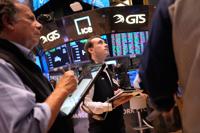
Wall Street closed out an up-and-down week with a mixed finish for U.S. indexes as bond yields rose and oil prices swung. The S&P 500 rose 0.2% Friday. The Dow Jones Industrial Average slipped 0.2%, and the Nasdaq composite added 0.4%. The majority of stocks on Wall Street fell, and pressure picked up on them as the yield on the 10-year Treasury climbed to 5.00%. That yield, an important benchmark for many kinds of loans including mortgages, topped 5% early this week for the first time since 2023. Brent crude briefly dropped below $102 a barrel before pulling back above $103.
From
To

The U.S. stock market rallied to its best day in six weeks after oil prices fell and pressure from the bond market eased. The S&P 500 jumped 1.1% Thursday for just its second rise in the last nine days. The Dow Jones Industrial Average added 0.6%, and the Nasdaq composite climbed 1.7%. Stocks got a boost after the price for a barrel of Brent crude oil slid 1% to settle back below $105. That helped pull the yield on the 10-year Treasury down to 4.93%. Gains for Nvidia and other AI stocks helped lead the way on Wall Street.

Traders work on the floor at the New York Stock Exchange in New York, Wednesday, Sept. 16, 2026. (AP Photo/Seth Wenig)

Featured Top Story
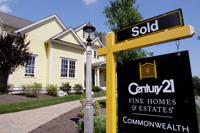
The average rate hasn't been this high since Jan. 30, 2025.

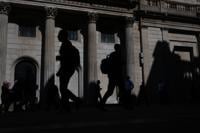
The Bank of England is keeping the U.K.’s main interest rate unchanged at 3.75% even though inflation in the United Kingdom has risen to a five-month high as the fallout from the Iran war continues to ratchet up fuel prices. Like other central banks, the inflation outlook is key for the Bank of England. Some have already decided to start raising borrowing costs again, including the U.S. Federal Reserve on Wednesday. Though borrowing rates were kept on hold, financial markets think it’s more likely than not that the bank will back an increase at one of the next two policy meetings, either in November or December.

Currency traders pass by a screen showing the Korea Composite Stock Price Index (KOSPI) at the foreign exchange dealing room of the Hana Bank headquarters in Seoul, South Korea, Thursday, Sept. 17, 2026. (AP Photo/Ahn Young-joon)

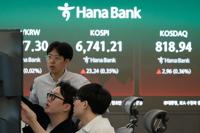
Currency traders watch monitors near a screen showing the Korea Composite Stock Price Index (KOSPI) at the foreign exchange dealing room of the Hana Bank headquarters in Seoul, South Korea, Thursday, Sept. 17, 2026. (AP Photo/Ahn Young-joon)


Currency traders work at the foreign exchange dealing room of the Hana Bank headquarters in Seoul, South Korea, Thursday, Sept. 17, 2026. (AP Photo/Ahn Young-joon)


President Donald Trump is blasting Federal Reserve governors after the board raised its benchmark interest rate Wednesday for the first time since 2023 in an effort to quell stubbornly high inflation. The central bank also signaled another rate hike could occur later this year. Trump called the governors politicians and said they're trying to hurt him politically. The quarter-point increase lifts the Fed’s key rate to about 3.9% and, over time, could result in higher borrowing costs for mortgages, auto loans and credit cards. The move comes as Americans are already struggling with high costs for groceries, gas and housing. Affordability has taken on a leading role in the upcoming midterm elections, just seven weeks away.


U.S. stocks slipped after the Federal Reserve hiked its main interest rate for the first time in three years and suggested more increases may be ahead as it tries to get the nation’s high inflation under control. The S&P 500 fell 0.4% Wednesday after giving up a modest gain from earlier in the day. The Dow Jones Industrial Average dropped 1.2%, and the Nasdaq composite was nearly unchanged after edging down by less than 0.1%. Stocks turned lower after the Fed's chairman said repeatedly in a press conference that inflation remains too high and the U.S. economy appears to be strengthening.