A New Mexico jury has found Facebook liable of deceiving users about privacy protections on the social media platform. The verdict arrived Friday, the latest legal setback that has already cost the company billions of dollars. It is now up to the judge to determine how much the company would pay. Attorneys representing the state are asking for the maximum $5,000 penalty per violation. The two-week trial centered on accusations that Facebook deceived users about a data breach stemming from a third-party personality quiz that harvested data from roughly 87 million profiles and sold it to a political consulting firm, Cambridge Analytica, to generate targeted ads. The now-defunct firm’s clients included the 2016 campaign for Donald Trump.
From
To
Closing arguments have taken place in a New Mexico trial over Facebook's alleged failure to protect users from a third-party quiz that harvested data from 87 million profiles. The data was sold to Cambridge Analytica, which worked for Donald Trump's 2016 campaign. Attorneys for the state said Facebook deceived users about privacy protections and urged jurors to find the platform liable for thousands of violations of the state Unfair Practices Act. Lawyers for Facebook said the state failed to present evidence of any violations, and they argued the platform has improved privacy and safety protections. If jurors determine the law was violated, New Mexico is seeking up to $5,000 per violation.

Google has been fined 403 million euros for breaching the EU's privacy rules by mishandling users' location data. Ireland's Data Protection Commission found that Google unlawfully processed data in its Web & App Activity and Location History settings. Regulators also said Google's processing of personal data in its Location Accuracy feature was not lawful, fair, or transparent. The investigation, which began six years ago, looked at Google's compliance with the General Data Protection Regulation from 2018 to 2020. Google stated that it has since updated its policies and improved tools for managing location data.

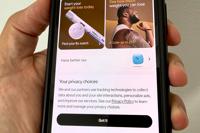
It's not hard to explain why business is booming for telehealth companies. The apps and websites offer quick, convenient access to prescriptions for sensitive medical conditions, including weight loss, sexual problems and mental health conditions. But U.S. regulators are increasingly singling them out for deceptive, unethical business practices. The Federal Trade Commission recently filed a lawsuit alleging telehealth company Hims & Hers secretly exposed customers’ health data and signed them up for hard-to-cancel subscriptions without their permission. It's the latest in a series of similar cases. Experts say part of the problem is that most privacy and consumer protection laws don't directly apply to telehealth companies.

As the new school year kicks in, the debate around student AI use is raging. New York City and Los Angeles school districts have banned most student AI use for a year to study the technology's impact. Microsoft just announced it will commit to new AI guardrails and privacy standards in a new agreement it negotiated with a teacher's union, the AFT. Meanwhile, the union president is asking other tech giants to sign on, notably Google, OpenAI and Anthropic, saying the country needs industry standards in the absence of legislation. The conversation highlights the growing concerns of educators around AI use and privacy protections as the technology becomes mainstream at schools.


FILE - Sen. Josh Hawley, R-Mo., speaks during a Senate Committee on the Judiciary Subcommittee on Privacy, Technology, and the Law hearing on Capitol Hill in Washington, Feb. 10, 2026. (AP Photo/Nathan Howard, File)

Opening statements in the Facebook trial over privacy concerns linked to the 2016 election began in New Mexico on Wednesday. The political consulting firm, Cambridge Analytica, bought user data harvested from millions of Facebook profiles to generate targeted ads during the 2016 election. Attorneys for the state of New Mexico accused the social media platform of failing to protect users after the data helped generate targeted political ads, encouraging Democratic voters to stay home. Facebook’s attorney said the social media company investigated suspicious third-party apps following the breach and told jurors the state’s evidence is outdated because platform safeguards have improved. The trial is expected to last four weeks.


Meta launched on Tuesday a personal artificial intelligence agent, Muse, for people 18 and over who are looking for help with day-to-day tasks…
Featured Top Story
The IRS-DHS agreement set off litigation between advocacy groups and the federal government last year.


Featured Top Story
Reno Police share advice on securing your home in light of the abduction of Nancy Guthrie.