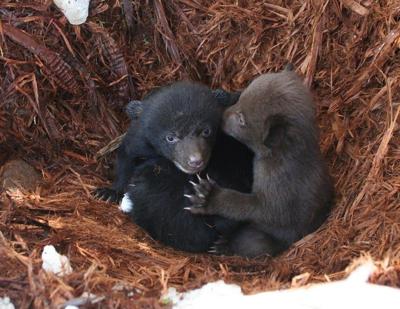
According to a study from the Wildlife Conservation Society (WCS), Nevada Department of Wildlife (NDOW), black bears are making a comeback in portions of the Great Basin in Nevada. They’ve credited the comeback to conservation efforts and say black bears haven’t been in these areas for more than 80 years.
They say unregulated hunting, landscape changes, and conflicts with settlers' livestock contributed to the decrease of the area’s bear populations in the early 1900’s.
But they say evolving forestry and grazing practices, along with reforestation and habitat regeneration, have allowed the bears to move back into the area.
They also credited conservation efforts conducted by WCS and NDOW over the course of more than 20 years to the growing bear population. Public education, investing in bear-proofing communities, reducing conflict rates between carnivores and people, and reduced human-caused carnivore mortality rates were all cited as positively-contributing efforts.
According to the report, black bear average annual growth rate has gone from the negatives to 16 percent over more than a decade. They’re estimating more than 500 black bears have now recolonized the areas.
”The recovery of large carnivores is relatively rare globally, yet this is the goal of conservation," said WCS Conservation Scientist Jon Beckmann. “Understanding the mode of recolonization and its genetic consequences is of broad interest in ecology and critical to successful conservation programs.”