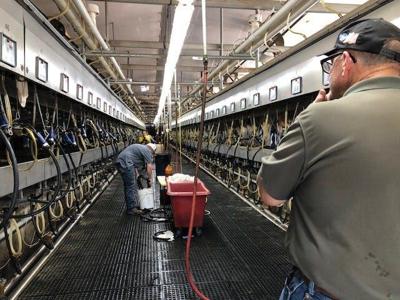
Dairy farmers in Fallon export their milk to countries all over the world, but rising costs are making business tough.
Recently, the Trump Administration has hit countries like China with tariffs on steel and aluminum products. Well, some of those countries have struck back with tariffs of their own on American agriculture.
These unexpected costs are hurting one Fallon dairy farmer and his livelihood.
Pete Olsen and his family have been in the business of milking cows for more than 100 years. While it may not be the most glamorous job, this farmer takes pride in the work he does, plus it typically pays the bills. However, he’s recently been finding it more difficult to make a profit.
"When those tariffs got announced, my price tipped over, a huge hit to my bottom line,” says Olsen.
He's referring to 25% tariffs that countries like China have been charging him to trade his milk. Since the costs of this tax are more than what the margin is on the product, Pete says he can't afford to pay it.
“And the customer says I’m not going to pay it, I’ll go somewhere else, I’ll go to Europe, I’ll go to New Zealand,” says Olsen.
When this happens, it means his dairy farm loses customers; a result that's forced other dairy men out of business.
“We're worried we'll lose more people if this doesn't end soon,” says Olsen.
In the meantime, the U.S. Department of Agriculture will issue $12 billion in assistance to farmers like Pete who've been hurt by these tariffs. While the gesture is great, he says it will hardly help.
“It's really not much money,” says Olsen. “We'd rather not get money from the government, we'd rather go out there and compete in the market and get money out of our customers.”
Growing crops to feed the cows is another big part of Pete’s business, but it's also one of the areas where he's had to get creative in order to cut production costs.
“We're farming everything that we can because if we grow the feed ourselves we can control the cost on it,” says Olsen.
Pete and his fellow farmers will be chopping down their corn stalks at the end of August. Thanks to recent wet winters, he's hopeful a successful crop will save him money to make up for what's been lost.
