Telescopes can see stars and other objects light years away, but the moon can be visible with your own eye. According to NASA the Earth is four times wider than the moon, making it about as wide as the United States or Europe.
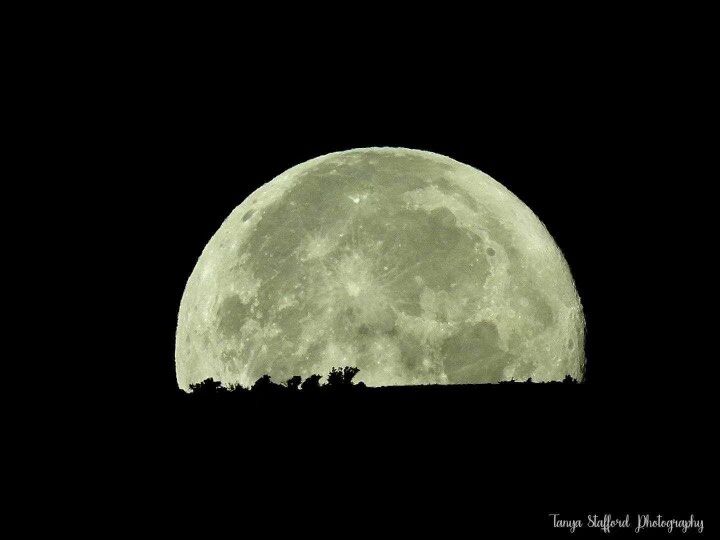
A supermoon is a full moon that looks brighter and larger than normal. Supermoons can also make ocean tides taller.
So what causes a supermoon? It all has to do with the distance between the Earth and the moon.
The moon travels around the Earth in an elliptical or oval shape, allowing for the distance between the two to change depending on where the moon is in it’s orbit around the Earth.
Perigee is the time when the moon is at its closest point to the Earth, or roughly 226,000 miles away.
A supermoon occurs when the moon is within ninety percent of perigee and a full moon at the same time. Supermoons happen three or four times a year.
According to NASA, a supermoon appears roughly fourteen percent bigger and thirty percent brighter than a micromoon, which is a full moon that is at its farthest point away from the Earth.

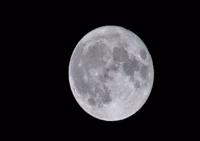
The next supermoon will be on August 30, so twice in one month. It's uncommon to have two supermoons in one month, in fact according to NASA, the next time that happen will be in January of 2037.
The supermoon on August 30 will also be a blue moon. Don't let the name fool you though, the moon will still appear grey or silver, not blue.
A blue moon occurs when you have two full moons in one month. This is more common than having two supermoons in one month, which is what makes this month so special.