

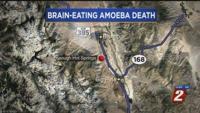


The Inyo County Health and Human Services says a child from Southern California died over the weekend after being diagnosed with a rare infection known as primary amebic meningoencephalitis (PAM). Tests were positive for Naegleria fowleri, a one-celled organism commonly known as brain-eating amoeba.
Humans become infected when water containing the organism enters the nose and migrates to the brain through the olfactory nerve along a bony plate in the skull called the cribiform plate. When it reaches the brain, it begins to destroy brain tissue. People do not get infected by drinking contaminated water and the amoeba has never been shown to spread from one person to another. Humans become infected usually while swimming or diving.
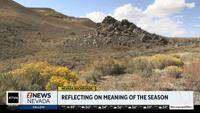
The child's only known water exposure was believed to be at one of the natural water ponds at Hot Ditch, a popular hot springs in the area of Bishop.
Inyo County Health and Humans Services and Environmental Health Departments have collaborated with the California Department of Public Health and the CDC on the investigation.
They said it was the second PAM case linked to untreated recreational water sources in Inyo County in recent years. In 2015, a 21-year-old succumbed to PAM after swimming in a private, untreated swimming pool in southern Inyo County.
Symptoms of PAM start quickly, usually within a few days of exposure.
Symptoms include:
Headache
Fever
Nausea
Vomiting
Stiff neck
Confusion
Lack of attention
Loss of balance
Seizures
Hallucinations
After the start of symptoms, the disease progresses rapidly and usually causes death within three to seven.
The amoeba is from a single cell class of organisms known as protozoa. They are naturally occurring organisms that feed on bacteria and tend to live in warm bodies of fresh water. They thrive when temperatures are high and water levels are low. Almost 90 percent of PAM cases in the U.S. were associated with swimming in warm, freshwater lakes and rivers.
Other sources include:
Hot springs/tubs
Swimming pools that are poorly maintained or inadequately chlorinated
Contaminated tap water
Water heaters with temperatures less than 166 degrees F
Ritual nasal cleansing using a neti pot
Religious practices
While the amoeba is widespread, infections are extremely rare. It is unknown why certain persons become infected while millions of others do not. The risk is low, yet the stakes are high because the change of dying when infected is almost 100 percent.
The CDC says "the only way to prevent a Naegleria fowleri infection is to refrain from water-related activities in or with warm, untreated or poorly treated fresh water."
Inyo County Health and Human Services says boiling water or using appropriate regular chlorination should eliminate the risk.
They've released some tips below:
Keep your head above water in untreated hot springs
Hold your nose shut or wear nose clips when swimming in warm, untreated freshwater
Avoid digging in or stirring up sediment in shallow, warm freshwater areas
Avoid water-related activities in warm freshwater during periods of high temperature and low water levels
Avoid swimming in polluted water or un-chlorinated swimming pools
If using a neti pot, use only filtered or boiled water.
For more information on PAM, visit this link here: http://www.cdc.gov/parasites/naegleria
(The Inyo County Health and Human Serivces contributed to this report).