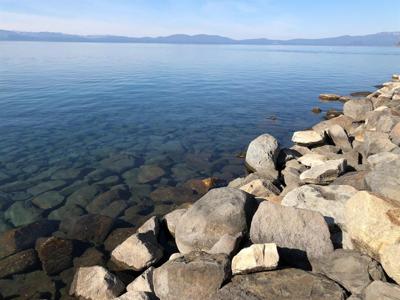
The winter of 2016-17 brought nearly double the precipitation of an average year, filling the Sierra's lakes and reservoirs after four years of drought. It was a welcome site that was followed up with a snowpack that was about average the following winter. Those winters allowed Lake Tahoe to fill up in the summer of 2017 and 2018. Still, the lake is about two feet lower than it was in July.
"We're doing okay on storage but it's been extremely dry," Chad Blanchard, U.S. District Court Water Master said. "October was well-below average and November we've had nothing yet but it doesn't take too much to catch up, this early in the year, so we're not that worried."
The water level is lower than it was last year at this time because the lake peaked earlier in the year, allowing a longer period of time for evaporation. Lake Tahoe is still 3.7 feet above its natural rim though, with winter just around the corner.
"December, January, and February are our three biggest months," Blanchard said. "So if we don't get anything in those months, then we really start getting behind and it's hard to catch up."
November is the fourth wettest month, and can kick-start the winter months with snow or rain. Snow is what stores most of our water until spring but rain can make the most of the snow in the early months of winter.
"I don't mind seeing rain up really high, this early in the year, because it soaks the soil in," Blanchard said. "Then you get snow on top of it and the soil is a little moist when the snow melts in the spring."
Blanchard says the weather models show a change in weather patterns in the next couple of weeks. He says that could change but he is hoping the Sierra gets some precipitation from some potential storms.
Thanks to the two previous winters, the lake's levels and our water supply can handle a below-average winter.
"An average year would be okay," Blanchard said. "We would get through next year just fine. In a worst-case scenario, it's extremely dry, we would have enough carry-over in Tahoe, pretty much to get us through next year. The year after that could be problematic."
Blanchard says the situation is the same for some of our reservoirs, upstream along the Truckee River.
"We have good carry-over in Stampede," Blanchard said. "Stampede's about up to flood control and Prosser is a little bit below but it wouldn't take much to get Prosser up to flood control."
If northern Nevada has flooding issues this winter, Blanchard says there is space left to reduce the risk of flooding between Lake Tahoe and Reno.
"We have a lot of room in Boca and a lot of room in Tahoe that we can capture some runoff if it happens to come from a rain event," Blanchard said.
As for how much precipitation this winter will bring, only time will tell.
