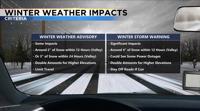


Knowing if a warning is posted is crucial in staying safe, but what does a watch or warning even mean?
The main difference between a watch and warning is certainty. A great way to show the difference between the two is with a puzzle. With a watch, you don't have the puzzle completed yet but you have all the different pieces for a winter storm to happen.
The weather is showing all of the ingredients for a storm to form like cold air and moisture, but meteorologists are not certain enough it's going to happen just yet.
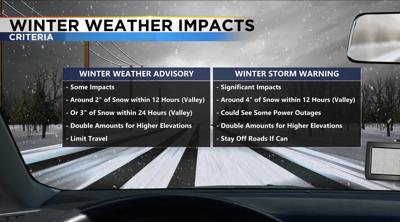
Now if you have a warning, that means that the puzzle is completed, all the pieces are together and the forecaster is pretty certain that the storm is going to happen. Now the main difference between a Winter Weather Advisory and warning all has to do with strength. For example, an easy puzzle for a child would be equivalent to an advisory, but a more challenging puzzle would be equivalent to a warning.
Drivers should use caution for both a Winter Weather Advisory and Winter Storm Warning.
The criteria for both vary depending on location and elevation. The National Weather Service in Reno will typically issue a Winter Weather Advisory in the lowest elevations when a couple inches of snow is expected within 12 hours or three inches within 24 hours. A Winter Storm Warning would be double that.
The criteria is flexible, meaning the weather service could still issue an advisory or warning if snow totals will be low but the impacts will be high enough. Things such as time of day or year and visibility also plays a role in issuing an alert or not. The criteria for the Sierra is double what the valley needs for a winter weather alert to be issued.
Blizzards require strong winds sustained at 35 miles per hour or stronger, alongside low visibility falling below a quarter mile for at least three hours. Blizzards are more so about the wind than the amount of snow.
Other forms of winter weather, like black ice, can make roadways slick. The National Weather Service has the authority to expire or extend a weather alert based on their discretion.
Just because an alert has been cancelled and no more snow is falling does not mean that there aren’t isolated icy spots, so make sure to stay safe.

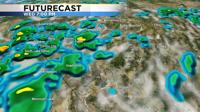
Scattered snow showers will stick around through the Wednesday evening commute.