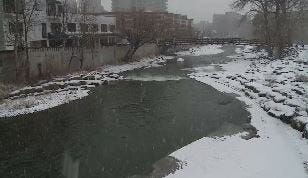

The Truckee River only stretches less than 120 miles from Lake Tahoe to Pyramid Lake, but that short water route has been the source of many conflicts for more than a century. In 1988, Sen. Harry Reid began the process of coming up with a new set of guidelines for the river, that all parties could agree with - 27 years later, the Truckee River Operating Agreement (TROA) is officially underway.
"We got a decision made and over with, and in the true spirit of government, it only took 27 years," Sparks Mayor Geno Martini said.
Martini is also the chairman of Truckee Meadows Water Authority, just one of the agencies that is happy with the agreement. They worked with California and Nevada, the U.S. Department of the Interior, and the Pyramid Lake Paiute Tribe to make the compromise.
"It was monumental and certainly there were times along the way where it didn't seem like it would get done but I think everybody was motivated by wanting to get something done," Leo Drozdoff, Director of the Nevada Department of Conservation & Natural Resources said.
Officials say the new agreement offers certainty and flexibility for the people that use the Truckee River's water. Urban growth, farm districts, and tribal uses were all reasons why they say the agreement had to be made. It also maintains recreation and protects species like the Lahontan Cutthroat Trout and the Pyramid Lake Cui-ui.
"The benefit to our habitat is huge for the tribe and then the signatory parties, the users, it's going to be huge for them also," Vinton Hawley, Pyramid Lake Paiute Tribe Chairman said.
Upstream storage was a major reason for modernizing the operation of the Truckee River. Because of TROA, officials say drought storage could eventually triple. Since the agreement took effect, December 1, more than 3,000 acre feet of water has been stored.
"We expect to increase our drought storage by about 50%, just over the winter, over what we could do either of the last two years," Mark Foree, TMWA General Manager said.
"Everybody always worries about we're not going to have enough water," Martini said. "Well, I think this will ensure, for now, that we can get through these droughts and be fine."
Chad Blanchard is the U.S. District Court Water Master and TROA Administrator. He says the plan will increase flexibility for the operation of upstream reservoirs, allowing different agencies to move water around and exchange water. He gave one example, saying if California wanted more water for recreation, they would have more flexibility to work with Nevada's stakeholders to make that happen.
"They can work with the other parties to be able to maybe work a deal and exchange some water back and forth to be able to manage objectives," Blanchard said.
90 percent of the river's water is being allocated to Nevada, ending the uncertainty with California over the distribution of the water. While there was some give-and-take for all parties involved, officials say this is the fairest and most useful method of utilizing one of northern Nevada's most precious resources.
"With all the competing interests, you have those kinds of conflicts but it takes everybody giving up a little bit to get a little bit," Foree said.
TMWA also owns half of the water rights in Donner Lake, and they have an agreement with the Truckee-Carson Irrigation District to buy the other half. Foree says Donner is a small but important lake, adding drought storage for the Truckee Meadows.
