The Transportation Security Administration says it has implemented new carry-on baggage security screening procedures at Reno-Tahoe International Airport.
The new procedures require travelers to place all electronics larger than a cell phone in bins for X-ray screening when going through the security checkpoint. The electronics should be placed in a bin with nothing on top or below, similar to how laptops have been screened for several years.
“TSA stands ready to work with passengers departing Reno-Tahoe International Airport to ensure they are familiar with the new procedures and guide them through the security screening process quickly and efficiently,” said Karen Burke, TSA Federal Security Director for Nevada. “TSA will continue to evaluate and modify our procedures as needed to keep the traveling public safe and secure.”
Travelers departing airports where the new procedures are in place will be asked to remove electronics larger than a cell phone from their carry-on bags. The plan includes items like cameras, tablets, DVD players and wireless speakers.
The procedures will be implemented at airports nationwide in the coming weeks and months. Passengers leaving Reno say they don't mind the extra layer of screening.
"I'm pretty used to taking things out of my bag because of laptops and shoes and jackets and that sort of thing, so taking one extra thing out doesn't seem like it would be a big deal," Laura Armstrong, Columbus, Georgia resident said.
Passengers may experience more bag checks so it is strongly advised that passengers arrive at RNO at least 90 minutes prior to their flight’s departure.
"I would never object to anything that makes flying safer," Ian Manson, Toronto, Canada resident said. "So, how can you possibly say it's a negative."
There are no changes to what travelers can bring through the checkpoint. Liquids in quantities less than 100 ml (3.4 ounces), food, electronics, and books continue to be allowed in carry-on bags. Liquids and laptops must be placed into their own bins.
The procedures have been tested for 18 months in 10 U.S. airports, with positive results.
"It can slow down the process," Lori Danker, TSA Spokeswoman said. "We haven't seen that here. We have TSA officers giving very specific instructions to passengers to they know what to expect to do."
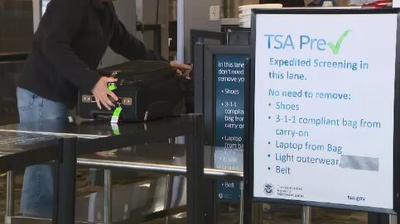
The new security measures do not apply to passengers enrolled as a Department of Homeland Security Trusted Traveler and are being screened in a dedicated TSA Precheck lane.
In late July, DHS announced that these new carry-on procedures would be implemented at all airports in the coming months. It is part of an effort to raise the baseline for aviation security and stay ahead of the evolving threat against aviation.
"We know that people who would want to harm the aviation system in our country are looking at common consumer items to be able to manipulate them in such a way," Dankers said.
(TSA)
