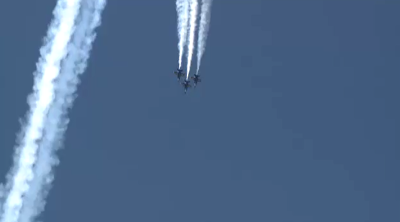
At 400 miles per hour the Blue Angels like to go fast. Warm weather makes the air less dense and requires more speed for planes to fly.
"The air is thinner and it's going to make the airplane go faster," said pilot Dave Holmgren.
On a cool day, the air is more dense and less speed is needed for the plane to fly. The Reno Air Races has seen it all, even snow several years ago. Luckily the air quality is much better this time around. Dust and haze can lower the visibility.
"It's not just how far you can see directly in front of you but, as a pilot, you're looking down often so you want to make sure you can see slant wise just as well as ahead of you," said meteorologist Dawn Johnson.
The National Weather Service is not performing a weather briefing this year, but you can still find them at the event. They also include an aviation section in their daily discussions online.
"We want to make sure pilots are aware of any kind of wind concerns," said Johnson.
Strong winds have a bigger affect on small planes and luckily there are no thunderstorms in the forecast this year. They can make flying dangerous, and dust devils can also lower visibility. In order to get your pilots license you have to know some meteorology.
"I had to take a meteorology course, actually two and it helped me quite a bit interpreting maps, and forecast things like that," said pilot and sales representative Ronald Smith.
Most planes are equipped with radar too. With blue skies and fairly light winds, the air races this year are a winner. Just don't forget the sunscreen.