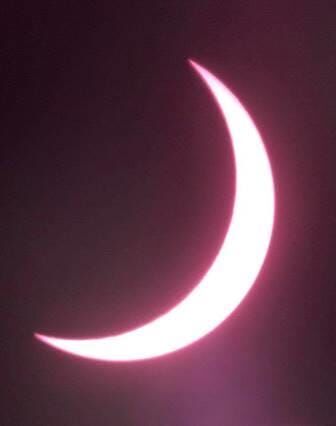
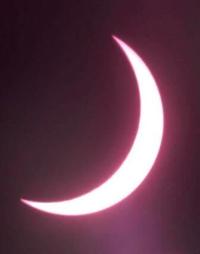
Solar eclipse glasses have been selling out places for weeks in anticipation for this rare event. The moon covered about 85% of the sun in Reno this morning at 10:21, and the public was out enjoying the view.
"Eighty-five percent, that's very, very, good," Jackie Soares said outside the Fleischmann Planetarium at the University of Nevada, Reno. "I saw some awesome pictures, I took some awesome pictures."
People of all ages came out to enjoy the first total solar eclipse to cross the U.S. coast to coast since 1918. There were close to 100 people at the UNR quad when the sun was 85% covered, and about 50 people at the planetarium, where they set up telescopes for the public to get a close up look at the crescent moon.
"We get groups and families that come in and just watching that light bulb go off in the kids, you know their brains get blown and that's a really cool feeling that starts a spark inside to get them interested in science, STEM education, stuff like that," Alexander Bayer, projectionist at the Planetarium, said.
An event like this is the perfect way to get the community involved in science, but it's great for research as well.
"NASA is having a plane travel with the eclipse all across the U.S., where they're able to see the atmosphere of the sun, and distinguish the Corona which burns at about 11 million degrees, and the actual surface of the sun, which is more like 11 thousand degrees," Bayer said.
Bayer enjoys the views as much as the next person, but he loves some of the interesting things that can be learned from a total solar eclipse.
"It actually proves Einstein's Theory of Relativity," Bayer said, "which says that gravity can actually bend light, and that's why we're able to see stars that are actually behind the sun, so if we were at totality, we would be able to see stars we wouldn't normally be able to see, because the sun's gravity is actually bending that light around the sun."
The Planetarium really likes events like these, because all of their funding comes from grants and donations. If you want to learn more on what the Planetarium provides or how to get involved, visit their website here: http://www.planetarium.unr.edu/