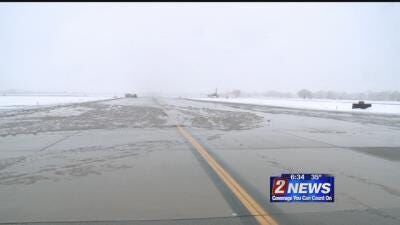
Nearly seven inches of snow fell at the Reno-Tahoe International Airport, Monday. That is a record for March 28 and the third highest total after March 15, since 1937. The storm was intense but concentrated in one area, with very little accumulation in the mountains. While March started off with some good winter storms that helped boost and maintain the snowpack, hydrologists say it is not the "Miracle March" many had hoped for.
"We've seen some years where our snowpack has tripled or more in the month," Tim Bardsley, National Weather Service Hydrologist said. "We did not come anywhere near that."
Still, March precipitation levels are above average. Snowpack in the Tahoe Basin is 10% higher than it was one month ago, now at 106% of a normal year.
"It's been cool enough," Bardsley said. "We've held onto the snowpack. Our conditions in the mountains are near normal, which seems huge compared to the last four years of drought."
Meanwhile, Reno is well-above average, with more than 30 inches of snowfall, compared to an average year of 20 inches.
"Last year, we had three inches, so we had 10 times the snowfall in Reno," Bardsley said.
Monday's storm is a big reason for the higher numbers. While that is good for local vegetation, lawns and ponds, it does not do much for water supply. It does delay the irrigation season but the region relies on mountain snow to recharge the reservoirs and rivers.
Snowpack typically peaks by April, which means the region will finish the year either at or above average. That is critical for the region, but it does not cut into the water deficit, created by the drought. Bardsley says some reservoirs and rivers have about 1.5 years to make up. Lake Tahoe is almost back up to its natural rim, and is expected to peak about 1.5 feet above it. Still, he says the lake should have about 300,000 acre feet of positive storage for this time of the year.
"While it's great to have an average year, we would've loved to have had a very enormous year to remove some of that deficit we've had," Bardsley said.
Experts say the most efficient snow runoff begins in April. Bardsley says the cooler weather and late March storms are helping to delay the runoff, at least until then.