A federal appeals court has temporarily blocked the release of records sought by a U.S. House committee investigating the Jan. 6 insurrection as the court considers an emergency request by former President Donald Trump.
The U.S. Court of Appeals for the District of Columbia Circuit on Thursday granted an administrative stay sought by Trump.
The stay is intended to give the court time to consider Trump’s arguments against release of the documents, which was otherwise scheduled for Friday without a court order.
The appeals court set arguments in the case for Nov. 30.
According to an earlier court filing from the archives, the records include call logs, drafts of remarks and speeches and handwritten notes from Trump’s then-chief of staff, Mark Meadows. There are also copies of talking points from then-press secretary Kayleigh McEnany and “a draft Executive Order on the topic of election integrity,” the National Archives has said.
Rep. Bennie Thompson, D-Miss., who chairs the House committee, said in a statement after the ruling that the records are crucial for understanding the attack and “in my view, there couldn’t be a more compelling public interest than getting answers about an attack on our democracy.”
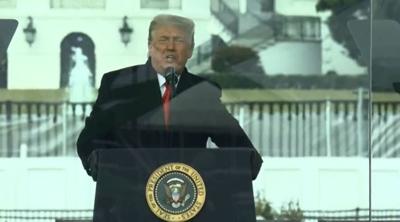
The nine-member House committee is investigating not just Trump’s conduct on Jan. 6 — when he told a rally to “fight like hell” shortly before rioters overran law enforcement — but his efforts in the months before the riot to challenge election results or obstruct a peaceful transfer of power. The committee has interviewed more than 150 witnesses and issued more than 30 subpoenas, including ones announced Tuesday to McEnany and former top adviser Stephen Miller. It is unclear, so far, whether the lawmakers will eventually call Trump to testify.
Trump has repeatedly attacked the committee’s work and continued to promote unfounded conspiracy theories about widespread fraud in the election, despite the fact that Biden’s win was certified by all 50 states and his claims have been rebuked by courts across the country.
In suing to block the National Archives from turning over documents, Trump called the House panel’s request a “vexatious, illegal fishing expedition” that was “untethered from any legitimate legislative purpose.” Allowing the House to get access to his records would also damage executive privilege for future presidents, Trump’s lawyers argued.
(Copyright 2021 The Associated Press. All rights reserved. This material may not be published, broadcast, rewritten or redistributed without permission.)
