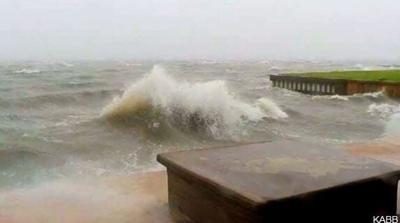
The National Hurricane Center has downgraded Hurricane Harvey from a Category 1 hurricane to a tropical storm.
But officials say they are still worried about potentially catastrophic rainfall that will continue for days, with more than 40 inches and flash flooding possible even well inland.
Harvey came ashore Friday along the Texas Gulf Coast as a Category 4 storm with 130 mph winds, the most powerful hurricane to hit the U.S. in more than a decade.
One death has been reported in this hurricane. Authorities say 56-year-old Robert Dean Schoenhals, drowned after his car was swept away by floodwaters caused by thunderstorms that pummeled the region. Crews located his body hours after the accident. A deputy saw Schoenhals try to drive through high standing water on a highway when the car hydroplaned off the road and entered a ditch with deep, rushing water.
Experts say hurricanes almost always lose strength quickly after making landfall and moving away from the warm waters that fuel their winds. But the danger doesn't end there.
Harvey is expected to keep slowing and dumping rain through the middle of next week.
Hurricane Harvey has been dumping nearly 3 inches (76.2 millimeters) of rain per hour at times and has left some streets in flood-prone Houston submerged in water.
Harris County Judge Ed Emmett, the chief administrator of the county that includes Houston, says flooding so far is a "minor issue." He says most of the watersheds are well within their banks "but we're not out of this."
Forecasters are predicting major flooding in the area by Tuesday. Houston has about 1,700 miles (2735.76 kilometers) of channels that drain to the Gulf of Mexico.
A handful of freeway service roads and streets and some scattered neighborhoods that normally experience high water in heavy rain have been flooded.
Houston Mayor Sylvester Turner cautions that although major flooding hasn't happened yet, "that can change."
The Associated Press and CBS News contributed to this report.