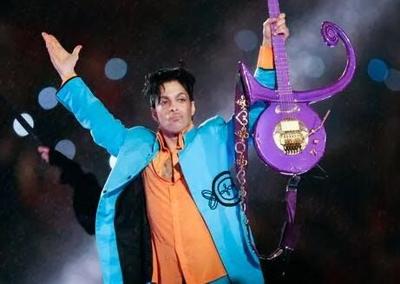

The prosecutor in the Minnesota county where Prince died says he's filing no criminal charges in the musician's death.
The announcement Thursday from Carver County Attorney Mark Metz means the state's investigation into how Prince got the fentanyl that killed him is closed. It came hours after documents revealed a doctor accused of illegally prescribing an opioid for Prince had agreed to pay $30,000 to settle a federal civil violation.
Metz said the evidence shows Prince thought he was taking Vicodin, not fentanyl. He said there's no evidence any person associated with Prince knew he possessed any counterfeit pill containing fentanyl.
An attorney for Dr. Michael Todd Schulenberg says he's agreed to pay the $30,000 to settle a federal civil violation to avoid the expense and risk of litigation.
Dr. Schulenberg was accused of prescribing oxycodone to Prince and putting it under the name of Prince's bodyguard and close friend, Kirk Johnson, to protect Prince's privacy.
But attorney Amy Conners says in a statement that Schulenberg affirms his previous statement that he did not prescribe opiates to any patient with the intention that they be given to Prince.
She says that after the doctor learned of Prince's addiction, he immediately began working to get him into treatment
Prince died on April 21, 2016, from an accidental overdose of fentanyl, a synthetic opioid.
But the federal government alleges that Dr. Schulenberg violated the Controlled Substances Act when he wrote a prescription in someone else's name on April 14, 2016.
The settlement released Thursday doesn't name Prince, but search warrants previously released say Schulenberg wrote a prescription for oxycodone in the name of Prince's bodyguard, intending it to go to Prince.
MORE: “The bottom line is that we simply do not have sufficient evidence to charge anyone with a crime & related to Prince’s death.”
— CBS Evening News (@CBSEveningNews) April 19, 2018
“We are pleased that the doctor is being held accountable for his actions in writing the prescription for Percocet in Kirk Johnson's name.” pic.twitter.com/VupGwACplq
"The evidence demonstrates that Prince thought he was taking Vicodin and not fentanyl," Carver County Attorney Mark Metz says. "Notably, the evidence demonstrates that Prince had no Vicodin or fentanyl prescription.” https://t.co/ensyCjyZhG pic.twitter.com/Wxw8TCwrK9
— CBS News (@CBSNews) April 19, 2018
WATCH LIVE: Prosecutors to announce decision on charges after probe into Prince's death https://t.co/ensyCjyZhG pic.twitter.com/6Ur3UBMOpS
— CBS News (@CBSNews) April 19, 2018
Prince was 57 when he was found alone and unresponsive in an elevator at his Paisley Park estate in suburban Chanhassen. An autopsy found he died of an accidental overdose of fentanyl, a synthetic opioid 50 times more powerful than heroin.
A confidential toxicology report obtained by The Associated Press in March showed high concentrations of fentanyl in the singer's blood, liver and stomach. The concentration of fentanyl in Prince's blood was 67.8 micrograms per liter, which outside experts called "exceedingly high." The report noted that fatalities have been documented in people with blood levels ranging from 3 to 58 micrograms per liter.
Search warrants unsealed about a year after Prince died showed that authorities searched his home, cellphone records of associates and his email accounts to try to determine how he got the drug. Authorities found numerous pills in various containers stashed around Prince's home, including some counterfeit pills that contained fentanyl. The source of that fentanyl was never determined.
While many who knew Prince over the years said he had a reputation for clean living, some said he also struggled with pain after years of intense performances. Documents released by authorities last year paint a picture of a man struggling with an addiction to prescription opioids and withdrawal, and they also show there were efforts to get him help.
Associates at Paisley Park told investigators that Prince had been "going through withdrawals, which are believed to be the result of the abuse of prescription medication," according to an affidavit unsealed in state court last year.
Just six days before he died, Prince passed out on a plane and an emergency stop was made in Moline, Illinois. The musician had to be revived with two doses of a drug that reverses the effects of an opioid overdose.
The day before his death, Paisley Park staffers contacted California addiction specialist Dr. Howard Kornfeld as they were trying to get Prince help. Kornfeld sent his son, Andrew, to Minnesota that night and the younger Kornfeld was among those who found Prince's body. Andrew Kornfeld was carrying buprenorphine, a medication that can be used to help treat opioid addiction.
Documents also alleged Dr. Michael Todd Schulenberg, a family physician who saw the musician twice before his death, told authorities he prescribed the opioid painkiller oxycodone to Prince but put it under the name of Prince's bodyguard and close friend Kirk Johnson "for Prince's privacy." Schulenberg's attorney has disputed that.
A laboratory report obtained by the AP notes that one of the pills found in a prescription bottle with Johnson's name contained oxycodone.
Oxycodone, the generic name for the active ingredient in OxyContin, was not listed as a cause of Prince's death. But it is part of a family of painkillers driving the nation's overdose and addiction epidemic, according to the U.S. Centers for Disease Control and Prevention. Nearly 2 million Americans abused or were addicted to prescription opioids, including oxycodone, in 2014.
Prince did not have any prescriptions for fentanyl.
(Copyright 2018 The Associated Press. All rights reserved. This material may not be published, broadcast, rewritten or redistributed.)