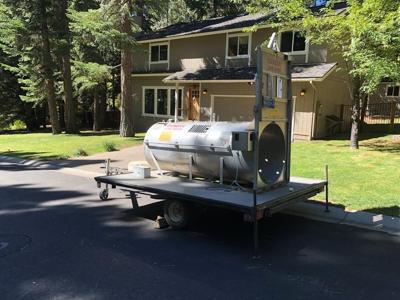
A bear and her cub are the suspects in a string of home break-ins in Stateline, prompting the Nevada Department of Wildlife to set a bear trap in the neighborhood. The latest was when the pair broke into a home on Terrace View Drive.
"It got in through a dog door and that entire wall came down and the bear kept returning even with people home," Ashley Sanchez, NDOW Public Information Officer said. "The bears didn't seem to be bothered by them and they kept returning to this neighborhood. We've had multiple other break-ins."
Rob Huber lives just a few doors down from that house. He has had quite a few run-ins with bears in the last 15 years that he's lived there. He says living there means living around bears.
"I think most of the folks that have lived up here for awhile understand that we have to coexist with the bears," Huber said.
Huber says residents can take many precautions to keep from attracting bears.
We've had them in our garage because we have a refrigerator in it," Huber said. "We try to keep it closed because of that. They've been into our cars a number of times. We decided ultimately to put bear alarms in our cars so when they do open the doors now, the noise seems to keep them away."
Huber also keeps his doors and windows locked and has bear-proof garbage containers. His dogs scare them off occasionally.
"They're just looking for easy food, apples or whatever they can get," Huber said. ""If we do a good job of keeping them in the woods and then they don't become problematic but in some cases, for whatever reasons I don't understand, some bears become more bold than others and they start entering houses."
If the traps work, NDOW will test the bears' DNA and determine the next step. Sanchez says it uses aversive training to discourage the bear from returning. Trained dogs chase the bears and biologists will shoot rubber pellets at them to teach them not to come around humans. If it involves a bear and her cub, they try to release them without using those tools. The last resort is to euthanize nuisance bears if they repeatedly cause problems.
"We want to keep them wild," Sanchez said. "We want to keep them away from neighborhoods. They belong here but we want to keep them out in the wild because we do want to prevent any human-bear conflicts. They're wild animals."
There have been reports of people tampering with the traps, to persuade bears to stay away from them. That is illegal. NDOW says the traps are there for public safety.
"We ask people to please stay away," Sanchez said. "Let our biologists do their jobs. We're trying to protect the public."
Hibernation usually starts in late November or early December, so bears are on the prowl for food, sometimes eating up to 25,000 calories a day. Huber says he mostly sees bears in the spring and fall.
"When they come out of hibernation, they seem to be more active," Huber said. "Probably because they're fairly hungry and they're trying to replenish their nutrients. Then towards fall when they're trying to fatten themselves up, they become more pronounced, coming out of the woods."
Sanchez says people with should pick their fruit trees and clean up any fruit that has fallen on the ground. Electric fencing can also be a good way to keep bears from getting onto your property.
