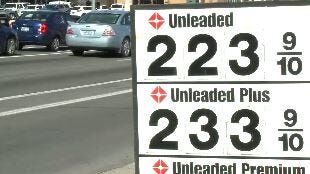
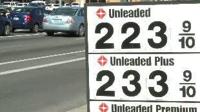
In November, voters in every Nevada county, except Washoe, will consider whether to approve a question that would impose an annual increase on the fuel tax for the next 10 years.The funds raised would go toward road construction and maintenance.
Washoe County voters already approved a measure back in 2008, allowing the local gas tax to adjust to inflation every year.
The current federal and state taxes for gasoline in Nevada are about 19 cents per gallon. There is also a county mandatory tax of 6 cents per gallon and then a county optional tax where most counties voting in November pay 9 cents. Esmeralda, Lincoln and Storey County pay 4 cents.
The question voters in each county, except Washoe, are being asked to consider is whether their county's board of commissioners should increase the fuel tax by up to 3 cents a year. This would mean each gallon of gas could be taxed up to 30 cents by the end of the 10 year period.
Patrick Pittenger, the transportation manager for Carson City public works says, "This is really our opportunity to be able to fix the roads of the city, we do the best we can with the available funding that we do have today, and they can see those projects around town but we really don't have enough money to keep up with the demands for their streets."
Paul McGrath, a 60 year Carson City resident says there are better alternatives.
"With the new tax, they're quadrupling the amount of money collected and in 10 years they'll be collecting 30 cents a gallon plus the 9 cents a gallon that they want now and it's just not going to meet with the approval of the voters of Carson City,” says McGrath.
Currently Carson City maintains more than 270 miles of roads and the DMV projects that if the fuel indexing passes, it would raise nearly $70 million in 10 years.
Bill Chernock, the executive director of the Carson Valley chamber of commerce, says Douglas County is also in need of road repairs.
"In this county we have a pretty significant backlog of rehab work that needs to be done on some of our collector roads and some of our local roads as well," says Chernock.
Dan Wray, the CEO of Biofilm management says, "The issue isn't whether or not they're going to fix the roads in Douglas, they already have a bond for 18 million bucks, the question is, is the state actually going to give them money."
Douglas County maintains more than 200 miles of roads. The DMV projects that nearly $44 million would be raised if the fuel indexing passes.
Jeff Page, the Lyon County Manager says, "It's dedicated funding to roads, for me I think that's the selling point, it can't be used for anything else but roads, where the general fund we can put it wherever we need to put it, this deals specifically with roads and it's a positive thing for us."
Lyon County maintains more than 900 miles of roads and based on the DMV’s projections, the fuel indexing would raise $124 million over ten years.