



Twelve states, including Nevada, sued to block Paramount’s takeover of Warner Bros. Discovery on Monday, warning that the $81 billion mega merger would “extinguish competition” in Hollywood and threaten jobs across the industry.
The office of California’s attorney general, who is leading the coalition, said the states are asking Warner Bros. and Paramount to not close their merger “until after the judicial process concludes” -- and if they do not agree, the coalition will then be file a temporary restraining order.
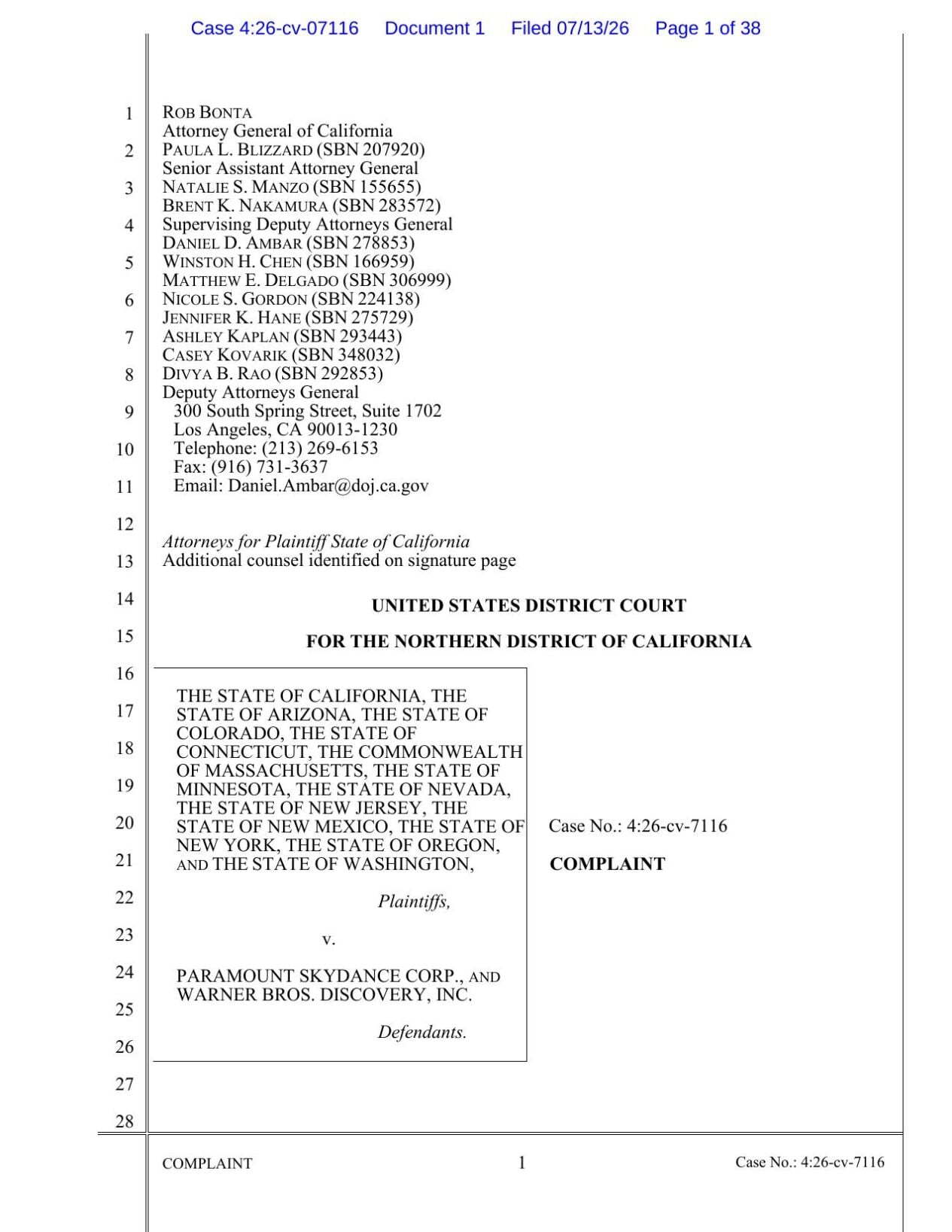
The lawsuit, filed in U.S. District for the Northen District of California, alleges that the merger violates Section 7 of the Clayton Act, which holds that mergers that may substantially lessen competition or tend to create a monopoly are illegal.
The attorneys general allege that if Warner Bros. and Paramount are allowed to merge it would lessen competition in the areas of:
- Wide Release Theatrical Film Distribution, where Warner Bros. and Paramount are two of the five major film distributors and would combine for around 27% share of the market. After the merger, only three distributors will control 75% of these films, and only four distributors (defendants, Disney, Universal and Sony) will control 86% of them.
- Anticipated Top-Grossing Theatrical Film Distribution, a submarket of theatrical film distribution focused on anticipated blockbuster films with wide audiences and large production budgets. After the merger, defendants will control more than 30% of these films, and four distributors (defendants, Disney, Universal and Sony) will control 93% of them.
- Licensing Basic Cable Television Channels, or the market for distributing basic cable channels to cable and satellite providers. Warner Bros. is the second largest and Paramount is the third largest in this market, and they would combine for a 27% share.
Paramount, which was bought by Skydance just last year, wants all of Warner. That would mean putting HBO Max, cult-favorite titles like “Harry Potter” and even CNN under the same roof with CBS, “Top Gun” and the Paramount+ streaming service. The states’ lawsuit could throw a wrench in those plans, at least for now. The antitrust case arrives at a pivotal time for the Paramount-Warner transaction - which, after months of what became a very public bidding war, received shareholders’ stamp of approval in April and then a blessing from the Trump administration just last month.
“The unlawful merger of these two entertainment behemoths would lead to higher prices, lower quality, and less content for film and television, harming movie theaters, basic cable distributors, and ultimately, audiences on every sofa and movie theater seat in the U.S.,” said Attorney General Rob Bonta said in a statement.
Nevada Attorney General Aaron D. Ford says, "When competition disappears, consumers are the ones who pay the price. This merger threatens to reduce choices, drive up costs and diminish the variety of movies and television programming available to families. Nevadans deserve a marketplace where companies are incentivized to compete to deliver diverse entertainment, competitive prices and more innovation."
In filing today’s lawsuit, Attorney General Ford joins the attorneys general of California, Arizona, Colorado, Connecticut, Massachusetts, Minnesota, New Jersey, New Mexico, New York, Oregon and Washington.
(The Associated Press, Office of Nevada Attorney General contributed to this report.)