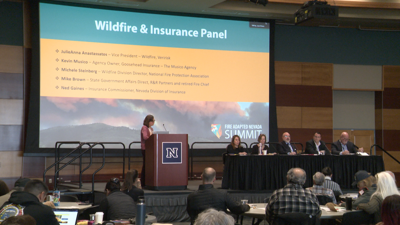


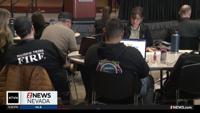

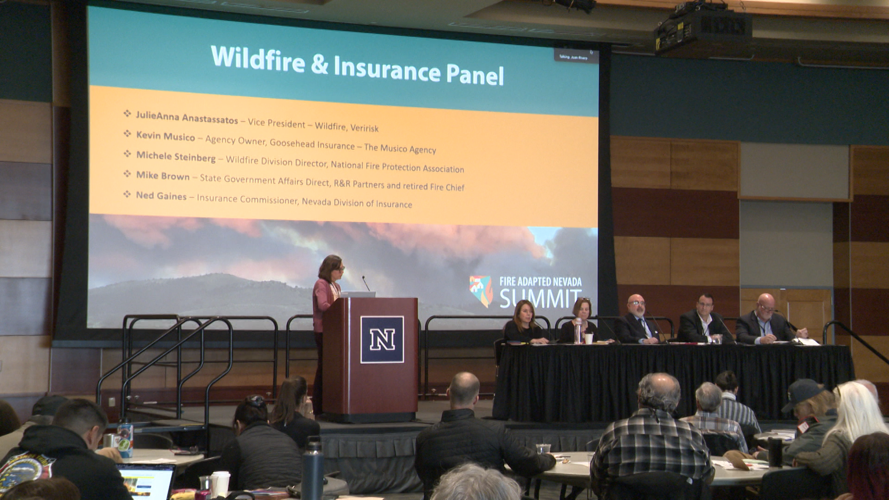
This week, the University of Nevada, Reno, hosted a summit for local fire departments, land managers, and the general public to discuss fire safety.
"Whose responsibility is it to make sure our communities are safer? Everyone has a role to play," said Megan Kay, the manager of the University's Living with Fire program.
Kay said even doing something small can provide a big boost in safety.
"It can be daunting, and people might think that they need to solve the entire problem before they even begin," she said. "But, you know, research shows that just doing a little action can translate to a lot of reduction in risk."
These actions can be as small as putting a go-bag together or making an evacuation plan. Or, as one person said, take care of your lawn.
"Clean up your yards and get those foundation plants removed," said Barbara Fenne.
Fenne lives in Mogul and said even if her home is fire-safe, having only one evacuation route can create a bottleneck.
"I am really concerned about the potential of three communities using our two exits on I-80 to evacuate," she said.
Another big topic at the summit was Assembly Bill 376. The measure is intended to improve access to fire insurance, but it allows insurers to carve these protections out of their home insurance policies.
A retired fire chief says there are extra concerns if you live in the 89511 ZIP code in Washoe Valley, where the Davis Fire burned in 2024.
"If you're within that footprint, you were probably contacted by your insurance carrier that they want to either do a valuation on your property or they're looking at it for future nonparticipation through non-renewal," said Michael Brown.
Basically, insurers want to save money by staying out of what they see as a high-risk area.
In the short term, Brown said there are ways to convince them your area is actually safe.
"What I believe is that if we continue to work in a partnership with [insurers] from all aspects of fuels reduction ... to prove to them that we're doing everything we can within our state and our communities to create defensible space," Brown said.
The University has its Living with Fire resources online.