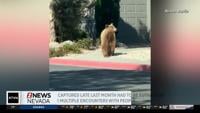

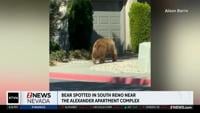


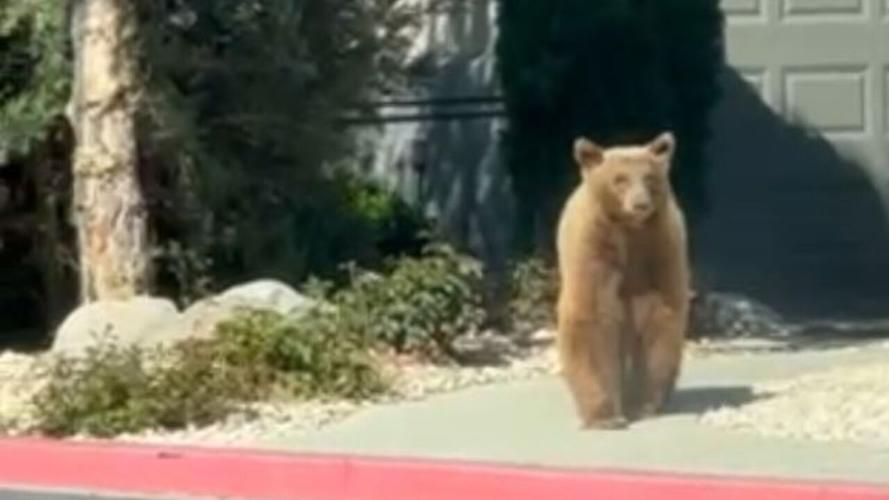
A bear that was captured by the Nevada Department of Wildlife last month has since been euthanized.
We first reported the bear was captured after being spotted near the Alexander Apartments in late April.
NDOW then released the bear into the wild the next day using dogs and people to try to encourage it to stay away.
However, they say the bear came back and had to be captured two more times.
For safety reasons they made the decision to euthanize it.
APRIL 30, 2025:
A female black bear, estimated to be between 10 and 12 years old, was seen early Tuesday morning, April 29, near the Alexander Apartments on South Virginia Street in Reno.
The Nevada Department of Wildlife (NDOW) responded and safely tranquilized the bear. She was transported to a secure facility for evaluation.
According to NDOW, the bear had no prior tag, so there was no existing record of her behavior or movement history. Officials believe the bear may have used natural corridors like trails or creek beds to access the residential area, likely in search of food.
She was captured on video by a viewer of 2 News Nevada, who recorded the sighting from the apartment complex.
NDOW later released the bear near the area where she was captured, close to Davis Creek on Wednesday.
During the release, NDOW implemented its aversive conditioning protocol.
This method is intended to deter bears from associating residential areas with safety.
Karelian Bear Dogs were used in combination with loud shouting to create a negative experience for the bear.
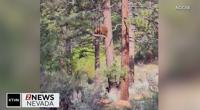
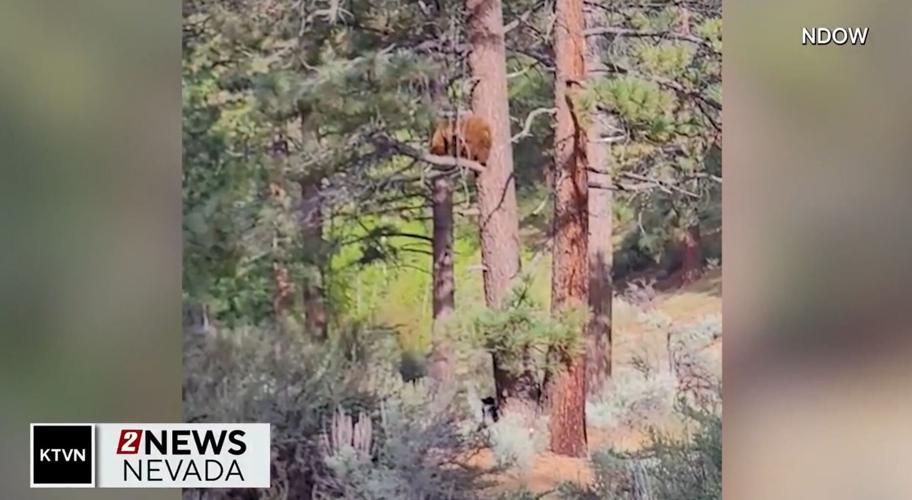
Officials re-engaged the dogs and noise stimuli each time the bear appeared comfortable, including when she came down from a tree and lingered.
“Anytime the bear appeared comfortable, for example, when it came down from the tree and lingered, we re-engaged with the dogs and noise to reinforce that discomfort,” said Ashley Zeme, public information officer for the Nevada Department of Wildlife.
NDOW reported that the bear eventually fled the area and returned to the wilderness.
“The goal is to ensure bears don’t associate humans or developed areas with safety. The bear eventually fled the area and returned to the wilderness, which is the outcome we want,” Zeme said.
Residents are reminded by NDOW to secure garbage and avoid feeding wildlife to minimize the potential for future encounters.
A video showing the bear’s release and the aversive conditioning process can be viewed here:
“These show NDOW’s ‘aversive conditioning’ process, a method we use to teach bears that neighborhoods are not safe or welcoming places,” said Zeme, Nevada Department of Wildlife.