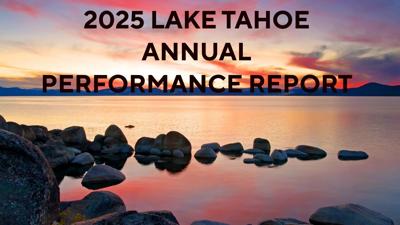


A joint effort by California and Nevada prevented a record amount of polluted runoff from entering Lake Tahoe in 2024, according to a new annual performance report.
The report, released by the Lahontan Regional Water Quality Control Board and the Nevada Division of Environmental Protection, found that more than 727,000 pounds of fine sediment were kept out of the lake, along with over 5,800 pounds of nitrogen and nearly 2,100 pounds of phosphorus.
The bi-state program, known as the Lake Tahoe Total Maximum Daily Load Program, or TMDL Program, was launched in 2011 to reduce pollutants that harm the lake’s water clarity.
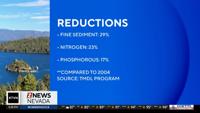
In 2024, the program achieved a 29% reduction in fine sediment, a 23% reduction in nitrogen, and a 17% reduction in phosphorus, compared to 2004 levels. These pollutants are known to fuel algae growth and decrease water quality.
“Through long-term investments in science, we’ve been able to protect one of our most treasured natural landmarks,” said Yana Garcia, California Secretary for Environmental Protection. “California is helping to stop hundreds of thousands of pounds of harmful runoff from entering Lake Tahoe each year with successful local and regional partnerships, and strong collaboration with the state of Nevada. As climate challenges grow, we remain firmly committed to restoring the lake’s clarity and strengthening its resilience for years to come.”
The 2024 pollutant reductions mark the highest since the program began tracking them in 2016. Officials estimate the amount of fine sediment prevented from entering the lake would fill about 29 dump trucks.
“Protecting Lake Tahoe’s iconic clarity requires long-term commitment, collaboration, and innovation,” said Jason Kuchnicki, chief of the Nevada Division of Environmental Protection’s Bureau of Water Quality Planning. “These results reflect the strength of the bi-state partnership and the dedication of local agencies implementing proven, science-based strategies to reduce pollution at its source. As we continue adapting to new challenges, this program remains a cornerstone of our efforts to safeguard one of Nevada’s—and the nation’s—most treasured natural resources.”
Urban partners, including the California and Nevada Departments of Transportation, El Dorado and Placer counties, Douglas and Washoe counties, and the city of South Lake Tahoe, all exceeded their targets.
The results were estimated using the Pollutant Load Reduction Model and may not reflect actual load reductions.
Despite the progress, the lake’s average clarity in 2024 was measured at 62 feet, which is lower than the 72 feet recorded in 2023 and 68 feet in 2022.
Officials note that long-term trends are a better measure of lake health than single-year data. Currently, clarity is neither improving nor worsening overall.
“The 2024 results show that our strategies are working, even as conditions in and around the lake become more unpredictable because of increasing pressures from climate extremes, wildfire, and ecological change,” said Ben Letton, Lahontan Water Board executive officer. “Building resilience into our pollutant control efforts is essential.”
Ongoing research is focused on understanding additional factors that influence lake clarity, including wildfires, rising temperatures, invasive species, and extreme weather.
The Tahoe Science Advisory Council is expected to release new findings later this year, which will be used to guide future pollutant reduction strategies.
The program’s long-term goal is to restore the lake’s clarity to 100 feet, with a near-term target of 78 feet by the end of 2031.
More information and the full 2025 performance report are available on the Lake Clarity Tracker – Program Management page.